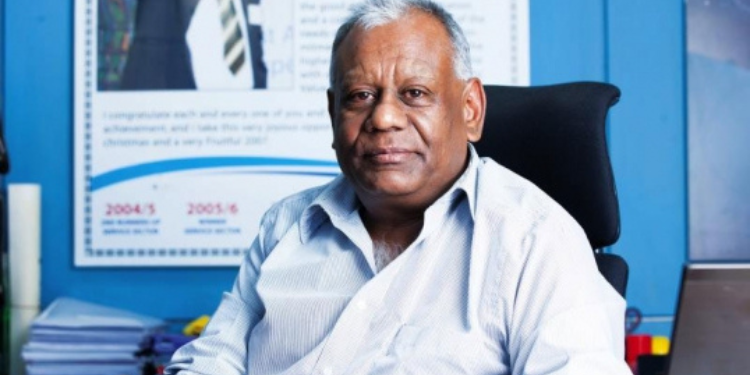
Atul Shah, born in 1961, stands as one of Kenya’s most influential entrepreneurs — a man who transformed a humble family shop in Nakuru into Nakumatt Holdings, once East Africa’s largest retail empire. His story is one of grit, foresight, and an unyielding belief in the potential of Kenyan enterprise.
Early Life and Inspiration
Atul’s entrepreneurial roots trace back to his father, Maganlal Shah, who ran a small general store in Nakuru. From stocking shelves to managing customers, Atul learned the fundamentals of retail business firsthand. This hands-on experience shaped his appreciation for consistency, integrity, and discipline — traits that later defined his leadership style.
Motivated by his father’s vision and guided by faith, Atul developed a lifelong passion for retail. He saw it not merely as a business, but as a catalyst for economic transformation and job creation in Kenya and the wider region.
Building the Nakumatt Empire
In 1978, Atul and his brothers opened a modest shop in Nakuru. Though progress was slow, their determination never wavered. By 1987, the business had evolved into Nakuru Mattress Supermarket, a precursor to Nakumatt Holdings, whose name combined “Nakuru Mattress.”
At just 26 years old, Atul’s ambitions were audacious. He often likened the business to a young elephant — small, patient, yet destined for greatness if nurtured with care. This analogy inspired Nakumatt’s elephant logo, a symbol of strength and endurance that would become synonymous with retail excellence across East Africa.
Expansion and Market Leadership
Under Atul Shah’s leadership, Nakumatt experienced explosive growth between 1998 and 2004. The chain rapidly expanded across Kenya, Uganda, Tanzania, and Rwanda, ultimately reaching over 50 branches and employing more than 10,000 people.
At its peak, Nakumatt generated annual revenues exceeding $450 million, anchoring itself as a dominant player in the regional retail market. The chain’s modern shopping model — clean aisles, wide product variety, and extended hours — redefined the Kenyan shopping experience.
Nakumatt’s presence in flagship malls such as The Junction, Westgate, and Highridge contributed significantly to Nairobi’s mall culture, positioning the brand as the heartbeat of urban consumer life.
The Vision and Values Behind Nakumatt
Atul’s leadership was rooted in three guiding values: faith, integrity, and perseverance. He believed business should not only generate profit but also empower communities through employment and innovation.
His “Nakumatt 2.0” strategy aimed to make the brand Africa’s retail leader, integrating technology, customer loyalty programs, and large-format stores to enhance consumer experience. Despite fierce competition, Nakumatt became a household name across East Africa, a reflection of Atul’s unwavering pursuit of excellence.
The Fall of a Retail Giant
Nakumatt’s collapse in the late 2010s marked one of the most dramatic business downfalls in Kenya’s corporate history. A combination of overexpansion, debt accumulation, and management challenges crippled the once-flourishing giant.
However, Atul Shah’s reputation as a pioneer remained intact. Many business analysts credit him with modernizing retail in Kenya — setting standards that later inspired competitors like Naivas, Quickmart, and Carrefour Kenya.
Life After Nakumatt
Today, Atul Shah focuses on mentorship and advocacy, championing the recognition of retail as a vital economic pillar. His current mission is to nurture young African entrepreneurs, encouraging innovation, ethical leadership, and financial discipline in business operations.
Despite Nakumatt’s fall, Shah’s legacy endures. His journey mirrors the evolution of Kenya’s modern economy — from family-owned stores to billion-shilling enterprises that shaped how East Africans shop.
In the annals of Kenyan business history, Atul Shah remains not only a billionaire by measure of wealth but also a visionary whose dream changed the face of East African retail forever.