Nyongesa Sande
No Result
View All Result
  • News
    • World
    • Africa
  • Politics
  • Business
  • Tech
  • AI
  • Telecom
  • Sports
  • Opinion
  • Lifestyle
  • Live
Nyongesa Sande
No Result
View All Result
Nyongesa Sande
No Result
View All Result
  • News
  • Politics
  • Business
  • Tech
  • AI
  • Telecom
  • Sports
  • Opinion
  • Lifestyle
  • Live
ADVERTISEMENT

Home » The Abamutete Clan of the Abanyole: Identity, Conflict, and Cultural Symbolism

The Abamutete Clan of the Abanyole: Identity, Conflict, and Cultural Symbolism

NyongesaSande News Desk by NyongesaSande News Desk
1 year ago
in African History
Reading Time: 4 mins read
A A
The Abamutete Clan of the Abanyole: Identity, Conflict, and Cultural Symbolism

The Abamutete are a significant yet controversial clan within the Abanyole, a sub-group of the Luhya ethnic community of Western Kenya. Their historical narratives, political positioning, and cultural perceptions paint a vivid picture of inter-clan rivalry, shifting power dynamics, and deep-seated symbolic representations within the larger Nyole community.

  • Origins and Political Emergence
  • Ritual Conflict and Symbolic War
  • Ebulonga Conflict and Political Displacement
  • The Image of the Abamutete in Abanyole Identity
  • The Abamutete as Embodiment of Modernity and Paradox
  • Conclusion: Abamutete as a Mirror of Nyole Paradox

Origins and Political Emergence

The rise of the Abamutete within the Abanyole socio-political landscape is rooted in a tale of cunning and opportunity. Oral traditions recorded by Dishon Kweya recount that Otieno Ndale, an Abamutete clansman, secured the position of chief by tricking Munala of the Abasiekwe clan. King Mumia had initially proposed Munala to the colonial administration, but the Abamutete allegedly inebriated Munala until he missed the coronation, allowing Ndale to seize the post.

This incident did more than place an Abamutete in power—it sowed lasting inter-clan resentment, especially between the Abamutete, Abasiekwe, and Abatongoi, contributing to present-day rivalries during local elections.

ADVERTISEMENT

Ritual Conflict and Symbolic War

The Abamutete are also central to a dramatic ritual conflict involving the Abasilatsi clan. After a member of the Abasilatsi committed incest (olubo)—one of the gravest taboos in Nyole culture—and was banished to his maternal uncles in Em’mutete, the Abamutete performed cleansing rituals over his corpse. This act symbolically aimed to curse the Abasilatsi.

However, the Abasilatsi retaliated. They exhumed and burned the remains, asserting dominance by defeating the Abamutete in the ensuing war. This sequence became symbolic of Abasilatsi masculinity triumphing over the Abamutete, who were discursively constructed as effeminate and morally ambiguous in community lore.

ADVERTISEMENT

Ebulonga Conflict and Political Displacement

Conflict between the Abamutete and Abasilatsi was not limited to ritual or symbolic acts. A major dispute occurred in Ebulonga, a location once partly occupied by the Abamutete. This dispute was intensified by the rivalry between the Abasilatsi football team and the Abamutete team at Kima in the 1930s.

When it became clear the Abasilatsi might win, violence erupted, marking the beginning of their resolve to expel the Abamutete from Ebulonga. Furthermore, Robert Libale, the sub-chief of Ebulonga and an Abamutete, was ousted, reflecting a reassertion of Abasilatsi hegemony and a direct rejection of colonial-era leadership appointments.


The Image of the Abamutete in Abanyole Identity

Among the Abanyole, the Abamutete are often portrayed as outsiders or the “Other.” This perception is intensified by their geographical proximity to Luo communities (referred to as Ababo), as well as narratives linking them to effeminate and taboo practices. The Kweya document recounts how incestuous behavior and moral deviance were symbolically attributed to Abamutete bloodlines, leading to their frequent banishment or marginalization within Ebunyole narratives.

ADVERTISEMENT

Furthermore, the term “Em’mutete” (homeland of the Abamutete) sometimes symbolized exile or pariah status, especially for those seen as having committed taboos.


The Abamutete as Embodiment of Modernity and Paradox

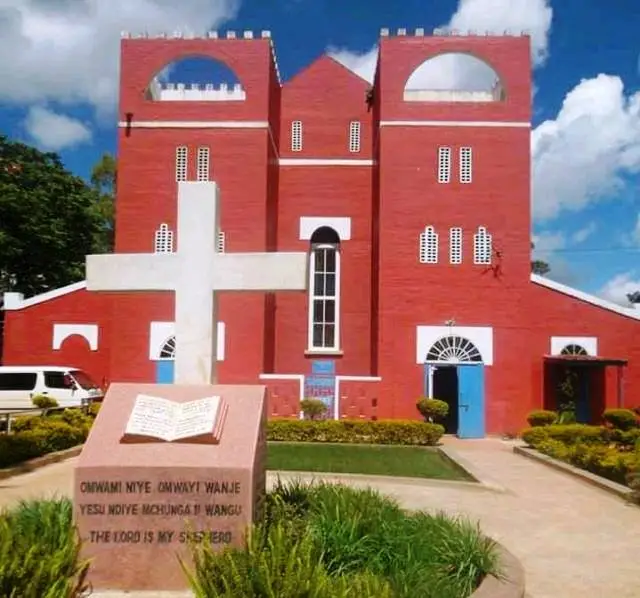
Interestingly, the Abamutete also embraced aspects of modernity, including Western religion and education. Kima, their cultural and political hub, became the headquarters of the Church of God Mission in East Africa, earning the clan the moniker Abasungu (whites) and their territory Ebusungu (white man’s land). This association with Western missions contributed to both admiration and suspicion.

Their embrace of foreign institutions and values—especially during colonial and missionary eras—fueled perceptions of them as duplicitous, modern yet detached from authentic Nyole identity. Their rise in colonial structures was often reframed as manipulation rather than merit, adding to their image as controversial figures within Ebunyole history.


Conclusion: Abamutete as a Mirror of Nyole Paradox

The story of the Abamutete is deeply entwined with the history of power, ritual, and cultural performance among the Abanyole. Represented at times as tricksters, at others as victims, the Abamutete occupy a liminal space—not fully embraced by dominant Nyole narratives, yet impossible to erase.

Their story is critical for understanding:

  • Inter-clan rivalries in Western Kenya
  • The entanglement of colonial power with local politics
  • The symbolic framing of gender and morality in oral traditions

Ultimately, the Abamutete are a lens through which one can explore broader questions of identity, belonging, and narrative control in African societies.

Tags: Abamutete Clan of the Abanyole
Google Add as a Preferred Source on Google
Previous Post

The Bukusu Sub-Tribe: Origins, Clans, and Cultural Heritage

Next Post

The Abachitwa Clan of the Abanyole: Ancestry, Identity, and Disputed Belonging

NyongesaSande News Desk

NyongesaSande News Desk

Nyongesa Sande offers diverse content across news, technology, entertainment, and more, aiming to provide readers with a wide range of informative and engaging articles. NYONGESA SANDE's dedicated team provides our audience not only with the highly relevant news but also with outstanding interactive experience.

Related Posts

Memorial marker in Ngong Forest marking the spot where J.M. Kariuki’s body was found in 1975.
African History

The Ngong Forest Site Where J.M. Kariuki’s Body Was Found

by NyongesaSande News Desk
1 month ago
0

Deep inside Ngong Forest stands a modest memorial marker marking one of the most painful...

Read moreDetails
Historic image associated with Kenya’s notorious Three Musketeers criminal gang of the 1990s.
African History

The Story of Kenya’s Infamous “Three Musketeers” Gang

by NyongesaSande News Desk
1 month ago
0

This is The Story of Kenya’s Infamous “Three Musketeers” Gang. During the 1990s, few names...

Read moreDetails
Historic image of Jomo Kenyatta lying in state after his death in August 1978.
African History

Kenya Remembers Jomo Kenyatta 48 Years After His Death

by NyongesaSande News Desk
1 month ago
0

It has been 48 years since Kenya entered one of the most emotional moments in...

Read moreDetails
Young Julius Malema during his early years in student politics in South Africa.
African History

How Julius Malema Rose Through Student Politics

by NyongesaSande News Desk
1 month ago
0

Long before becoming one of South Africa’s most recognizable and controversial political figures, Julius Malema...

Read moreDetails
Historic image showing Jomo Kenyatta, Daniel arap Moi and Mwai Kibaki together during a public event in Kenya.
African History

Rare Photo Captures Kenya’s First Three Presidents Together

by NyongesaSande News Desk
1 month ago
0

A rare and iconic photograph bringing together Kenya’s first three presidents — Jomo Kenyatta, Daniel...

Read moreDetails
Jomo Kenyatta sitting in a garden reading in Highover Storrington, England in 1939.
African History

Rare 1939 Photo Shows Jomo Kenyatta in England Garden

by NyongesaSande News Desk
1 month ago
0

A rare 1939 photograph of Jomo Kenyatta sitting quietly in a garden at Highover, Storrington...

Read moreDetails
Load More
Next Post
The Abachitwa Clan of the Abanyole: Ancestry, Identity, and Disputed Belonging

The Abachitwa Clan of the Abanyole: Ancestry, Identity, and Disputed Belonging

Complete Guide to some of  Banyore Clans in Kenya

The Abayingu Clan of the Abanyole: History, Identity, and Liminal Belonging

ADVERTISEMENT

Who We Are

Nyongesa Sande

NyongesaSande.com is a digital news and media platform covering breaking news, business, technology, AI, politics, sports, world affairs and African innovation.

News Sections

  • News
    • World
    • Africa
  • Politics
  • Business
  • Tech
  • AI
  • Telecom
  • Sports
  • Opinion
  • Lifestyle
  • Live

Editorial Standards

  • Editorial Policy
  • Fact Checking Policy
  • Corrections Policy
  • Ethics Policy
  • AI Usage Policy
  • News Tips
  • Submit Press Release

Legal

  • Privacy Policy
  • Terms of Use
  • Cookie Policy
  • Disclaimer
  • Risk Disclaimer
  • DMCA
  • Ad Choices

Our Company

  • About Us
    • Nyosake Designers
      • Nyosake Webmasters
      • Nyosake Investment
  • Contact Us
    • Newsroom Contact
  • Ownership Disclosure
  • Advertise
  • Privacy Policy
  • Terms of Use
  • Cookie Policy
  • Disclaimer
  • Risk Disclaimer
  • DMCA
  • Ad Choices

NyongesaSande.com is an independent digital news and media platform covering Africa, business, technology, AI, politics and global developments.

© 2026 NyongesaSande.com. All rights reserved.

No Result
View All Result
  • News
    • World
    • Africa
  • Politics
  • Business
  • Tech
  • AI
  • Telecom
  • Sports
  • Opinion
  • Lifestyle
  • Live

NyongesaSande.com is an independent digital news and media platform covering Africa, business, technology, AI, politics and global developments.

© 2026 NyongesaSande.com. All rights reserved.