


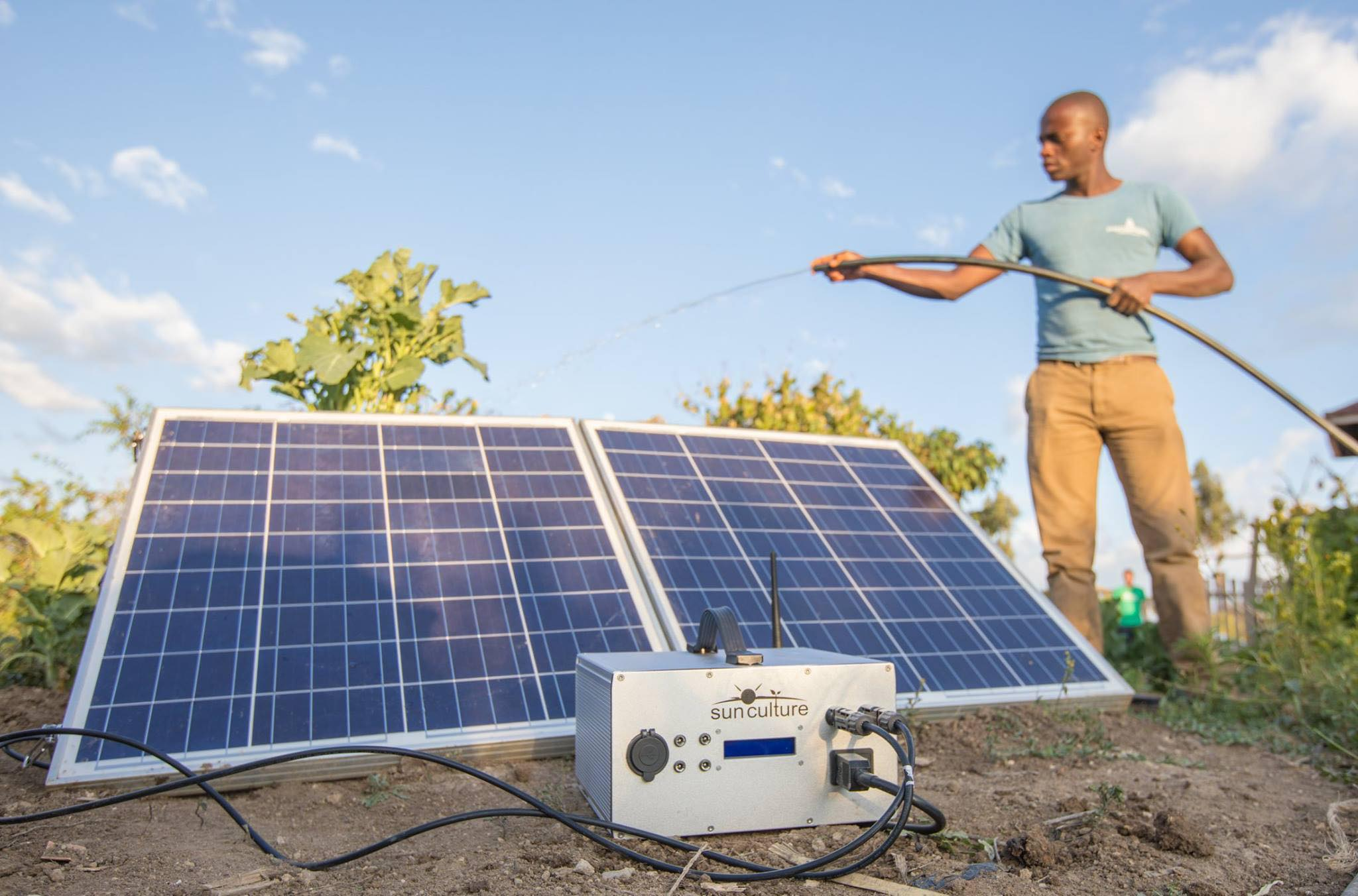
SunCulture funding has become an important case study in African agritech, climate technology, and farmer finance. Founded in Nairobi in 2012, SunCulture designs, manufactures, sells, and distributes solar-powered irrigation systems for smallholder farmers. Its core promise is simple: help farmers make more money by giving them affordable access to water, productive assets, and financing.
The company operates across agriculture, Internet of Things, software, finance, agribusiness, renewable energy, irrigation, and climate technology. Its model combines solar hardware, pay-as-you-go financing, data systems, and farmer services. That mix makes SunCulture more than a solar pump company. It is building a platform around productive-use energy for agriculture.
SunCulture’s funding history includes seed capital, Series A and Series B investment, debt funding, equity funding, grants, and climate-focused financing. Investors include WaterEquity, British International Investment, Acumen, InfraCo Africa, EDF Group, The Schmidt Family Foundation, Equator VC, Nithio, Acumen Resilient Agriculture Fund, Electrification Financing Initiative, Lion’s Head Global Partners, AlphaMundi, African Development Bank, Triodos Investment Management, SunFunder, Dream Project, E3 Capital, Aster Capital, Partners Group, BloombergNEF, and Hesabu Capital.
The company’s funding journey matters because smallholder farmers face a difficult financial equation. They need irrigation to grow higher-value crops, but many cannot afford productive assets upfront. SunCulture’s strategy is to close that gap by combining solar irrigation with flexible financing.
What Is SunCulture?
SunCulture is a Kenyan agritech and climate technology company focused on solar-powered irrigation for smallholder farmers. The company’s products help farmers access water for irrigation, reduce dependence on rain-fed agriculture, and grow higher-value crops.
Its solution is built around a practical farming problem. Many smallholder farmers rely on rainfall, which limits planting cycles and exposes them to drought risk. With irrigation, farmers can produce more consistently, grow fresh fruits and vegetables, and improve income potential.
SunCulture’s model also includes financing. The company recognized that even when solar irrigation is cheaper over time, many farmers cannot afford to buy systems upfront. Its pay-as-you-go approach allows farmers to pay in smaller installments, making productive assets more accessible.
The company is associated with Samir Ibrahim and is listed as being based in Nairobi, Kenya. Its broader vision is tied to a major development challenge: helping farmers move from low-income, rain-fed farming toward more productive, climate-resilient agriculture.
Why SunCulture Funding Matters
SunCulture funding matters because agriculture remains central to African livelihoods, but farmer financing remains deeply underserved. A large share of Africa’s workforce depends on agriculture, yet formal bank lending to the sector remains limited compared with its economic importance.
This creates a structural problem. Farmers need capital to buy irrigation systems, inputs, equipment, and services. But lenders often view smallholder agriculture as risky because of weather shocks, limited collateral, uncertain crop prices, and irregular income.
SunCulture tries to solve this problem by bundling technology and finance. Solar irrigation gives farmers access to water. Financing makes the system affordable. Digital tools and service support help manage the customer relationship.
This is why investors are backing SunCulture. The company sits at the intersection of several major themes:
| Theme | Why It Matters |
|---|---|
| Food Security | Irrigation can help farmers produce more food and reduce dependence on rainfall. |
| Climate Resilience | Solar-powered irrigation can help farmers adapt to drought and changing rainfall patterns. |
| Renewable Energy | Solar pumps reduce dependence on diesel-powered irrigation. |
| Farmer Finance | Pay-as-you-go models make productive assets more affordable. |
| Rural Incomes | Higher-value crops can improve farmer earnings when markets are accessible. |
| Water Access | Irrigation systems improve access to water for productive use. |
SunCulture funding therefore supports both a business model and a wider agricultural transition.
Full List of SunCulture Funding and Investor Activity
SunCulture’s funding history includes equity, debt, grants, Series A, Series B, and climate-focused capital. Some amounts are disclosed, while others are not publicly available.
| Investor | Announced Date | Amount | Main Category | Strategic Value |
| WaterEquity | Sep 2025 | $5M | Series B / Climate Finance | Supports expansion of solar-powered irrigation and water access for smallholder farmers. |
| British International Investment | Feb 2025 | $4M | Equity Funding | Supports productive-use renewable energy and climate-smart farming. |
| Acumen | Apr 2024 | Undisclosed | Series B | Supports inclusive agritech growth and farmer impact. |
| InfraCo Africa | Apr 2024 | Undisclosed | Series B | Supports infrastructure-linked expansion and climate resilience. |
| EDF Group | Apr 2024 | Undisclosed | Series B | Adds energy-sector expertise and follow-on support. |
| The Schmidt Family Foundation | Apr 2024 | Undisclosed | Series B | Supports climate technology and environmental impact. |
| Equator VC | Apr 2024 | Undisclosed | Series B | Supports African climate-tech and agritech growth. |
| Nithio Holdings | Sep 2023 | $12M Debt Facility | Debt Funding | Supports inventory and receivables financing for productive-use renewable energy products. |
| Acumen Resilient Agriculture Fund | Nov 2022 | Undisclosed | Debt Funding | Supports climate-resilient agriculture financing. |
| Electrification Financing Initiative | Nov 2022 | Undisclosed | Debt Funding | Supports productive-use energy access and farmer financing. |
| Lion’s Head Global Partners | Feb 2021 | Undisclosed | Debt Funding | Supports asset finance and working capital. |
| AlphaMundi | Feb 2021 | Undisclosed | Debt Funding | Supports impact-focused farmer finance. |
| African Development Bank | Feb 2021 | Undisclosed | Debt Funding | Supports agriculture and renewable energy access. |
| Triodos Investment Management | Feb 2021 | Undisclosed | Debt Funding | Supports sustainable agriculture and impact finance. |
| SunFunder | Feb 2021 | Undisclosed | Debt Funding | Supports solar energy and productive-use finance. |
| Dream Project | Dec 2020 | Undisclosed | Series A | Supports early growth and market expansion. |
| Électricité de France | Dec 2020 | Undisclosed | Series A | Adds energy-sector backing. |
| E3 Capital | Dec 2020 | Undisclosed | Series A | Supports African climate-tech growth. |
| Acumen Capital Finance Partners | Dec 2020 | Undisclosed | Series A | Supports inclusive asset finance and farmer growth. |
| E3 Capital | Apr 2017 | Undisclosed | Seed | Supports early-stage climate and energy access growth. |
| Aster Capital | Apr 2017 | Undisclosed | Seed | Adds early venture support. |
| Partners Group | Apr 2017 | Undisclosed | Seed | Supports early-stage company development. |
| BloombergNEF | Apr 2017 | Undisclosed | Grant | Supports recognition and early climate-tech validation. |
| Hesabu Capital | Not specified | Undisclosed | Equity Funding | Supports company growth and agritech expansion. |
SunCulture Funding Timeline
2012: Founded in Nairobi
SunCulture was founded in Nairobi in 2012. Its early mission focused on helping smallholder farmers increase income through solar-powered irrigation.
This starting point matters because irrigation is one of the most direct ways to improve farm productivity. Farmers who rely only on rainfall may be limited to fewer growing cycles and lower-value crops. Irrigation can allow them to grow more consistently and target higher-value fresh produce.
2017: Seed Funding and Early Climate-Tech Recognition
In April 2017, SunCulture attracted seed-stage support from investors including E3 Capital, Aster Capital, and Partners Group. It also received grant support linked to BloombergNEF.
This early period helped validate SunCulture’s approach. Solar irrigation was still an emerging category in many African markets, and the company needed capital to develop products, build distribution, and prove demand.
2020: Series A Growth Capital
In December 2020, SunCulture secured Series A support from Dream Project, Électricité de France, E3 Capital, and Acumen Capital Finance Partners.
This stage helped the company move beyond early product validation toward broader commercial expansion. It also brought energy and impact investors into the business, reinforcing SunCulture’s identity as both an agritech and renewable energy company.
2021: Debt Funding for Asset Finance
In February 2021, SunCulture attracted debt funding from Lion’s Head Global Partners, AlphaMundi, African Development Bank, Triodos Investment Management, and SunFunder.
This debt funding was strategically important because SunCulture’s model depends on financing productive assets. Farmers often need irrigation systems before they generate additional income. Debt capital helps bridge that gap by supporting customer financing, inventory, and receivables.
2022: Climate-Resilient Agriculture Debt
In November 2022, SunCulture attracted debt funding from Acumen Resilient Agriculture Fund and the Electrification Financing Initiative.
This funding aligned with SunCulture’s climate resilience strategy. Solar-powered irrigation helps farmers reduce dependence on rainfall while avoiding the fuel costs and emissions associated with diesel pumps.
2023: $12 Million Debt Facility
In September 2023, Nithio Holdings participated in a $12 million syndicated debt facility for SunCulture. The facility was designed to finance inventory and receivables for SunCulture’s Kenyan subsidiary across productive-use renewable energy products, appliances, and irrigation equipment.
This was a major funding milestone because it supported the financial engine behind the business. SunCulture needs capital not only to sell products but to finance them over time.
2024: $27.5 Million Series B
In April 2024, SunCulture raised a $27.5 million Series B round. Investors included Acumen, InfraCo Africa, EDF Group, The Schmidt Family Foundation, Equator VC, and others.
The round gave SunCulture capital to accelerate expansion, deepen innovation, and strengthen its climate technology platform. It also showed strong investor confidence in solar irrigation as a solution for smallholder farmers.
2025: BII and WaterEquity Back Expansion
In February 2025, British International Investment provided $4 million in equity funding to SunCulture. In September 2025, WaterEquity invested $5 million to expand solar-powered irrigation and water access.
These two funding events show that investors continue to see value in SunCulture’s model. They also show growing interest in the connection between water access, climate resilience, farmer income, and renewable energy.
Biggest SunCulture Funding Rounds by Deal Value
SunCulture’s largest disclosed funding events include a mix of equity, Series B, and debt funding.
| Rank | Funding Event | Announced Date | Deal Value | Strategic Area |
| 1 | Series B Round | Apr 2024 | $27.5M | Expansion, climate technology, solar irrigation, and product innovation |
| 2 | Syndicated Debt Facility | Sep 2023 | $12M | Inventory, receivables, and productive-use renewable energy financing |
| 3 | WaterEquity Investment | Sep 2025 | $5M | Solar-powered irrigation and water access expansion |
| 4 | British International Investment Equity Funding | Feb 2025 | $4M | Productive-use energy and climate-smart agriculture |
| 5 | Earlier Seed, Series A, Grant, and Debt Rounds | 2017–2022 | Undisclosed | Product validation, farmer financing, and market expansion |
The $27.5 million Series B is the company’s largest disclosed equity-style funding milestone. The $12 million debt facility is also important because it directly supports the asset-financing side of the business.
Most Common Funding Categories
SunCulture’s funding mix reflects the realities of agritech, asset finance, and climate technology.
| Funding Category | Examples of Investors | Strategic Role |
| Series B | WaterEquity, Acumen, InfraCo Africa, EDF Group, The Schmidt Family Foundation, Equator VC | Supports expansion, innovation, and climate-smart agriculture. |
| Equity Funding | British International Investment, Hesabu Capital | Supports company growth and productive-use energy. |
| Debt Funding | Nithio, ARAF, Electrification Financing Initiative, Lion’s Head, AlphaMundi, AfDB, Triodos, SunFunder | Supports inventory, receivables, and farmer financing. |
| Series A | Dream Project, EDF, E3 Capital, Acumen Capital Finance Partners | Supports early commercial expansion. |
| Seed | E3 Capital, Aster Capital, Partners Group | Supports early product development and market validation. |
| Grant | BloombergNEF | Supports recognition, validation, and early innovation. |
The common theme is clear: SunCulture uses different forms of capital for different needs. Equity supports growth and innovation. Debt supports financing products for farmers. Grants and early-stage capital support experimentation and market creation.
Strategic Lessons From SunCulture Funding
Productive Assets Need Financing
SunCulture funding shows that agricultural technology is not only about building a useful product. Farmers must be able to afford it.
A solar irrigation system can improve income, but the farmer may not have enough cash to buy it upfront. Pay-as-you-go and asset finance models help solve that problem.
Water Access Is an Income Strategy
For smallholder farmers, water access can change the economics of farming. Irrigation can allow farmers to grow higher-value crops, plant outside normal rainy seasons, and reduce climate risk.
That is why SunCulture’s model is tied directly to income growth. The company’s central claim is that it helps farmers make more money.
Solar Irrigation Connects Energy and Agriculture
SunCulture sits between two major sectors: renewable energy and agriculture. Solar power makes irrigation cheaper and cleaner than diesel-based alternatives. Irrigation makes farming more productive and resilient.
This combination makes the company attractive to energy investors, agritech investors, and impact investors.
Debt Is as Important as Equity
Many startup stories focus on venture capital. SunCulture’s history shows that debt funding can be just as important for asset-heavy businesses.
Debt facilities help finance inventory and receivables. Without this capital, a company may have strong demand but limited ability to serve farmers.
How SunCulture Funding Fits Its Business Model
SunCulture’s business model depends on three connected components: solar irrigation products, farmer financing, and support services.
The company designs and distributes irrigation systems that use solar power. These systems help farmers access water for crops without relying on expensive fuel. But the product alone is not enough. Farmers need financing, training, installation support, after-sales service, and sometimes input bundles.
Funding supports all these elements.
Equity capital helps SunCulture grow its team, improve technology, expand into new markets, and build stronger products. Debt capital helps finance inventory and receivables. Impact capital supports the company’s mission to increase farmer income and improve climate resilience.
This funding structure fits the reality of smallholder agriculture. Farmers earn seasonally. They need assets before they generate returns. Financing must match that income cycle.
Financial and Ownership Context
SunCulture is a private company, so its full financial statements are not publicly available. However, its funding history shows a company that has attracted serious capital across venture, climate, development finance, and debt markets.
The $27.5 million Series B round in 2024 placed SunCulture among the better-funded African climate-tech companies in its category. The $12 million debt facility in 2023 showed that lenders were willing to support its inventory and receivables model. The 2025 investments from British International Investment and WaterEquity further reinforced the company’s climate and water-access credentials.
This financial context matters because SunCulture is not a lightweight software startup. It sells and finances physical assets. That means it must manage inventory, credit risk, customer repayment, product quality, and field operations.
The company’s funding history suggests that investors understand this complexity and are backing a model that combines technology with real-world agricultural infrastructure.
Competitive Impact of SunCulture Funding
SunCulture funding improves the company’s competitive position in several ways.
First, it gives SunCulture more capital to finance irrigation systems for farmers. In this market, financing capacity is a major advantage because many farmers cannot pay upfront.
Second, funding helps the company manage inventory. Solar pumps, irrigation systems, appliances, and related equipment must be available when farmers need them.
Third, investor backing improves credibility. Farmers, suppliers, partners, and lenders are more likely to work with a company supported by recognized institutions.
Fourth, funding supports product development. SunCulture operates in IoT, software, and finance as well as agriculture, so technology investment is important.
Finally, its funding base helps it compete against both traditional irrigation suppliers and newer climate-tech companies. A business that can offer hardware, financing, service, and data has a stronger proposition than one selling equipment alone.
Advantages of the Funding Strategy
Strong Alignment With Farmer Income
SunCulture’s funding supports a product that can directly improve farmer productivity. This gives the business a clear link between customer value and commercial growth.
Flexible Capital Mix
The company uses equity, debt, grants, and impact capital. This mix helps match different funding sources to different business needs.
Climate Resilience Appeal
Solar irrigation is attractive to climate-focused investors because it helps farmers adapt to drought and changing rainfall while reducing reliance on fossil fuels.
Strong Development Impact
The model targets smallholder farmers, water access, food production, rural income, and renewable energy. That makes it attractive to development finance institutions.
Scalable Asset Finance Model
Pay-as-you-go financing can help SunCulture reach farmers who would otherwise be unable to afford irrigation systems.
Disadvantages of the Funding Strategy
Credit Risk
Farmer repayment can be affected by weather, crop disease, market prices, household income needs, and harvest timing.
Operational Complexity
SunCulture must manage product distribution, installation, customer training, financing, repayment collection, and after-sales service.
Water Resource Risk
Irrigation depends on available water sources. In some areas, water scarcity or poor water management can limit impact.
Inventory and Supply Chain Pressure
Hardware businesses need reliable supply chains. Delays, currency changes, or equipment cost increases can affect margins and delivery.
Market Education Costs
Some farmers may need education on solar irrigation, financing terms, crop choices, and maintenance. This can increase customer acquisition and support costs.
Case Studies of Major SunCulture Funding Events
$27.5 Million Series B Round
The April 2024 Series B round was a major milestone for SunCulture. It attracted investors including Acumen, InfraCo Africa, EDF Group, The Schmidt Family Foundation, Equator VC, and others.
This round strengthened SunCulture’s ability to expand its technology platform, scale operations, and support more farmers. It also signaled investor confidence in the broader market for climate-smart agricultural technology.
$12 Million Debt Facility
The September 2023 debt facility was important because it targeted inventory and receivables. This is central to SunCulture’s model.
A farmer may receive a solar irrigation system and pay over time. SunCulture still needs capital upfront to supply the product. Debt financing helps bridge that gap and makes pay-as-you-go growth possible.
WaterEquity’s $5 Million Investment
WaterEquity’s $5 million investment in 2025 focused on expanding solar-powered irrigation and water access. This is strategically significant because water access is at the heart of SunCulture’s value proposition.
The investment also connects SunCulture to a wider climate and water resilience theme, which is increasingly important for agriculture investors.
British International Investment’s $4 Million Equity Funding
British International Investment’s $4 million equity funding in 2025 added development finance support to SunCulture’s growth. BII’s involvement matters because the company’s model combines commercial growth with rural impact, climate adaptation, and productive-use energy.
Common Mistakes When Analyzing SunCulture Funding
Treating SunCulture as Only a Solar Pump Seller
SunCulture sells solar-powered irrigation systems, but its business also depends on financing, software, IoT, customer service, and agricultural support.
Ignoring Farmer Affordability
The best irrigation technology will not scale if farmers cannot afford it. Financing is central to the business model.
Overlooking Debt Funding
Debt facilities can be more important than equity in asset-finance businesses. They help fund inventory and receivables.
Assuming Irrigation Alone Guarantees Higher Income
Irrigation helps, but income also depends on crop choice, market access, input quality, farmer training, and water availability.
Underestimating Field Operations
Serving smallholder farmers requires strong local operations. Installation, maintenance, education, and repayment support all affect success.
Lessons for Business Owners and Investors
SunCulture offers several lessons for entrepreneurs and investors.
First, strong businesses often solve a specific economic problem. SunCulture focuses on helping farmers make more money, not simply selling climate technology.
Second, financing can be part of the product. A solar irrigation system becomes more valuable when farmers can pay for it in a way that matches their income cycle.
Third, climate adaptation can be commercially practical. Farmers need resilience because rainfall is uncertain. Irrigation is a direct adaptation tool.
Fourth, hardware businesses need patient capital. Product development, supply chains, inventory, and receivables all require funding.
Finally, agricultural transformation needs bundled solutions. Farmers often need equipment, finance, inputs, services, and market access together.
Key Takeaways
- SunCulture is a Nairobi-based agritech and climate-tech company founded in 2012.
- The company designs and distributes solar-powered irrigation systems for smallholder farmers.
- SunCulture funding includes seed, Series A, Series B, debt, equity, and grant capital.
- Its largest disclosed round is the $27.5 million Series B announced in April 2024.
- WaterEquity invested $5 million in September 2025.
- British International Investment provided $4 million in equity funding in February 2025.
- Nithio participated in a $12 million syndicated debt facility in September 2023.
- The company’s model combines solar irrigation, farmer finance, IoT, software, and agribusiness services.
- Pay-as-you-go financing is central to making irrigation affordable for farmers.
- SunCulture’s strategy supports food security, climate resilience, renewable energy, and rural income growth.
- The company faces risks from credit performance, operations, water access, supply chains, and farmer market outcomes.
- SunCulture funding shows how climate-tech companies can combine hardware, finance, and impact capital.
Frequently Asked Questions
What is SunCulture?
SunCulture is a Kenyan agritech and climate technology company that designs, manufactures, sells, and distributes solar-powered irrigation systems for smallholder farmers.
What does SunCulture do?
SunCulture helps farmers access solar irrigation, financing, and related services so they can grow more productive and higher-value crops.
When was SunCulture founded?
SunCulture was founded in 2012.
Where is SunCulture based?
SunCulture is based in Nairobi, Kenya.
What is SunCulture funding?
SunCulture funding refers to the capital raised by the company from equity investors, debt providers, grant makers, and climate finance institutions to support solar irrigation and farmer finance.
How much did SunCulture raise in its Series B?
SunCulture raised $27.5 million in a Series B round announced in April 2024.
Who invested in SunCulture’s Series B?
Investors in SunCulture’s Series B included Acumen, InfraCo Africa, EDF Group, The Schmidt Family Foundation, Equator VC, and others.
What was WaterEquity’s investment in SunCulture?
WaterEquity invested $5 million in SunCulture in September 2025 to expand solar-powered irrigation and water access for smallholder farmers.
What was the Nithio debt facility?
Nithio participated in a $12 million syndicated debt facility in September 2023 to help SunCulture finance inventory and receivables for productive-use renewable energy products.
Why is SunCulture important for farmers?
SunCulture is important because irrigation can help farmers reduce dependence on rainfall, grow higher-value crops, and potentially improve income.
What are the risks facing SunCulture?
The main risks include farmer credit risk, operational complexity, water availability, supply chain pressure, market access challenges, and repayment uncertainty.
Conclusion
SunCulture funding shows how agritech, renewable energy, and farmer finance can come together to solve a practical problem: smallholder farmers need affordable access to water and productive assets. Founded in Nairobi in 2012, SunCulture has built its business around solar-powered irrigation systems that help farmers reduce dependence on rainfall and grow higher-value crops.
The company’s funding history reflects the complexity of this mission. It has raised equity, debt, grants, and climate-focused capital from investors including WaterEquity, British International Investment, Acumen, InfraCo Africa, EDF Group, Equator VC, Nithio, SunFunder, Triodos, African Development Bank, and others. Its $27.5 million Series B in 2024, $12 million debt facility in 2023, and 2025 investments from BII and WaterEquity show growing confidence in solar irrigation as a serious climate and agriculture solution.
The opportunity is significant, but execution matters. SunCulture must manage farmer financing, repayment risk, water availability, supply chains, installation, support, and market outcomes. Still, its funding journey offers a powerful lesson for business leaders and investors: the most valuable climate-tech companies are often those that help customers earn more, not just reduce emissions.
Disclaimer: This article is for informational and educational purposes only. It is not investment advice, financial advice, or a recommendation to buy or sell any security. Always conduct your own research and consider speaking with a qualified financial adviser before making investment decisions.
Read Also: Kasha Funding: How Kasha Built Its Women’s Health Commerce Platform


