Sun King funding reflects one of the most important shifts in the global clean energy market: the rise of off-grid solar as a practical solution for households and businesses that cannot rely on traditional electricity grids.
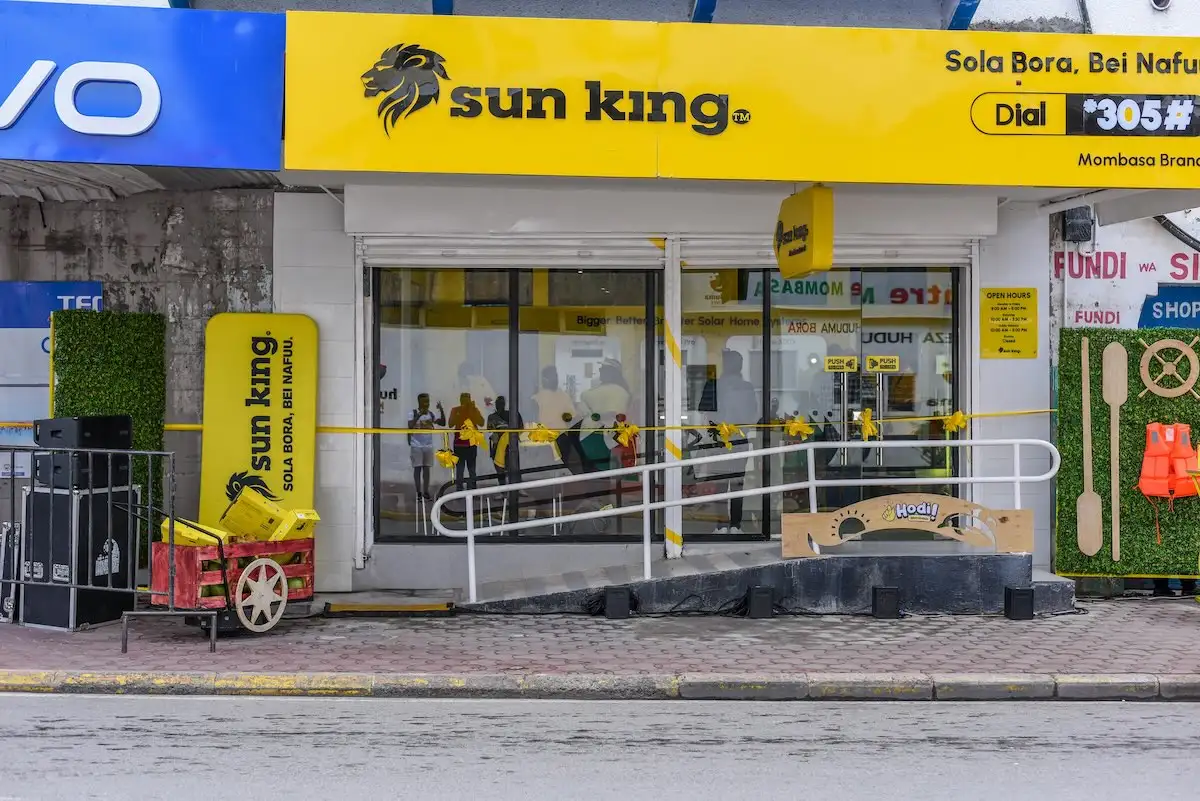
Founded in 2007, Sun King provides solar energy products and financing solutions across Africa, Asia, and beyond. The company operates in energy, lighting, renewable energy, clean energy, consumer products, and solar-powered financial access. Its mission is built around powering access to brighter lives through affordable energy products.
Sun King has raised more than $77 million from 26 investors in the supplied company profile, with known investor participation from Absa Group, FMO, and British International Investment in July 2025. Public financing reports also show that Sun King closed a major $156 million Kenyan-shilling securitisation in 2025 to expand pay-as-you-go solar access in Kenya.
The company’s funding story matters because Sun King is not only selling solar panels or lanterns. It is combining product design, consumer finance, distribution, credit, and renewable energy infrastructure to reach customers who often lack formal electricity access.
What Is Sun King?
Sun King is a clean energy company founded in 2007. It designs, distributes, finances, and supports solar-powered products for households and businesses, especially in underserved markets.
The company is strongly associated with off-grid solar. This means it serves customers who may not have reliable access to a national electricity grid or who cannot afford traditional energy connections. Its products can include solar lanterns, solar home systems, energy-efficient appliances, and related energy access products.
Sun King’s business model is closely tied to pay-as-you-go financing. Under this model, customers can access solar products through small payments over time instead of paying the full cost upfront. This is important in low-income and rural markets where many households need clean energy but cannot make large one-time purchases.
The company is listed as being based in Nairobi, Kenya, and was founded in 2007. Its market reach extends across Africa, Asia, and beyond, placing it among the most prominent companies in distributed solar energy.
Why Sun King Funding Matters
Sun King funding matters because energy access remains one of the biggest barriers to economic development. Without reliable electricity, households rely on expensive and polluting fuels. Children struggle to study at night. Small businesses face higher operating costs. Clinics, shops, and homes operate with limited energy security.
Traditional grid expansion is important, but it can be slow and expensive. Off-grid solar offers a complementary solution. It allows households and businesses to access power without waiting for grid infrastructure to arrive.
Funding is central to this model. Solar products require manufacturing, inventory, distribution, customer support, and financing. If customers pay over time, the company must also fund the receivables created by those payment plans. That is why securitisation, working capital facilities, and development finance are so important in Sun King’s business.
In simple terms, Sun King funding helps convert future customer payments into upfront capital that can finance more solar products today. This allows the company to reach more people while keeping products affordable.
Full List of Sun King Funding and Investor Activity
The supplied company profile lists Sun King as having raised more than $77 million from 26 investors. Recent named investors include Absa Group, FMO, and British International Investment. Public reports also show broader financing participation in the July 2025 Kenyan securitisation.
| Investor | Announced Date | Amount | Main Category | Strategic Value |
|---|---|---|---|---|
| Absa Group | Jul 2025 | Undisclosed | Commercial Bank / Securitisation | Supports pay-as-you-go solar receivables financing and clean energy expansion. |
| FMO | Jul 2025 | Undisclosed | Development Finance | Supports climate-aligned and inclusive solar access financing. |
| British International Investment | Jul 2025 | Undisclosed | Development Finance | Supports off-grid solar growth and energy access in underserved communities. |
| Citi | Jul 2025 | Undisclosed | Commercial Bank / Structuring | Helps structure and fund Sun King’s securitisation transaction. |
| Co-operative Bank of Kenya | Jul 2025 | Undisclosed | Commercial Bank | Supports local financing for solar product access in Kenya. |
| KCB Bank Kenya | Jul 2025 | Undisclosed | Commercial Bank | Supports consumer energy financing through securitised receivables. |
| Stanbic Bank Kenya | Jul 2025 | Undisclosed | Commercial Bank / Placement Agent | Supports placement and working capital financing for Sun King’s Kenya operations. |
| Norfund | Jul 2025 | Undisclosed | Development Finance | Supports mezzanine financing for clean energy access. |
The July 2025 transaction stands out because it was structured in Kenyan shillings and designed to finance solar access at scale. It also brought together commercial banks and development finance institutions, showing how blended finance can support clean energy growth.
Sun King Funding Timeline
2007: Founded to Expand Solar Access
Sun King was founded in 2007 with a focus on clean and affordable energy. At the time, off-grid solar was still developing as a commercial sector. Many households in underserved markets relied on kerosene, candles, batteries, diesel, or unreliable grid power.
The company entered the market with a product-led approach. It focused on energy solutions that could be useful for everyday households and small businesses.
Early Growth: Building a Consumer Solar Platform
As Sun King expanded, it built a business around solar lighting, home systems, appliances, and customer finance. This was an important shift. Selling a solar product once is different from building a financing platform that allows customers to pay over time.
Pay-as-you-go solar made the company’s model more scalable. It allowed customers to access energy even if they could not afford upfront costs. It also created recurring payment streams that could be financed by institutional investors.
2022: Large-Scale Equity Growth
Public reports show that Sun King closed a major Series D equity round in 2022 with participation from private equity investors including General Atlantic, M&G, and LeapFrog. This helped strengthen the company’s growth profile and supported its expansion as a leading off-grid solar business.
This period was important because it showed that off-grid solar had moved beyond early experimentation. It had become a serious infrastructure and consumer finance market.
July 2025: Absa, FMO, and BII Join Recent Funding Activity
In July 2025, the supplied company profile lists Absa Group, FMO, and British International Investment among Sun King’s recent investors. This aligns with the company’s broader financing strategy around pay-as-you-go receivables, clean energy access, and local-currency funding.
These investors are important because they represent both commercial banking and development finance. That combination helps Sun King finance solar products while also supporting energy access and climate goals.
July 2025: $156 Million Kenyan-Shilling Securitisation
Sun King announced a $156 million Kenyan-shilling securitisation in July 2025. The deal was backed by commercial banks including Absa, Citi, Co-operative Bank of Kenya, KCB Bank Kenya, and Stanbic Bank Kenya. Development finance institutions including British International Investment, FMO, and Norfund provided mezzanine support.
The transaction was expected to finance about 1.4 million solar products and smartphones in Kenya. It was also described as a landmark deal for off-grid solar financing in Sub-Saharan Africa outside South Africa.
Biggest Sun King Funding Rounds by Deal Value
Some Sun King investor entries in the supplied profile do not disclose individual amounts. However, public financing information highlights several major capital events.
| Rank | Funding Event | Announced Date | Deal Value | Strategic Area |
| 1 | Kenyan-shilling securitisation | Jul 2025 | $156M | Pay-as-you-go solar receivables and product financing |
| 2 | Series D equity round | 2022 | $330M | Global off-grid solar expansion and growth capital |
| 3 | Working capital facility | Jul 2025 | $20M | Inventory, product delivery, and customer access support |
| 4 | F6S-listed investor funding | Various | Over $77M | Clean energy, consumer solar, and renewable energy expansion |
The biggest reported capital events show how Sun King combines equity, securitisation, and working capital financing. This is different from a typical startup funding path. Sun King needs capital for physical products, customer financing, inventory, and long-term receivables.
Most Common Funding Categories
Sun King’s funding profile is shaped by clean energy infrastructure, consumer finance, and development impact.
| Funding Category | Role in Sun King’s Business |
| Equity Funding | Supports company growth, expansion, teams, and technology. |
| Securitisation | Converts customer receivables into capital for more solar product financing. |
| Working Capital | Helps purchase inventory and deliver products to customers. |
| Development Finance | Supports energy access, inclusion, and climate goals. |
| Commercial Bank Funding | Brings private capital into off-grid solar and PAYGo financing. |
This funding mix is essential because Sun King’s model requires both product capital and financing capital. Customers need energy products, but many also need payment flexibility. Investors fund the bridge between product delivery and customer repayment.
Strategic Lessons From Sun King Funding
Consumer Finance Can Unlock Energy Access
One of the biggest lessons from Sun King funding is that affordability is often as important as technology. Solar products may be cheaper over time than kerosene or diesel, but many customers still cannot pay the full cost upfront.
Pay-as-you-go financing solves this problem by spreading payments over time. That makes clean energy more accessible and creates a large financing opportunity.
Local-Currency Funding Matters
The July 2025 securitisation was denominated in Kenyan shillings. This matters because customers typically pay in local currency. If a company borrows in foreign currency but earns in local currency, exchange-rate risk can become a serious problem.
Local-currency funding can make the business model more stable and better aligned with customer payments.
Blended Finance Can Mobilize Commercial Capital
Sun King’s financing structure includes both commercial banks and development finance institutions. This is important because DFIs can help reduce risk, while commercial banks bring larger pools of private capital.
This blended model can make clean energy investment more scalable.
Off-Grid Solar Is Both a Product and Finance Business
Sun King is not simply a solar product company. It is also a consumer finance platform. The company must manage inventory, sales, installation, customer payments, credit risk, and receivables.
That makes funding strategy central to its competitive position.
How Sun King Funding Fits Its Business Model
Sun King’s business model depends on giving customers access to solar products they can afford. For many households and small businesses, affordability depends on financing.
This is where funding becomes critical.
When Sun King provides a pay-as-you-go product, it may collect customer payments over time. But the company still needs to pay for product manufacturing, distribution, sales, logistics, and support before all customer payments are received. Financing helps close that timing gap.
Securitisation is especially useful because it allows Sun King to raise capital against expected customer payments. That capital can then finance more products, creating a cycle of growth.
This model works best when customer repayment performance is strong, products are reliable, and distribution is efficient. It also depends on strong data systems because investors need confidence in the quality of the receivables.
Financial and Ownership Context
Sun King’s supplied company profile states that it has raised more than $77 million from 26 investors. More recent public financing reports show much larger structured finance activity, including the $156 million Kenyan-shilling securitisation announced in July 2025 and a previously reported $330 million Series D equity round in 2022.
This financing history shows that Sun King has moved beyond early startup fundraising. It now operates more like a scaled clean energy finance and distribution platform.
The July 2025 transaction is particularly important because it brought together private banks and development finance institutions. That structure suggests stronger institutional confidence in pay-as-you-go solar receivables as a financeable asset class.
For business readers, the lesson is clear. Sun King is not only raising money to grow. It is building financial structures that can support repeated customer financing at scale.
Competitive Impact of Sun King Funding
Sun King funding improves the company’s competitive position in several ways.
First, it gives Sun King more capital to finance solar products for customers. In off-grid solar, financing capacity can be a major competitive advantage.
Second, it helps the company manage inventory. Solar home systems, lanterns, appliances, and smartphones must be purchased or manufactured before they reach customers. Working capital allows the company to maintain supply.
Third, institutional backing improves trust. Customers, banks, governments, and partners are more likely to work with a company that has strong investor support.
Fourth, the securitisation model could lower the cost of capital over time if investor confidence grows. Lower financing costs can help make products more affordable.
Finally, Sun King’s scale strengthens its market position. A company with a large customer base, strong repayment data, and investor backing can create advantages that smaller competitors may struggle to match.
Advantages of the Funding Strategy
Larger Customer Reach
Funding allows Sun King to finance more solar products and reach more households and businesses. The July 2025 securitisation alone was expected to support about 1.4 million solar products and smartphones in Kenya.
Better Affordability
Pay-as-you-go financing helps customers access clean energy without paying the full cost upfront. This is essential in low-income and underserved markets.
Strong Institutional Support
Backing from commercial banks and development finance institutions improves credibility and provides long-term financing options.
Local-Currency Stability
Kenyan-shilling financing reduces the mismatch between customer payments and funding obligations. This can make the model more resilient.
Climate and Inclusion Impact
Sun King’s model supports clean energy access, reduced reliance on kerosene or diesel, and improved financial inclusion for customers using pay-as-you-go systems.
Disadvantages of the Funding Strategy
Credit Risk
Pay-as-you-go solar depends on customer repayment. If customers struggle financially, repayment performance can weaken.
Currency and Inflation Pressure
Even with local-currency financing, inflation and economic instability can affect customer affordability and operating costs.
Inventory Risk
Sun King must manage product supply, logistics, quality control, and demand forecasting. Poor inventory planning can create cash-flow pressure.
Regulatory Risk
Energy, consumer finance, data protection, and lending rules can affect the business model. Regulatory changes may influence pricing, collections, and product financing.
Operational Complexity
Serving customers across underserved areas requires strong field operations, after-sales support, customer education, and payment systems.
Case Studies of Major Sun King Funding Events
July 2025 Securitisation
The $156 million Kenyan-shilling securitisation is one of Sun King’s most important financing events. It brought together commercial banks and development finance institutions to support pay-as-you-go solar receivables.
The deal is important because it shows that off-grid solar customer payments can be packaged into a financeable structure. This can unlock larger pools of capital for energy access.
2022 Series D Equity Round
Sun King’s 2022 Series D equity round, reported at $330 million, helped position the company as one of the most significant off-grid solar firms globally. Participation from major private equity investors showed that the company’s model had moved into a more mature phase.
Equity funding of that scale can support expansion, product development, technology systems, and market growth.
Working Capital Facility
Alongside the 2025 securitisation, Sun King was also linked to a working capital facility. This type of financing is important because the company needs inventory to serve customers.
Working capital may sound less exciting than a large equity round, but it is essential for a product-led clean energy company. Without inventory, even strong customer demand cannot turn into sales.
Development Finance Participation
FMO, British International Investment, and Norfund’s involvement reflects the role of development finance in clean energy access. These institutions can help attract private capital by supporting structures that combine commercial return with climate and inclusion objectives.
Common Mistakes When Analyzing Sun King Funding
Treating Sun King as Only a Solar Product Company
Sun King sells solar products, but its model also depends on consumer finance, data, receivables management, and distribution. Analysts must understand both sides.
Ignoring Pay-As-You-Go Economics
PAYGo finance is central to Sun King’s growth. The business depends on customer repayment, collections, financing costs, and portfolio performance.
Looking Only at Equity Rounds
Securitisation and working capital facilities can be just as important as equity. They directly support customer financing and product delivery.
Underestimating Local-Currency Risk
Currency mismatch can hurt emerging-market energy companies. Local-currency structures are strategically important because customers pay in local currency.
Assuming Energy Access Is Automatically Profitable
Energy access has strong social value, but profitability still depends on pricing, repayment rates, logistics, after-sales service, and cost control.
Lessons for Business Owners and Investors
Sun King offers several important lessons.
First, a strong product can become more powerful when paired with financing. Solar technology alone does not solve affordability. PAYGo financing makes access easier.
Second, local capital markets matter. The 2025 securitisation shows how domestic-currency funding can support clean energy at scale.
Third, blended finance can unlock private investment. Development finance institutions can help make commercial lenders more comfortable with new asset classes.
Fourth, customer data is valuable. In pay-as-you-go solar, repayment history and receivables quality can become the foundation for larger financing transactions.
Finally, clean energy businesses must be operationally disciplined. Distribution, collections, product quality, and customer service all affect financial performance.
Key Takeaways
- Sun King was founded in 2007.
- The company provides solar energy products and financing solutions across Africa, Asia, and beyond.
- Sun King operates in energy, lighting, renewable energy, clean energy, and consumer products.
- The supplied profile lists more than $77 million in funding from 26 investors.
- Recent named investors include Absa Group, FMO, and British International Investment.
- Sun King announced a $156 million Kenyan-shilling securitisation in July 2025.
- The 2025 transaction was expected to finance about 1.4 million solar products and smartphones in Kenya.
- The company uses pay-as-you-go financing to make solar products more affordable.
- Sun King’s model combines clean energy, consumer finance, distribution, and receivables financing.
- Development finance institutions and commercial banks both play important roles in its funding strategy.
- Local-currency financing helps reduce exchange-rate mismatch.
- Sun King’s growth depends on repayment performance, operational execution, product reliability, and financing access.
Frequently Asked Questions
What is Sun King?
Sun King is a clean energy company founded in 2007 that provides solar-powered products and financing solutions for households and businesses.
What does Sun King do?
Sun King designs, distributes, finances, and supports solar products such as solar lighting, home systems, appliances, and related energy access solutions.
Where is Sun King based?
Sun King is listed as being based in Nairobi, Kenya, and serves markets across Africa, Asia, and beyond.
What is Sun King funding?
Sun King funding refers to the capital raised by the company through investors, commercial banks, development finance institutions, securitisation, and working capital facilities.
How much funding has Sun King raised?
The supplied company profile lists more than $77 million in funding from 26 investors, while public reports also show larger structured finance and equity transactions.
Who are Sun King’s recent investors?
Recent named investors include Absa Group, FMO, and British International Investment. The July 2025 securitisation also involved commercial banks and development finance institutions.
What was Sun King’s July 2025 securitisation?
It was a $156 million Kenyan-shilling securitisation designed to finance pay-as-you-go solar products and smartphones in Kenya.
Why is Sun King’s funding important?
The funding helps make clean energy more affordable by financing solar products for customers who pay over time.
What is pay-as-you-go solar?
Pay-as-you-go solar allows customers to access solar products through smaller payments over time instead of paying the full cost upfront.
What are the risks facing Sun King?
The main risks include customer repayment risk, currency pressure, inflation, inventory management, regulation, and operational complexity.
Conclusion
Sun King funding shows how clean energy companies can use finance as a tool for scale. Founded in 2007, Sun King has grown by combining solar technology, consumer finance, distribution, and institutional capital. Its model is built around a clear problem: millions of households and businesses need affordable, reliable, and cleaner energy but cannot always access or pay for traditional electricity.
The company’s funding history highlights the growing maturity of off-grid solar. The July 2025 securitisation, backed by commercial banks and development finance institutions, shows that pay-as-you-go solar receivables can attract serious capital. It also shows why local-currency funding matters in African energy markets.
Sun King’s opportunity is large, but its success depends on execution. Customer repayment, product reliability, inventory management, regulatory compliance, and financing costs all matter. Still, Sun King funding provides a strong case study in how clean energy access can move from donor-backed experimentation to structured, investor-backed scale.
For business owners, investors, and energy analysts, the lesson is clear. The future of off-grid solar will not be shaped by technology alone. It will be shaped by companies that can combine useful products, affordable finance, strong operations, and trusted capital into a model that works for customers in the real world.
Disclaimer: This article is for informational and educational purposes only. It is not investment advice, financial advice, or a recommendation to buy or sell any security. Always conduct your own research and consider speaking with a qualified financial adviser before making investment decisions.
Read Also: Jambo Funding: How Jambo Built Its Web3 Mobile Business