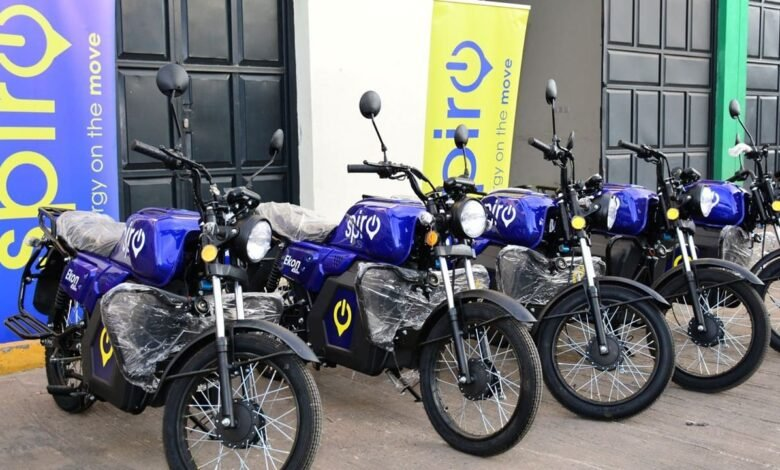
Spiro funding has become one of the clearest signals that Africa’s electric mobility market is moving from pilot projects into large-scale infrastructure deployment. Founded in 2022, Spiro describes itself as Africa’s largest EV player, with a business focused on electric motorcycles, battery-swapping infrastructure, local manufacturing, clean transport, and urban mobility.
The company operates across energy, manufacturing, transportation, electric vehicles, mobility, battery infrastructure, and clean technology. Its core model is built around a major African transport reality: motorcycles are essential to urban mobility, delivery work, and informal employment across many markets. Replacing petrol-powered bikes with electric motorcycles can reduce running costs, cut emissions, and create a new energy infrastructure opportunity.
Spiro’s investor base includes Equitane, Impact Fund Denmark, Africa Go Green Fund, Nithio Holdings, Afreximbank-linked funding, and other institutional backers. Its latest reported financing includes a $215 million equity round announced in June 2026, following a $50 million debt facility announced in February 2026. Earlier public reports also pointed to a $100 million investment in 2025.
This funding record shows why Spiro is becoming a major company to watch. It is not simply selling electric bikes. It is building a network business around vehicles, batteries, swap stations, charging, data, maintenance, and manufacturing.
What Is Spiro?
Spiro is an African electric mobility company focused on electric motorcycles and battery-swapping infrastructure. The company is listed as being based in Nairobi, Kenya, and was founded in 2022.
Its business is built around helping riders move from petrol motorcycles to electric mobility. In many African cities, two-wheelers are central to transport, delivery, commuting, and small business activity. They are also exposed to fuel price volatility, maintenance costs, emissions concerns, and urban air pollution.
Spiro’s answer is an integrated electric motorcycle ecosystem. Instead of requiring riders to wait for batteries to charge, the company uses battery-swapping stations where riders can exchange depleted batteries for charged ones within minutes.
That model is important because charging time is one of the biggest barriers to electric vehicle adoption. For motorcycle taxi riders and delivery workers, time off the road means lost income. Battery swapping can make EV adoption more practical by reducing downtime.
Spiro’s business sits across several major sectors:
| Sector | Why It Matters to Spiro |
|---|---|
| Energy | Battery charging and power supply are central to the model. |
| Manufacturing | Electric motorcycles and components require assembly and production capacity. |
| Transportation | The company targets everyday urban mobility and rider economics. |
| Electric Vehicles | EV motorcycles are the core product. |
| Mobility | The business depends on rider adoption and transport network density. |
| Clean Technology | Spiro supports lower-emission transport alternatives. |
Why Spiro Funding Matters
Spiro funding matters because electric mobility in Africa is capital-intensive. Unlike a software startup, an EV company must finance vehicles, batteries, charging systems, swap stations, warehouses, service networks, manufacturing facilities, and rider support.
The funding also matters because Africa’s transport sector is highly sensitive to fuel prices. Petrol motorcycles are widely used, but fuel costs can reduce rider earnings. If electric motorcycles lower running costs, they can improve rider economics while also reducing emissions.
Spiro’s model is especially important because it focuses on infrastructure. Many EV companies fail when they sell vehicles without solving charging. Spiro is trying to solve the charging problem through a battery-swapping network.
That means the company’s growth depends on density. Riders need swap stations close to where they work. The more stations Spiro builds, the more practical the system becomes. The more riders join, the more valuable the network becomes.
Funding is the engine behind that network effect.
Full List of Spiro Funding and Investor Activity
Spiro’s available funding record includes private equity and debt funding, with major recent investor activity in 2026.
| Investor | Announced Date | Amount | Main Category | Strategic Value |
| Equitane | Jun 2026 | Part of $215M round | Private Equity | Supports African EV expansion, battery-swapping infrastructure, and manufacturing growth. |
| Impact Fund Denmark | Jun 2026 | Part of $215M round | Private Equity / Impact Investment | Supports clean mobility, climate-aligned infrastructure, and African transport electrification. |
| Africa Go Green Fund | Feb 2026 | Part of $50M debt facility | Debt Funding | Supports clean mobility infrastructure and battery-swapping expansion. |
| Nithio Holdings | Feb 2026 | Part of $50M debt facility | Debt Funding | Supports asset finance, batteries, and energy infrastructure. |
| Afreximbank-linked financing | Feb 2026 | Part of $50M debt facility | Debt Funding | Supports African EV infrastructure and mobility scale-up. |
| FEDA / Afreximbank-related investment | Oct 2025 | Reported as part of $100M investment | Equity / Growth Capital | Supports battery-swapping infrastructure and technology platform expansion. |
The available record shows a company using both equity and debt. That matters because Spiro needs growth capital for expansion and debt financing for infrastructure, batteries, and working assets.
Spiro Funding Timeline
2022: Founded With an EV Infrastructure Vision
Spiro was founded in 2022 with a focus on African electric mobility. Its market entry came at a time when EV adoption across the continent was still early, but interest in electric two-wheelers was rising.
The company targeted a practical mobility segment. Motorcycles are widely used in African cities for taxis, deliveries, and short-distance transport. That makes them a logical starting point for electrification.
2025: Large Growth Investment Supports Scale
In October 2025, Spiro was reported to have secured a $100 million investment to support electric mobility expansion. The funding was linked to battery-swapping infrastructure, technology development, and market growth.
This funding stage helped establish Spiro as a serious EV infrastructure company rather than a small vehicle distributor. It also came as investors were paying closer attention to electric two-wheelers as a major clean mobility opportunity.
February 2026: $50 Million Debt Facility
In February 2026, Spiro secured a $50 million debt facility involving Africa Go Green Fund, Afreximbank, and Nithio. The facility was designed to support expansion of its battery-swapping network and clean mobility infrastructure.
This was strategically important because debt can be useful for asset-heavy businesses. Batteries, swap stations, and EV infrastructure require large upfront investment but can support recurring revenue when used by riders over time.
June 2026: $215 Million Equity Round
In June 2026, Spiro announced a $215 million equity round backed by investors including Equitane and Impact Fund Denmark. The company said the new capital would support expansion of its electric mobility and battery-swapping infrastructure across Africa.
By this stage, Spiro reported operations across Kenya, Rwanda, Uganda, Togo, Benin, Nigeria, and Cameroon. It also reported more than 100,000 electric vehicles and 2,500 smart battery-swapping stations deployed.
The June 2026 raise positioned Spiro among the most heavily funded electric mobility companies focused on Africa.
Biggest Spiro Funding Rounds by Deal Value
Spiro’s largest reported funding events show a business moving quickly into capital-heavy scale-up.
| Rank | Funding Event | Announced Date | Deal Value | Strategic Area |
| 1 | Equity round backed by Equitane and Impact Fund Denmark | Jun 2026 | $215M | EV expansion, battery swapping, manufacturing, and energy infrastructure |
| 2 | Growth investment linked to FEDA / Afreximbank | Oct 2025 | $100M | Battery-swapping infrastructure and technology platform growth |
| 3 | Debt facility involving Africa Go Green Fund, Afreximbank, and Nithio | Feb 2026 | $50M | Battery network expansion and clean mobility infrastructure |
| 4 | Nithio participation | Feb 2026 | Part of $50M facility | Battery and infrastructure finance |
| 5 | Africa Go Green Fund participation | Feb 2026 | Part of $50M facility | Clean mobility debt finance |
The $215 million equity round is the largest reported Spiro funding event. It also shows that the company’s model has moved into a stage where large infrastructure capital is needed to expand across markets.
Most Common Funding Categories
Spiro’s funding profile reflects the needs of an electric mobility infrastructure company.
| Funding Category | Examples of Investors | Strategic Role |
| Private Equity | Equitane, Impact Fund Denmark | Supports expansion, manufacturing, market entry, and platform growth. |
| Debt Funding | Africa Go Green Fund, Nithio, Afreximbank | Supports batteries, swap stations, and infrastructure assets. |
| Climate Finance | Africa Go Green Fund, Impact Fund Denmark | Supports lower-emission transport and clean energy systems. |
| Development Finance | Afreximbank-related investors and impact funds | Supports African industrialization and sustainable mobility. |
| Infrastructure Finance | Debt and equity providers | Supports physical EV networks and battery-swapping systems. |
Spiro’s funding categories show why EV mobility is different from many startup sectors. The company needs patient capital, infrastructure funding, and strong balance-sheet support.
Strategic Lessons From Spiro Funding
Battery Swapping Solves a Practical Rider Problem
One of the strongest lessons from Spiro funding is that electric mobility must solve real operating problems. Riders cannot wait hours for charging if their income depends on staying on the road.
Battery swapping reduces downtime. It gives riders a faster way to keep working and makes EV adoption more practical for motorcycle taxi and delivery use cases.
Infrastructure Can Become a Competitive Moat
Electric motorcycles are important, but the battery-swapping network may be even more strategic. A dense network of swap stations can create a strong advantage because riders depend on reliable access to charged batteries.
If Spiro builds enough stations in the right locations, it can become harder for competitors to match its convenience.
EV Adoption Requires Financing
Many riders may want electric motorcycles but cannot afford high upfront costs. Financing, leasing, battery plans, and operational savings are central to adoption.
Spiro funding supports the company’s ability to provide vehicles and infrastructure at scale.
Local Manufacturing Can Strengthen the Model
Spiro’s expansion plans include strengthening local manufacturing and assembly. This can improve supply chains, reduce import dependence, create jobs, and help the company adapt vehicles to local market needs.
How Spiro Funding Fits Its Business Model
Spiro’s business model is built around an integrated EV ecosystem. The company is not only selling motorcycles. It is creating a full operating system for electric two-wheelers.
The model includes:
- Electric motorcycles
- Battery packs
- Battery-swapping stations
- Charging infrastructure
- Rider support
- Manufacturing and assembly
- Data systems
- Maintenance and service
- Energy management
Funding supports each part of this model. Equity capital helps the company expand into new countries, build teams, develop technology, and strengthen manufacturing. Debt capital helps finance physical infrastructure, batteries, and network expansion.
This capital structure makes sense because Spiro must invest before revenue fully matures. Swap stations must be built before riders rely on them. Batteries must be available before the network becomes convenient. Motorcycles must be deployed before rider economics can improve.
Financial and Ownership Context
Spiro is a private company, so full financial statements are not publicly available. However, its public funding record shows a company that has attracted large-scale capital in a short period.
The $100 million investment reported in 2025, the $50 million debt facility in February 2026, and the $215 million equity round in June 2026 show rapid funding momentum.
This momentum reflects investor interest in electric mobility, but it also reflects the capital intensity of the model. Spiro must finance vehicles, batteries, stations, charging systems, manufacturing capacity, and expansion into multiple markets.
For analysts, the central financial question is whether Spiro can convert large infrastructure spending into durable rider adoption, strong utilization, and attractive unit economics.
Competitive Impact of Spiro Funding
Spiro funding improves the company’s competitive position in several ways.
First, it allows Spiro to expand its swap station network. In electric two-wheelers, network density is a major advantage. Riders need reliable battery access close to their routes.
Second, funding supports market entry. Spiro already operates in several African countries and plans further expansion. Capital helps it build local teams, infrastructure, partnerships, and supply chains.
Third, the company can invest in manufacturing and assembly. This can reduce costs over time and improve control over vehicle quality.
Fourth, funding gives Spiro a stronger brand position. In a developing sector, riders and partners are more likely to trust a company with visible infrastructure and strong financial backing.
However, competition is growing. Other electric motorcycle companies, charging networks, battery providers, and mobility platforms are also targeting Africa’s transport market. Spiro’s challenge is to keep expanding without weakening service quality.
Advantages of the Funding Strategy
Large-Scale Infrastructure Deployment
The funding allows Spiro to build the physical network needed for EV adoption. Battery swapping requires stations, batteries, software, staff, and maintenance systems.
Strong Rider Value Proposition
If electric motorcycles reduce operating costs, riders can improve their daily economics. Lower fuel spending can be a powerful adoption driver.
Climate and Air Quality Benefits
Electric motorcycles can reduce tailpipe emissions in cities and support cleaner urban transport.
Manufacturing and Assembly Potential
Local manufacturing and assembly can support job creation, lower logistics costs, and improve adaptation to local markets.
Multi-Country Expansion
Spiro’s funding gives it the ability to expand across several African markets at once, helping it build early scale.
Disadvantages of the Funding Strategy
High Capital Intensity
Spiro’s model requires large upfront investment. Vehicles, batteries, and swap stations are expensive, and returns depend on high utilization.
Battery Network Risk
If swap stations are too far apart, riders may face inconvenience. Poor network density can slow adoption.
Interoperability Challenges
Battery-swapping systems can become restrictive if riders cannot use batteries across different brands or networks. This may create friction as the market grows.
Regulatory Risk
EV policy, import duties, transport rules, battery standards, and energy regulations can differ by country. Spiro must manage these rules across multiple markets.
Execution Complexity
Operating across many countries requires strong logistics, service, maintenance, financing, customer support, and government relations.
Case Studies of Major Spiro Funding Events
$215 Million Equity Round
The June 2026 $215 million equity round is Spiro’s most important reported funding milestone. Backed by investors including Equitane and Impact Fund Denmark, the round was designed to expand electric mobility and battery-swapping infrastructure across Africa.
This funding supports Spiro’s next phase: more vehicles, more swap stations, more markets, and stronger manufacturing capacity.
$50 Million Debt Facility
The February 2026 $50 million debt facility involving Africa Go Green Fund, Afreximbank, and Nithio shows the role of debt in EV infrastructure. Debt can support assets that generate long-term revenue, such as batteries and swap stations.
This facility is important because it came after a large 2025 investment and before the 2026 equity round, showing a layered capital strategy.
$100 Million Growth Investment
The $100 million investment reported in October 2025 helped Spiro scale its platform and deepen its battery-swapping infrastructure. This capital helped move the company into a more serious growth phase.
For a company founded in 2022, securing this level of investment within a few years signaled strong investor interest in Africa’s EV transition.
Nithio Participation
Nithio’s involvement in the 2026 debt facility is notable because it focuses on financing climate and energy assets. For Spiro, asset finance is essential because batteries and swap stations require upfront capital.
Nithio’s role highlights how specialized climate finance can support clean mobility infrastructure.
Common Mistakes When Analyzing Spiro Funding
Treating Spiro as Only a Motorcycle Company
Spiro is not just selling electric motorcycles. It is building a mobility and energy infrastructure network around batteries, swapping, manufacturing, and rider services.
Ignoring Utilization
The value of swap stations depends on how often they are used. High utilization can improve economics. Low utilization can make infrastructure expensive.
Overlooking Rider Income
Rider adoption depends on practical economics. If electric motorcycles reduce costs and downtime, adoption improves. If costs are unclear, riders may hesitate.
Underestimating Battery Management
Battery quality, charging cycles, safety, maintenance, and replacement costs are central to the model. Poor battery management can damage margins and trust.
Assuming Funding Guarantees Market Leadership
Large funding helps, but execution decides the outcome. Spiro must prove reliability, affordability, and service quality across different markets.
Lessons for Business Owners and Investors
Spiro offers several lessons for business owners and investors.
First, infrastructure can be the real product. In EV markets, vehicles matter, but charging and battery access may matter more.
Second, adoption depends on customer economics. Riders will switch to electric motorcycles if the model improves income, convenience, and reliability.
Third, capital structure matters. Equity can fund expansion, while debt can finance physical assets. Spiro uses both.
Fourth, local execution is critical. Africa is not one market. Each country has different rules, roads, power systems, rider habits, and financing needs.
Finally, clean mobility businesses must balance growth and reliability. Expanding too fast without service quality can damage trust.
Key Takeaways
- Spiro is an African electric mobility company founded in 2022.
- The company is listed as being based in Nairobi, Kenya.
- Spiro operates across energy, manufacturing, transportation, electric vehicles, and mobility.
- Its core model combines electric motorcycles with battery-swapping infrastructure.
- Spiro announced a $215 million equity round in June 2026.
- Equitane and Impact Fund Denmark were named among the 2026 equity investors.
- Spiro secured a $50 million debt facility in February 2026 involving Africa Go Green Fund, Afreximbank, and Nithio.
- The company has reported more than 100,000 electric vehicles and 2,500 battery-swapping stations deployed.
- Spiro operates in markets including Kenya, Rwanda, Uganda, Togo, Benin, Nigeria, and Cameroon.
- Funding supports EV deployment, battery infrastructure, manufacturing, and market expansion.
- The company faces risks from capital intensity, regulation, interoperability, battery management, and execution complexity.
- Spiro funding shows how Africa’s EV sector is moving toward infrastructure-led scale.
Frequently Asked Questions
What is Spiro?
Spiro is an African electric mobility company focused on electric motorcycles, battery-swapping infrastructure, and sustainable urban transport.
What does Spiro do?
Spiro provides electric motorcycles and battery-swapping stations that allow riders to exchange depleted batteries for charged ones within minutes.
When was Spiro founded?
Spiro was founded in 2022.
Where is Spiro based?
Spiro is listed as being based in Nairobi, Kenya.
What is Spiro funding?
Spiro funding refers to the capital raised by the company from equity investors, debt providers, climate finance institutions, and infrastructure-focused backers.
How much did Spiro raise in June 2026?
Spiro announced a $215 million equity round in June 2026.
Who invested in Spiro’s 2026 equity round?
Investors named in the 2026 equity round include Equitane and Impact Fund Denmark.
What was Spiro’s February 2026 debt facility?
Spiro secured a $50 million debt facility involving Africa Go Green Fund, Afreximbank, and Nithio to expand its battery-swapping and clean mobility infrastructure.
How does Spiro’s battery-swapping system work?
Riders exchange depleted batteries for charged batteries at Spiro swap stations. This reduces downtime compared with waiting for a battery to charge.
In which countries does Spiro operate?
Spiro has reported operations in Kenya, Rwanda, Uganda, Togo, Benin, Nigeria, and Cameroon.
What types of electric bikes does Spiro offer?
Spiro focuses on electric two-wheelers designed for urban mobility, rider income, delivery work, and motorcycle taxi use.
How does Spiro contribute to sustainability?
Spiro supports lower-emission transport by replacing petrol-powered motorcycles with electric two-wheelers and building battery-swapping infrastructure.
Can riders purchase or lease a Spiro electric bike?
Spiro’s commercial model may vary by market, but electric motorcycle companies commonly use purchase, lease, financing, or service-based models to support rider adoption.
What support does Spiro offer customers?
Spiro’s model includes battery swapping, maintenance, rider support, and access to its EV infrastructure network.
How do riders find a battery-swapping station?
Riders typically use company-provided tools, apps, local station maps, or rider support channels to locate nearby battery-swapping stations.
What is Spiro’s vision for the future?
Spiro’s vision is to scale affordable electric mobility and battery-swapping infrastructure across Africa while supporting cleaner transport and lower operating costs for riders.
Conclusion
Spiro funding shows how Africa’s electric mobility sector is becoming an infrastructure business, not just a vehicle market. Founded in 2022, Spiro has moved quickly by combining electric motorcycles, battery-swapping stations, local manufacturing, and clean energy infrastructure.
The company’s $215 million equity round in June 2026, $50 million debt facility in February 2026, and earlier $100 million investment in 2025 show strong investor interest in African EV growth. The funding also reflects the scale of the challenge. To electrify motorcycle transport, Spiro must deploy bikes, batteries, swap stations, charging systems, software, maintenance networks, and local operations across several countries.
The opportunity is large. Motorcycles are essential to African urban transport, and electric two-wheelers can reduce fuel costs, improve rider economics, and lower emissions. But the risks are equally real. Battery-swapping networks are expensive, regulation varies by country, and riders need reliability every day.
For business owners, investors, and mobility analysts, Spiro funding offers a clear lesson. The winners in African EV mobility will not be the companies that only sell vehicles. They will be the companies that build trusted infrastructure, keep riders moving, manage batteries well, and make electric transport cheaper and easier than petrol alternatives.
Disclaimer: This article is for informational and educational purposes only. It is not investment advice, financial advice, or a recommendation to buy or sell any security. Always conduct your own research and consider speaking with a qualified financial adviser before making investment decisions.
Read Also: SunCulture Funding: How SunCulture Built Its Agritech Business