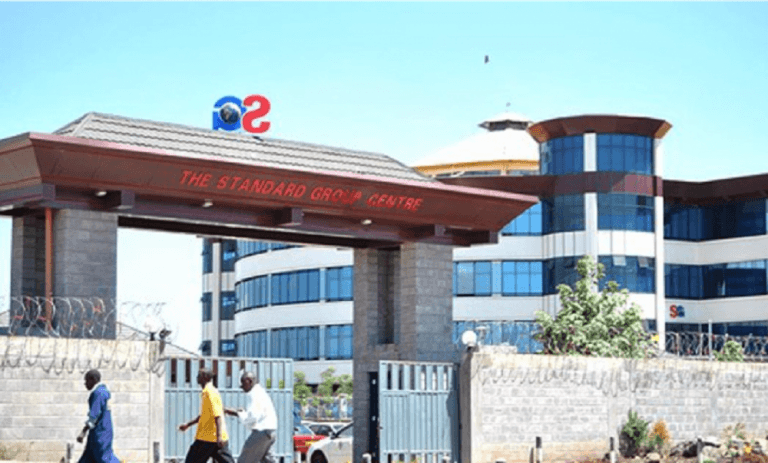
Standard Group Shareholders remain a major subject of public interest because the company is one of Kenya’s oldest and most influential media houses. The Nairobi Securities Exchange-listed media company operates major platforms including The Standard newspaper, KTN, Radio Maisha and digital news products that reach audiences across the country.
According to the latest beneficial ownership disclosures cited in the shareholder records as of December 31, 2024, the Moi family remains the dominant shareholder bloc in Standard Group PLC through S.N.G Holdings Limited. The disclosures show that the family-linked holding controls 69.03 percent of the company, giving it more than two-thirds of the media group’s shareholding.
The second-largest block is linked to the Kulei family through Trade World Kenya Limited, which holds 10.90 percent. Together, the Moi and Kulei-linked interests account for nearly 80 percent of Standard Group’s ownership, leaving a smaller portion distributed among institutional investors, employee share schemes, private companies and minority shareholders.
The ownership structure matters because Standard Group is not just another listed company. It is a media business with a central role in Kenya’s public information ecosystem. Concentrated ownership in a media company can influence board appointments, capital decisions, strategic direction and long-term governance priorities.
Full List of Standard Group Shareholders
The shareholder structure provided in the latest disclosures shows a highly concentrated register, with two major shareholder blocs controlling the majority of the company.
| Shareholder | Shareholding |
|---|---|
| S.N.G Holdings Limited | 69.03% |
| Trade World Kenya Limited | 10.90% |
| Miller Trustees Limited | 10.53% |
| Ismail Gulamali | 2.71% |
| The Standard Group Limited ESOP Trust | 0.33% |
| Denroma Investment Limited | 0.29% |
| Shah Savitaben Velji Raichand | 0.28% |
| Goes Eufrazio Juliao | 0.27% |
| Thuthuma Limited | 0.27% |
| Saraj Properties Limited | 0.23% |
| Other minority shareholders | 5.17% |
The figures show that Standard Group’s ownership is not widely dispersed in the way many public investors might expect from a listed company. Instead, control is concentrated among a small number of shareholders, with S.N.G Holdings Limited alone holding a decisive majority.
Moi Family-Linked S.N.G Holdings Holds the Largest Stake
S.N.G Holdings Limited is the largest shareholder in Standard Group PLC, with a 69.03 percent stake. The company is registered in the United Kingdom and has long been associated with the Moi family’s interests in the media group.
According to the disclosures cited in the provided records, Gideon Moi previously held more than 75 percent beneficial control of S.N.G Holdings before a 2022 restructuring moved ownership into a British Virgin Islands entity. The restructuring reportedly changed the ownership chain and removed it from certain United Kingdom disclosure requirements.
Before his death in 2020, former President Daniel arap Moi had been listed as a person exercising significant influence over the holding structure. The latest disclosures suggest that the family’s influence over Standard Group remains intact despite the restructuring.
The scale of S.N.G Holdings’ stake means the Moi-linked shareholder bloc has substantial influence over the company’s direction. With more than two-thirds of the shareholding, the bloc has significant weight in major corporate decisions, including board composition, capital raising, restructuring and long-term strategy.
Trade World Kenya and the Kulei Family Stake
Trade World Kenya Limited is the second-largest shareholder in Standard Group PLC, with a 10.90 percent stake. The company is linked to the Kulei family, associated with businessman Joshua Kulei, who was a longtime aide to former President Daniel arap Moi.
Trade World Kenya is listed at Transnational Plaza in Nairobi, an address associated with several business interests linked to the Moi and Kulei networks.
The disclosures cited in the provided records suggest Joshua Kulei holds an effective 38 percent interest in Standard Group through various investment vehicles. This indicates that the Kulei-linked influence in the company may extend beyond the direct 10.90 percent shareholding shown under Trade World Kenya Limited.
The Kulei family’s position is important because, when combined with the Moi family-linked stake, the two blocs represent close to four-fifths of the company’s ownership. That level of concentration gives the two shareholder groups significant influence over the future of one of Kenya’s best-known media brands.
Miller Trustees Holds the Third-Largest Stake
Miller Trustees Limited is listed as the third-largest shareholder in Standard Group PLC with a 10.53 percent stake. This makes it the largest shareholder outside the two dominant family-linked blocs.
A stake above 10 percent is material in any listed company, especially where the remaining free float is relatively small. However, compared with S.N.G Holdings’ 69.03 percent shareholding, Miller Trustees remains a minority investor.
Its presence on the register adds an institutional element to Standard Group’s ownership structure, although the company’s control remains heavily concentrated among the largest shareholder groups.
Individual and Smaller Corporate Shareholders
Beyond the top three shareholders, Standard Group’s ownership includes a limited number of smaller individual and corporate investors.
Businessman Ismail Gulamali is listed with a 2.71 percent stake. The Standard Group Limited ESOP Trust holds 0.33 percent, representing an employee share ownership interest in the company. Other smaller shareholders include Denroma Investment Limited, Shah Savitaben Velji Raichand, Goes Eufrazio Juliao, Thuthuma Limited and Saraj Properties Limited.
Together, other minority shareholders hold 5.17 percent. This means ordinary minority ownership is relatively small compared with the dominant shareholder blocs.
For public-market investors, this level of concentration can affect liquidity, voting influence and market dynamics. A company with a narrow free float may see limited trading volumes, while minority shareholders may have less practical influence over major corporate decisions.
Why Standard Group Ownership Matters
Standard Group’s ownership is important because media companies are different from ordinary commercial enterprises. They do not only sell products or services. They shape public debate, influence political communication, inform citizens and hold institutions accountable.
Ownership concentration in a media company therefore attracts more scrutiny than it might in other sectors. Shareholder influence can affect board composition, management appointments, capital decisions, editorial investment, digital transformation and long-term survival strategy.
This does not automatically mean shareholders interfere with editorial decisions. However, transparency in media ownership is essential because audiences, advertisers, regulators and investors need to understand who controls influential information platforms.
In Standard Group’s case, the latest shareholder structure shows that control remains concentrated among interests associated with Kenya’s former political elite. That makes the company’s governance and strategic direction a continued subject of public interest.
Financial Pressure Adds Weight to Ownership Debate
Standard Group’s ownership structure is also being examined against a difficult financial backdrop for the media industry. Like many traditional media companies, the group has faced pressure from declining print revenues, digital disruption, reduced advertising budgets and competition from online platforms.
The company’s recent financial disclosures show a challenging operating environment, with revenue decline and continued losses affecting the group’s balance sheet. These pressures have made funding, restructuring and strategic renewal important issues for shareholders.
In such an environment, major shareholders matter even more. They may be called upon to support recapitalisation, approve restructuring plans, guide board decisions or back a digital transformation strategy.
The question is not only who owns Standard Group, but what those owners intend to do with one of Kenya’s most established media institutions at a time when the sector is under intense commercial pressure.
Media Ownership Under Scrutiny
Globally, media ownership transparency has become a major governance issue. Regulators, civil society organisations and investors increasingly want to know who owns news platforms, how much control they hold and whether ownership structures are clear to the public.
In Kenya, this debate is especially important because media companies play a central role in elections, public accountability, business reporting, national debate and civic education. When a major media house has highly concentrated ownership, questions naturally arise about influence, independence and governance.
Standard Group’s shareholder register shows that a small group of investors controls the majority of the company. The Moi and Kulei-linked interests collectively account for nearly 80 percent of the business, making them the most influential shareholder blocs.
That ownership concentration does not remove the company’s obligations as a listed entity, but it does shape how investors and the public interpret governance, strategic decisions and shareholder influence.
What Minority Shareholders Should Watch
Minority shareholders in Standard Group should pay attention to several issues.
First, they should monitor any capital-raising plans, including rights issues, debt restructuring or shareholder loans. Such transactions can affect dilution, voting power and future returns.
Second, they should watch board appointments and governance changes. In a company with concentrated ownership, board composition is a key indicator of how control is exercised.
Third, they should follow the company’s digital strategy. Standard Group’s long-term performance will depend on how effectively it adapts to digital audiences, online advertising, subscription models, video platforms and new media consumption habits.
Fourth, minority investors should review financial performance closely. Revenue trends, cost controls, debt levels and working capital will determine whether the company can stabilise and rebuild.
Finally, shareholders should pay attention to disclosure quality. Clear and timely communication is essential in any listed company, especially one operating in a sensitive sector such as media.
Conclusion: Standard Group Shareholders Remain Highly Concentrated
Standard Group Shareholders are led by S.N.G Holdings Limited, the Moi family-linked entity that controls 69.03 percent of the company. Trade World Kenya Limited, linked to the Kulei family, holds another 10.90 percent, while Miller Trustees Limited owns 10.53 percent.
The combined influence of the Moi and Kulei-linked shareholder blocs means that control of Standard Group remains concentrated among a small group of investors connected to Kenya’s political and business history.
For the public, this ownership structure is important because Standard Group remains one of Kenya’s leading media organisations. For investors, it matters because shareholder concentration affects governance, liquidity, capital decisions and long-term strategy.
As the media industry continues to face digital disruption and financial pressure, the role of Standard Group’s major shareholders will remain central to the company’s future.
FAQs About Standard Group Shareholders
Who owns Standard Group PLC?
Standard Group PLC is mainly owned by S.N.G Holdings Limited, which holds 69.03 percent of the company, according to the shareholder figures provided. S.N.G Holdings is linked to the Moi family. The second-largest shareholder is Trade World Kenya Limited with 10.90 percent, followed by Miller Trustees Limited with 10.53 percent. The remaining shares are held by individual investors, smaller companies, an employee share ownership trust and other minority shareholders.
Which family controls Standard Group?
The Moi family remains the dominant shareholder bloc in Standard Group through S.N.G Holdings Limited, which owns 69.03 percent of the media company. The Kulei family-linked Trade World Kenya Limited holds another 10.90 percent. Based on the figures provided, the two family-linked blocs together account for nearly 80 percent of Standard Group’s shareholding, giving them substantial influence over the listed media company’s governance and strategic direction.
What is S.N.G Holdings Limited?
S.N.G Holdings Limited is the largest shareholder in Standard Group PLC. It holds 69.03 percent of the company, making it the controlling shareholder. The company is registered in the United Kingdom and has been linked to the Moi family. According to the ownership disclosures cited in the provided information, a restructuring in 2022 moved ownership into a British Virgin Islands entity, altering the ownership chain.
How much of Standard Group does Trade World Kenya own?
Trade World Kenya Limited owns 10.90 percent of Standard Group PLC, making it the second-largest shareholder. The company is linked to the Kulei family, associated with businessman Joshua Kulei. Its stake is significant because, when combined with the Moi family-linked S.N.G Holdings stake, the two blocs control close to four-fifths of Standard Group’s ownership.
Who are the other major shareholders in Standard Group?
Apart from S.N.G Holdings Limited and Trade World Kenya Limited, the other major shareholder is Miller Trustees Limited, which owns 10.53 percent. Businessman Ismail Gulamali holds 2.71 percent. Smaller shareholders include The Standard Group Limited ESOP Trust, Denroma Investment Limited, Shah Savitaben Velji Raichand, Goes Eufrazio Juliao, Thuthuma Limited, Saraj Properties Limited and other minority shareholders.
Why is Standard Group ownership important?
Standard Group ownership matters because the company is one of Kenya’s most prominent media houses. It operates newspapers, television, radio and digital platforms that influence public debate and national conversations. Ownership concentration in a media company raises important questions about governance, transparency, editorial investment and strategic direction. Investors also care because concentrated ownership can affect voting power, liquidity and capital decisions.
Is Standard Group listed on the Nairobi Securities Exchange?
Yes. Standard Group PLC is listed on the Nairobi Securities Exchange. As a listed company, it is required to make public disclosures, publish financial statements and communicate material information to shareholders and the market. However, despite being listed, its shareholder structure is highly concentrated, with the largest shareholder holding more than two-thirds of the company.
What businesses does Standard Group operate?
Standard Group operates across print, television, radio and digital media. Its brands include The Standard newspaper, KTN, Radio Maisha and other media platforms serving Kenyan audiences. The company has historically been one of Kenya’s leading media organisations, although like many traditional media houses, it continues to face pressure from digital disruption and changing advertising markets.
What does ownership concentration mean for minority shareholders?
Ownership concentration means a small number of shareholders control most of the company’s voting power. For minority shareholders, this can limit influence over major decisions such as board appointments, capital raising, restructuring and strategic direction. It can also affect share liquidity if only a small portion of shares is actively available for trading. Minority investors should pay close attention to disclosures, AGM resolutions and financial updates.
Why is media ownership transparency important?
Media ownership transparency is important because news organisations shape public opinion, inform voters, report on government and influence national debate. Audiences should know who controls major media platforms so they can better understand governance, potential influence and accountability. Transparent ownership also helps investors, advertisers and regulators assess whether a media company is being run responsibly and independently.