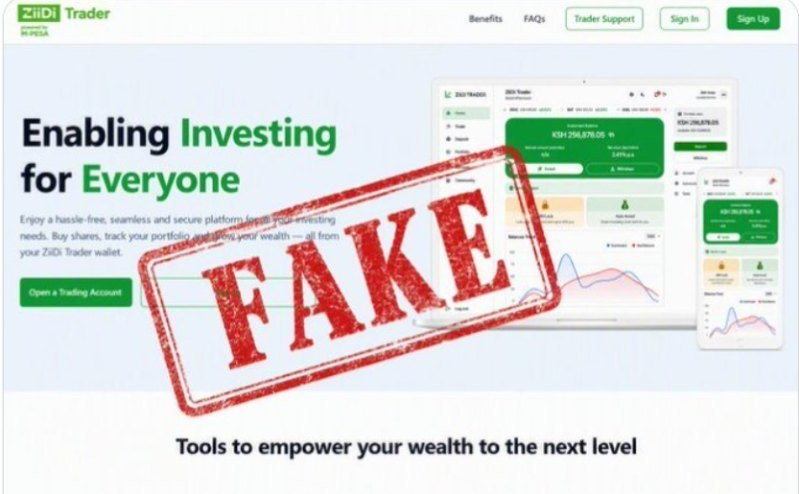
Safaricom has warned customers against a fake website claiming to be linked to Ziidi Trader, its mobile-based share trading product available through M-PESA and My OneApp. The company says the lookalike domain ziiditrader.com is not an official Safaricom platform and has no association with the telco or its investment services.
The warning comes at a sensitive time for Kenya’s fast-growing retail investment market. Ziidi Trader has attracted strong interest from ordinary Kenyans seeking easier access to the Nairobi Securities Exchange through mobile money. That popularity has also made the platform a target for fraudsters looking to exploit customer trust in Safaricom, M-PESA and digital investing.
Safaricom has urged customers not to enter personal details, phone numbers, M-PESA PINs, bank information or login credentials on suspicious websites. The company says Ziidi Trader should only be accessed through My OneApp, where the service is officially integrated.
The alert is an important reminder that digital finance growth must go hand in hand with stronger consumer awareness. As mobile investing becomes more accessible, scammers are likely to copy trusted brands, register similar domain names and create fake pages designed to steal sensitive information.
What Safaricom Said About the Fake Website
Safaricom clarified that the fake Ziidi Trader website is not legal, official or authorised by the company. The telco told customers to avoid engaging with the site and to use only official Safaricom channels when accessing Ziidi Trader or any related M-PESA investment product.
The company also reminded users that Safaricom will never ask for private credentials such as M-PESA PINs, bank passwords or other sensitive financial information through unofficial websites.
Customers who encounter suspicious activity have been advised to report it through SMS 333 or through My OneApp. This reporting route is important because fraud attempts can spread quickly, especially when scammers use social media, messaging apps or paid ads to lure victims.
The safest rule for users is simple: do not click investment links from unknown sources, do not share PINs, and do not trust a website simply because it uses the name of a popular financial product.
Why Ziidi Trader Is Attracting Fraudsters
Ziidi Trader is part of Safaricom’s wider push to turn M-PESA into a broader financial services platform. M-PESA is no longer only about sending money, paying bills or saving. It is increasingly being used as a gateway to investment products, including money market funds and share trading.
Ziidi Trader allows eligible M-PESA users to buy and sell shares on the Nairobi Securities Exchange through a mobile platform. This has lowered barriers for retail investors who may previously have found stockbroking processes difficult, slow or intimidating.
That accessibility is a major strength, but it also creates fraud risk. Whenever a trusted financial brand gains mass adoption, scammers often try to create fake websites, imitation pages and misleading links. Their goal is to trick users into believing they are interacting with the real platform.
In this case, the fake website appears to be exploiting the public visibility of Ziidi Trader. Users searching online for the platform may mistakenly land on a fraudulent domain if they do not know that Safaricom has directed customers to access the service through My OneApp.
The Bigger Cybersecurity Risk for Mobile Investors
The Ziidi Trader scam warning highlights a wider cybersecurity challenge in Kenya’s digital finance sector. As more financial services move to mobile platforms, criminals are shifting from traditional fraud to digital impersonation.
Lookalike websites are one of the most common tactics. Fraudsters register domains that resemble trusted brands, copy logos, imitate layouts and ask users to “log in,” “verify accounts,” “activate investments” or “claim bonuses.” Once a user enters personal details, the information may be used for account takeover, SIM-related fraud, phishing or unauthorised transactions.
Mobile investors are particularly vulnerable because many are new to capital markets. A first-time investor may not know how official investment platforms are accessed or what information a legitimate provider should request. This makes customer education critical.
Safaricom’s warning should therefore be seen not only as a brand protection notice but also as a consumer protection alert. The more Kenyans invest digitally, the more important it becomes to understand how to verify platforms before entering sensitive information.
How Customers Can Stay Safe
Customers should access Ziidi Trader only through My OneApp and avoid searching for unofficial websites claiming to offer the service. They should also avoid clicking links received through WhatsApp, SMS, Telegram, Facebook, X or email unless they are certain the source is official.
No customer should share an M-PESA PIN, bank PIN, one-time password, password, ID number or financial account details on a suspicious website. Safaricom has repeatedly reminded customers that private credentials should never be shared.
Users should also check for warning signs. These include spelling mistakes, suspicious domain names, promises of guaranteed returns, requests for urgent verification, unfamiliar payment instructions and pages that ask for PINs or passwords outside the official app environment.
Anyone who has already entered details on a suspicious Ziidi Trader website should immediately stop using the site, report the incident through SMS 333 or My OneApp, change relevant credentials and monitor their M-PESA and bank accounts for unusual activity.
Why the Warning Matters for Kenya’s Investment Market
Ziidi Trader is part of a larger shift in Kenya’s financial market. For years, many ordinary Kenyans viewed stock investing as complicated or reserved for people with brokerage accounts and market knowledge. Mobile-based share trading is changing that perception by making listed securities more accessible through familiar digital channels.
This could support deeper retail participation in the Nairobi Securities Exchange and help more Kenyans build long-term investment habits. However, trust is essential. If fraudsters successfully impersonate investment platforms, new investors may become fearful, confused or financially exposed.
That is why Safaricom’s alert matters beyond one fake website. It underscores the need for stronger public education around digital investing, official access points, fraud reporting and basic cybersecurity habits.
The growth of mobile investing will depend not only on convenience but also on safety. Investors must know where to access services, how to identify fake platforms and what steps to take when they suspect fraud.
What Ziidi Trader Users Should Remember
Ziidi Trader users should remember that the official service is accessed through My OneApp, not through random websites using the Ziidi name. Any page asking for sensitive financial information should be treated with caution.
Users should also remember that investment platforms do not remove normal investment risk. Even when using the correct platform, shares can rise or fall in value. Investors should understand what they are buying, avoid emotional decisions and never trust anyone promising guaranteed stock market returns.
The fake website warning adds another layer of caution: before thinking about returns, users must first confirm they are using the real service.
Conclusion: Ziidi Trader Scam Warning Is a Wake-Up Call
Safaricom’s warning over the fake Ziidi Trader website is a timely reminder that Kenya’s digital investment boom is creating new opportunities for both investors and scammers. As M-PESA-linked investing grows, fraudsters are likely to keep targeting users through fake websites, impersonation campaigns and suspicious links.
The safest approach is to use only official Safaricom channels, access Ziidi Trader through My OneApp and report suspicious activity through SMS 333 or the app. Customers should never share M-PESA PINs, bank details or private credentials on unofficial websites.
The Ziidi Trader Scam alert should push users to become more careful, not more fearful. Mobile investing can still be a powerful tool for financial inclusion, but only when customers combine investment ambition with digital safety.
FAQs
What is the fake Ziidi Trader website Safaricom warned about?
Safaricom warned customers about a fake website using the Ziidi Trader name. The company said the domain ziiditrader.com is not an official Safaricom website and has no association with the company or its M-PESA investment services. Customers should avoid entering personal details, M-PESA PINs, bank information or login credentials on that site. Safaricom has advised users to access Ziidi Trader only through My OneApp.
How should I access the real Ziidi Trader platform?
Safaricom says customers should access the legitimate Ziidi Trader service through My OneApp. Users should avoid relying on search engine results, social media links or forwarded messages claiming to lead to Ziidi Trader. Fraudsters often create websites that look similar to trusted brands in order to steal information. The safest option is to open the official app and access the service from there.
What should I do if I entered my details on a fake Ziidi Trader website?
If you entered details on a suspicious website, stop using the site immediately. Report the incident through SMS 333 or My OneApp, then monitor your M-PESA and bank accounts for unusual activity. If you shared any password, PIN or sensitive credential, change it immediately where possible. You should also avoid responding to follow-up calls or messages from unknown people claiming they can “fix” the issue for a fee.
Will Safaricom ask for my M-PESA PIN online?
No. Safaricom has reminded customers that it will never ask for private credentials such as M-PESA PINs, passwords or banking details through unofficial websites. Any website, message or caller asking for your PIN should be treated as suspicious. A PIN is private and should never be shared with anyone, including people claiming to work for a company, bank, investment platform or customer support team.
Why are scammers targeting Ziidi Trader users?
Scammers are targeting Ziidi Trader users because the platform is gaining attention among Kenyans interested in mobile-based share trading. When a financial product becomes popular, fraudsters often create fake websites or impersonation pages to exploit public trust. New investors may be especially vulnerable if they are still learning how the platform works. That is why Safaricom is urging customers to verify access points and use only official channels.
Is Ziidi Trader an investment product?
Yes. Ziidi Trader is a Safaricom-linked product that allows M-PESA customers to buy and sell shares on the Nairobi Securities Exchange through a digital platform. Like all share trading services, it involves investment risk because stock prices can rise or fall. Users should understand the companies they invest in, avoid guaranteed-return promises and use only the official platform when trading or checking their accounts.
How can I report a suspicious Ziidi Trader link?
Safaricom has advised customers to report suspicious activity through SMS 333 or through My OneApp. Reporting helps the company identify and respond to fraud attempts faster. Customers should avoid forwarding suspicious links to friends or groups because that can spread the scam. Instead, take a screenshot if necessary, report through the official channel and delete the suspicious message or link.
What are signs of a fake investment website?
Common warning signs include a domain name that looks slightly different from the official brand, spelling errors, poor design, urgent messages, promises of guaranteed returns, requests for PINs or passwords, and instructions to make payments outside official channels. A fake site may also copy logos and colours from a trusted company. Users should be especially careful with links shared through social media, SMS, WhatsApp or email.
Can I lose money through a fake Ziidi Trader website?
Yes. If a fake website steals your personal information, PINs, passwords or banking details, criminals may try to access your accounts or trick you into sending money. Even if no money is taken immediately, stolen credentials can expose you to future fraud. That is why users should never enter sensitive information on unofficial websites and should report suspicious activity as soon as possible.
Why is this warning important for Kenya’s digital finance market?
The warning is important because Kenya’s digital finance market is expanding quickly from mobile payments into savings, investing and share trading. As more people use mobile platforms for financial decisions, fraud prevention becomes more important. Trust is essential for digital investing to grow. Safaricom’s alert reminds users that financial inclusion must be matched with cybersecurity awareness, official access channels and careful verification.
Read Also: Motorola Edge 70 Max Gets Certified With Qi2 25W Magnetic Wireless Charging