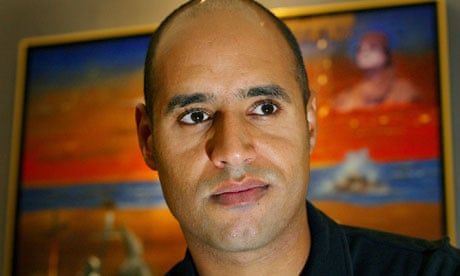
Libya — Saif al-Islam Gaddafi, the son of Muammar Gaddafi, the long-time ruler of Libya, has been confirmed dead at the age of 53. Reports from Libyan sources, including family members and his lawyer Khaled el-Zaydi, confirmed his death on February 3, 2026, citing his killing in Zintan, a city in western Libya where he had spent much of the past decade.
Saif al-Islam, once considered the heir apparent to the Libyan throne, had lived through dramatic transformations in both his personal life and political career. His death comes after years of tumultuous involvement in Libyan politics, including his bid to return to power in the country devastated by civil unrest and conflict.
From Power to Imprisonment: The Fall of Saif al-Islam
Once Libya’s most prominent figure after his father, Saif al-Islam’s trajectory mirrored the downfall of the Gaddafi regime. After initially positioning himself as a reformist, calling for constitutional changes and human rights, his role in the brutal crackdown against rebels during the 2011 Libyan civil war saw him move from political figurehead to a symbol of repression.
Saif al-Islam’s controversial crackdown on the revolutionaries, which he referred to as “rats,” would remain one of the defining moments of his career. In the early days of the rebellion, Saif al-Islam vowed that the government would fight to the last bullet, promising that “rivers of blood” would flow across Libya to quell the uprisings.
As rebels seized control of Tripoli, Saif al-Islam attempted to flee Libya, disguised as a Bedouin tribesman, only to be captured by the Abu Bakr Sadik Brigade and flown to Zintan, where he would remain in captivity for six years. His family’s regime was overthrown, and his father, Muammar Gaddafi, was killed by rebels. Saif al-Islam’s life took a sharp turn from one of luxury to prolonged detention.
Saif al-Islam’s Presidential Ambitions and Legal Battles
In 2017, Saif al-Islam was released by Zintan militia under a government amnesty, and soon after, he began to reconnect with political circles and advocates within the country. His first major act was filing for a presidential candidacy in 2021, aiming to restore the Gaddafi family’s legacy of rule.
His presidential campaign was met with significant opposition, as many Libyans and armed groups rejected his bid, citing his role in the Gaddafi regime’s crimes. Despite his disqualification due to a 2015 war crimes conviction, Saif al-Islam’s candidacy ignited heated debates, contributing to the collapse of the election process and further deepening Libya’s political crisis. His campaign was a symbolic gesture for those yearning for the stability that Libya once enjoyed under his father’s rule, but also a reminder of the country’s fragmented and contentious political landscape.
The Life and Times of Saif al-Islam Gaddafi
Saif al-Islam’s early life was one of privilege. Born to Muammar Gaddafi in 1999, Saif al-Islam was groomed for leadership, receiving an education at the London School of Economics. Fluent in English and well-connected in Western diplomatic circles, he was often seen as the most Western-friendly face of the Gaddafi regime. His diplomatic efforts included successful negotiations to end Libya’s weapons of mass destruction program and his involvement in post-Lockerbie compensation deals.
However, his tough stance during the 2011 uprising, which ultimately led to the death of his father, erased his earlier image as a potential reformer. Following his capture in 2011, Saif al-Islam was sentenced to death in 2015 by a Libyan court for crimes committed during the war. Although an arrest warrant was issued for him by the International Criminal Court (ICC) for war crimes, he managed to evade capture until his release in 2017.
The Circumstances of His Death
The exact circumstances of Saif al-Islam’s death remain unclear. Initial reports suggest he was shot and killed in Zintan, the town that had become his base for nearly a decade following his capture. His lawyer confirmed that Saif al-Islam was killed in a shooting incident but did not provide further details. The Libyan media and close sources to the family reported his death, but there has been no official confirmation from the Libyan government at the time of publication.
Legacy of a Divisive Figure
Saif al-Islam Gaddafi’s death marks the end of an era for a family that dominated Libyan politics for over 40 years. While he was once seen as a reformer, his actions during the Libyan civil war ensured his infamy among many Libyans, particularly those who suffered under his father’s regime. His presidential bid in 2021 brought his name back into the political conversation, but ultimately, his death marks the conclusion of a deeply controversial chapter in Libya’s recent history.