Quick Facts
| Attribute | Details |
|---|---|
| Full Name | Patricio Aylwin Azócar |
| Born | November 26, 1918, Viña del Mar, Chile |
| Died | April 19, 2016, Santiago (aged 97) |
| Title / Office | President of Chile (1990–94) |
| Political Affiliation | Christian Democratic Party |
| Education | Law degree, University of Chile (1943) |
| Known For | First democratically elected president after Augusto Pinochet’s dictatorship |
Early Life and Political Career
Patricio Aylwin Azócar was born on November 26, 1918, in Viña del Mar, Chile, the eldest son of a Supreme Court president. He studied law at the University of Chile, graduating in 1943, and later taught law at both the University of Chile and the Pontifical Catholic University of Chile.
His political career began in 1945, when he joined the National Falange, a Christian-inspired reformist movement that broke away from the Conservative Party. Aylwin quickly rose within the organization, serving as its president in 1950 and 1951. In 1957, he became a co-founder of the Christian Democratic Party (PDC), which he would later lead seven times.
Elected to the Senate in 1965, Aylwin became a prominent legislator, serving until 1973 when the military coup against Salvador Allende brought Gen. Augusto Pinochet to power.
Role During the Dictatorship
After the 1973 coup, Aylwin emerged as a moderate critic of Pinochet’s regime. He opposed the 1980 constitution, though by 1982 he argued it should be accepted while seeking opportunities for reform.
He became the public face of the Coalition of Parties for Democracy (Concertación), originally known as the Command for No (Comando por el No), during the 1988 plebiscite on Pinochet’s continued rule. The “No” victory opened the way for a democratic transition.
In 1989, Aylwin was nominated as the presidential candidate of the PDC with broad support from the Concertación coalition. On December 14, 1989, he was elected with 55 percent of the vote, becoming Chile’s first democratically chosen president since the 1973 coup.
Presidency and Democratic Transition (1990–1994)
Aylwin assumed the presidency on March 11, 1990, symbolizing Chile’s return to democracy. His administration faced difficult challenges:
- Human Rights: He established the National Commission for Truth and Reconciliation, tasked with investigating killings and disappearances under Pinochet’s rule. The commission’s report was a landmark in Chile’s reckoning with past abuses.
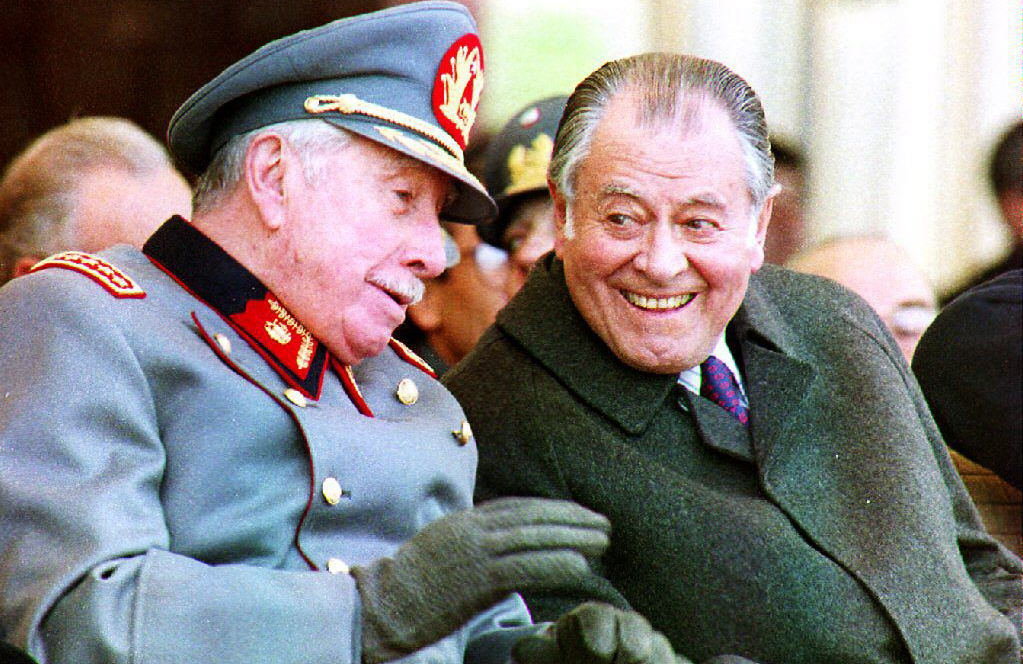
- Military Relations: Aylwin often clashed with Pinochet, who remained commander in chief of the army, but he maintained stability through cautious negotiations and support from the navy, air force, and police leadership.
- Social and Economic Policy: His government pursued poverty reduction programs and reforms aimed at improving living standards for the poor, without reversing Chile’s market-oriented economic model.
By carefully balancing demands for justice and reconciliation, Aylwin set the foundation for a stable democratic system while avoiding direct confrontation with the still-powerful military.
Later Life and Legacy
After leaving office in 1994, Aylwin remained active within the Christian Democratic Party but never sought elected office again. He became a respected elder statesman, remembered for his moral authority and commitment to democratic principles.
Patricio Aylwin died in Santiago on April 19, 2016, at the age of 97. His leadership is widely credited with guiding Chile’s peaceful transition to democracy, ensuring stability after nearly two decades of dictatorship.