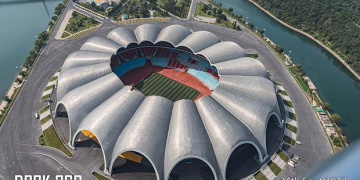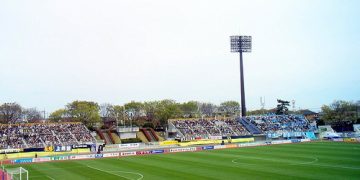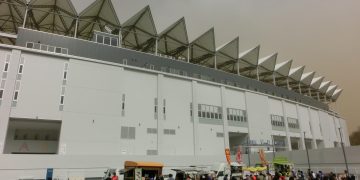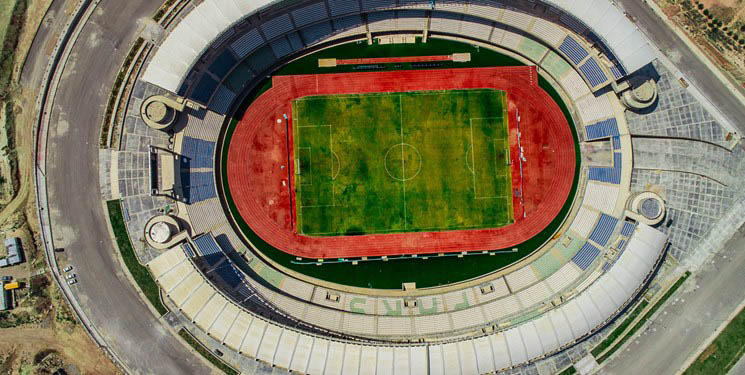
Pars Stadium is one of Iran’s important modern sporting venues, located in the Mianrood district of Shiraz. Built to expand the city’s football infrastructure, Pars Stadium combines large capacity, clean architectural lines, and multi-purpose functionality. Pars Stadium hosts major league fixtures and stands as the fourth largest stadium in the country, reinforcing Shiraz’s presence in national football.
Stadium Details
| Feature | Information |
|---|---|
| Name | Pars Stadium |
| Former Name | Shiraz Olympic Stadium |
| Capacity | 50,000 |
| Country | Iran |
| City | Shiraz |
| Primary Home Club | Fajr Sepasi F.C. |
| Other Users | Bargh Shiraz F.C., Qashqai F.C. |
| Inauguration | 20 April 2017 |
| Construction | 2007–2017 |
| Broke Ground | 2006 |
| Cost | IRR 540 billion ($16.7 million) |
| Location | Mianrood, Shiraz, Iran |
| Owner | Ministry of Sport and Youth (Iran) |
| Surface | Grass |
| Structural Engineer | Hamgrooh Consulting Engineers |
Origins and Long Construction Timeline
Pars Stadium began as an ambitious project intended to elevate Shiraz’s sports facilities. Groundbreaking took place in 2006, and major construction activities began in 2007. The project stretched over a full decade due to financial and technical delays. Such extended timelines are common in large-scale Iranian infrastructure projects. The stadium officially opened on 20 April 2017 and instantly became a key venue in southern Iran.
The Ministry of Sport and Youth oversaw the development, and Hamgrooh Consulting Engineers supervised structural engineering. The project’s cost reached IRR 540 billion, equal to approximately $16.7 million. Despite the long process, the completed stadium delivered modern features that serve both local clubs and national competitions.
Location, Design, and Accessibility
Located in Mianrood on the eastern side of Shiraz, Pars Stadium enjoys a spacious setting suitable for major sporting events. Its architecture emphasizes open visibility, clean curves, and a compact bowl shape that enhances the viewing experience. The design supports strong environmental ventilation, important in Shiraz’s climate, and offers broad access routes for spectators.
The stadium was originally named Shiraz Olympic Stadium, reflecting its intended multi-sport purpose. Over time, football became its dominant focus, and the venue adopted its current name, placing emphasis on Iranian cultural identity.
Football Significance and Home Teams
Pars Stadium functions primarily as the home ground for Fajr Sepasi F.C., a club competing in the Persian Gulf Pro League. The venue also hosts selected matches for Bargh Shiraz F.C. and Qashqai F.C., especially fixtures in the Azadegan League. This multi-team usage reinforces the stadium’s importance as a regional football hub. Its 50,000-seat capacity enables large attendance on match days and contributes to Shiraz’s sporting culture.
Structure, Facilities, and Multi-Purpose Use
The stadium’s grass surface is maintained to professional standards, allowing for high-quality football matches. The bowl-shaped seating layout concentrates crowd energy and improves acoustics. The structure supports flexibility, enabling the venue to accommodate additional events when required.
Technology and construction choices made during the extended building period give the stadium durable foundations and strong engineering integrity. From the start, the facility aimed to balance practicality with long-term use. This makes Pars Stadium suitable for both domestic competitions and potential regional tournaments.
Cultural and Regional Importance
Pars Stadium provides Shiraz with a modern arena capable of hosting large sporting events. It strengthens community identity by serving as a gathering point for fans across the region. Over time, the stadium gained recognition for its scale, location, and consistency in hosting major football fixtures. Its role continues to evolve as local teams grow in prominence and national interest expands.
Pars Stadium remains a symbol of Shiraz’s sporting ambition and a central venue for the future of football in the region.