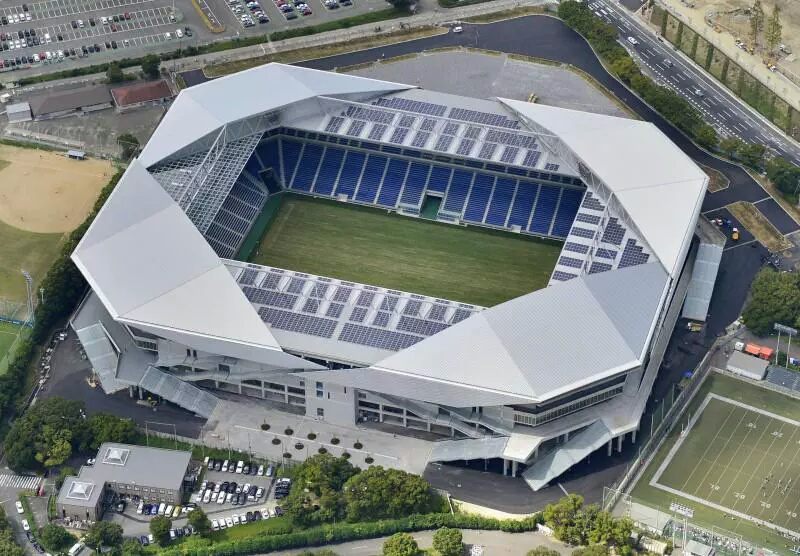
Panasonic Stadium Suita is one of Japan’s most modern football arenas and the purpose-built home of Gamba Osaka. Completed in 2015 and officially opened in early 2016, Panasonic Stadium Suita replaced the club’s outdated Expo ’70 home with a compact, football-specific design focused on atmosphere, sustainability, and world-class viewing quality. Panasonic Stadium Suita stands today as one of the most advanced football venues in the J.League.
Stadium Details
| Feature | Information |
|---|---|
| Name | Panasonic Stadium Suita |
| Capacity | 39,694 |
| VIP Seats | 1,248 |
| Disabled Seats | 414 |
| Country | Japan |
| City | Suita |
| Home Club | Gamba Osaka |
| Inauguration | February 2016 |
| Construction | December 2013 – October 2015 |
| Cost | ¥14.085 billion |
| Architect | Yasui Architecture & Engineers / Takenaka Corporation |
| Contractor | Takenaka Corporation |
| Design Start | 2008 |
Origins and Planning
The idea for a new home ground emerged in 2007, when Gamba Osaka recognised that their existing stadium in the Expo ’70 complex no longer met modern football standards. By 2009 a detailed relocation plan was established, placing the new stadium just 700 meters south within the Expo park.
Financing proved difficult during the early years, delaying the project. However, this delay unexpectedly benefited the design; by 2013 capacity was increased from 32,000 to nearly 40,000 seats to support Japan’s 2022 World Cup bid. Skyboxes originally planned for the north stand were removed, allowing expanded general seating for the club’s most vocal supporters.
Architecture and Stadium Design
The design vision from 2009 remained intact—an intimate, football-focused bowl with double-tiered stands placed only 7–10 meters from the pitch. The stadium’s exterior maintains a minimalist, concrete-driven aesthetic, while a striking ribbon-like roof creates the stadium’s unique silhouette.
The roof itself features an innovative 3D truss system, with primary beams arranged in three directions. This structure reduces steel use by around 40% and increases earthquake resistance, a crucial factor in Japanese stadium engineering.
Inside, the venue is built for elite football experiences. The seating bowl is steep and close to the pitch, creating intense match-day atmosphere. Panasonic Stadium Suita also contains Japan’s largest hospitality and skybox offerings within a football stadium.
Sustainability and Disaster Preparedness
Panasonic Stadium Suita is one of Japan’s most eco-efficient sports venues. Sustainable technologies integrated into the stadium include:
- A 500 kW rooftop solar plant generating the equivalent power consumption of 184 households
- Japan’s first full-LED floodlight system, reducing energy use by 27%
- A rainwater collection system reclaiming 5,500 tons for toilet use
- Efficient building materials through precast construction methods
The stadium was also designed as a civic safety facility. It can serve as emergency storage (480 m²) and provide temporary shelter for up to 800 residents, enhancing its public value and qualifying it for partial government funding.
Construction and Completion
Construction began in December 2013 after years of planning delays. Thanks to extensive use of precast concrete, the core structure was completed within just over a year. The entire project finished in October 2015, with donors invited for a community preview event long before its official opening match.
The final cost reached ¥14.085 billion—lower than initial 2008 estimates—thanks to efficient engineering and large-scale corporate and private donations. Public authorities contributed ¥3.25 billion, while corporate donors financed ¥9.95 billion. An additional ¥622 million came from thousands of individual supporters.
A Modern Home for Gamba Osaka
Panasonic Stadium Suita has become one of the premier football venues in Japan, offering an intense atmosphere, close-quarters viewing, and modern facilities for players and fans. Its combination of minimalist architecture, eco-friendly engineering, and strong community support reflects the spirit of Gamba Osaka and the city of Suita.