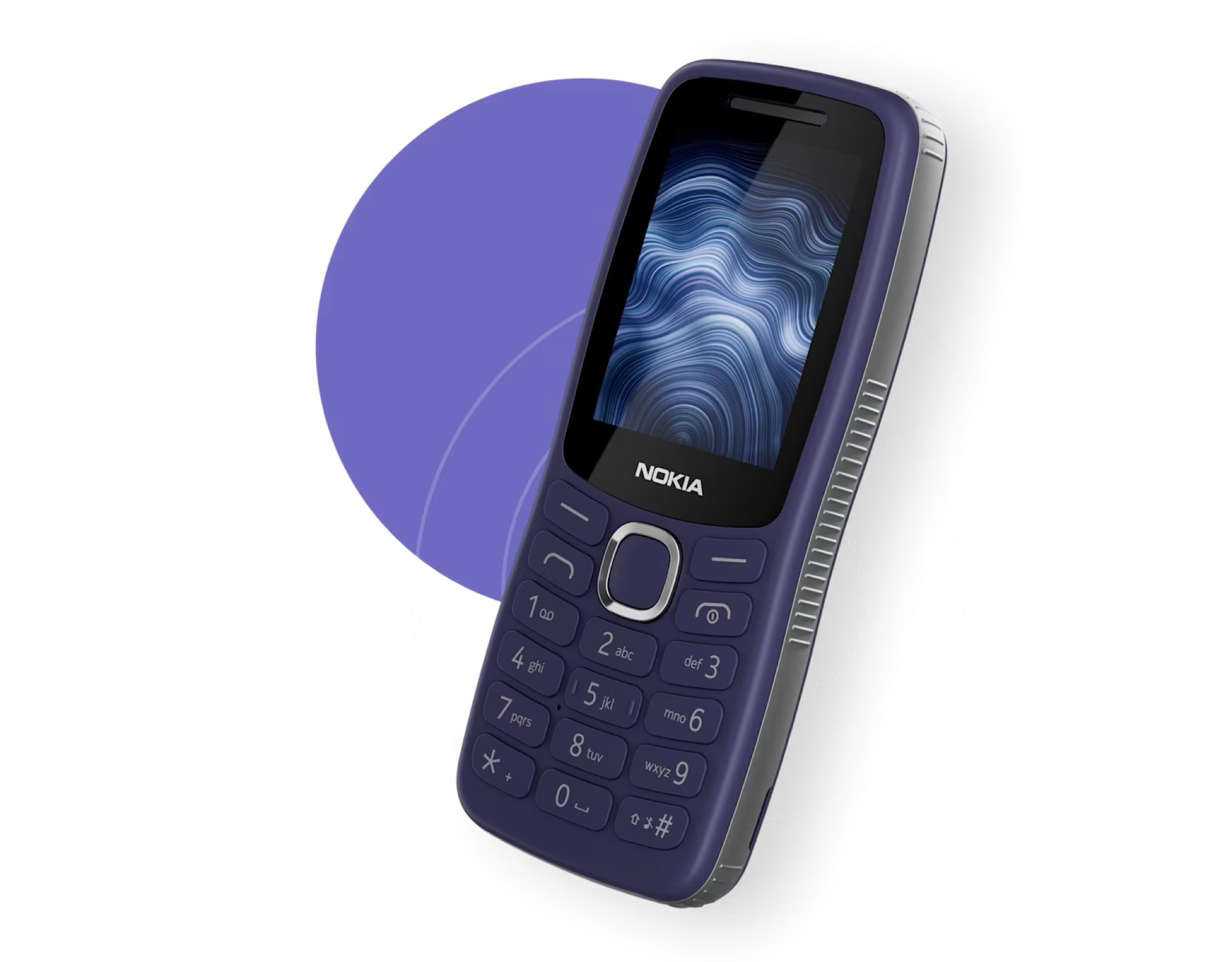
The Nokia 123 Shield has been introduced as HMD’s most affordable water- and dust-resistant feature phone, targeting outdoor workers and customers seeking a durable basic handset.
The new model combines a protective exterior with a removable 1,750-mAh battery, USB-C charging and up to 19 days of claimed standby time. It supports 2G connectivity rather than 4G, positioning it primarily as a voice and text device rather than an internet-focused mobile phone.
HMD has not announced one global recommended retail price. Early European listings, however, suggest that the phone will sell for roughly €32 to €40, depending on the country and retailer.

Nokia 123 Shield targets demanding environments
HMD says the Nokia 123 Shield was designed to withstand everyday exposure to rain, splashes, sand and dust.
Although the company’s main marketing materials do not prominently place an ingress-protection number beside the product name, its official footnote says the phone meets IP65 requirements under the IEC 60529 standard.
An IP65 classification means the device is protected against dust entering its enclosure and against low-pressure water jets. It does not mean the phone is designed for prolonged submersion in water.
The handset has a textured surface along its sides to improve grip, particularly when handled outdoors or while wearing work gloves. Rubber protection around the charging and headphone connections is intended to reduce the likelihood of water, sand or dirt entering the ports.
These design choices suggest HMD is targeting construction workers, agricultural users, delivery personnel and other customers who may need a phone that can tolerate conditions beyond a typical indoor environment.
Call reliability is a central selling point
The Nokia 123 Shield is being marketed primarily around dependable voice communication.
HMD says the handset has been optimized to provide stronger and more consistent call connectivity than some of its earlier entry-level 2G feature phones, including the Nokia 105. The company has not published detailed independent signal-performance measurements supporting the comparison.
The focus on basic calling reflects the phone’s intended market. Feature phones remain useful in areas where customers want long battery life, physical buttons and simple communication without the cost or complexity of a smartphone.
They are also commonly used as backup phones, workplace devices or secondary handsets for customers who need a number dedicated to calls and text messages.
However, reliance on 2G limits the Nokia 123 Shield’s suitability in countries where older mobile networks have already been shut down or are scheduled for retirement. Availability will therefore depend partly on whether local telecommunications operators continue supporting 2G services.

Basic hardware supports calls, radio and music
The Nokia 123 Shield is powered by the Unisoc SC6531E chipset and runs HMD’s S30+ feature-phone operating system.
It includes 4MB of RAM and 4MB of internal storage. Users can add a microSD card with capacity of up to 32GB for music and other supported files.
The handset has a 2.4-inch QVGA display and a basic QVGA rear camera. These specifications are intended for essential functions rather than high-quality photography, video streaming or modern applications.
An LED next to the camera can also operate as a torch. HMD claims the light is three times brighter than the flash included with the Nokia 110, although real-world brightness will depend on how the measurement was conducted.
Physical keys remain a major part of the design. They may appeal to customers who find touchscreen interfaces difficult to operate or who need a phone that can be used reliably with wet or dirty hands.
Removable battery offers extended usage
The handset’s 1,750-mAh removable battery is one of its most important features.
HMD claims the Nokia 123 Shield can deliver as much as 27.9 hours of talk time and remain on standby for up to 19 days after a full charge.
Actual battery performance will vary according to network conditions, signal strength, SIM configuration and how frequently features such as the torch, radio and music player are used.
The removable design allows users to replace an aging battery without opening the phone with specialized tools. It may also be useful for customers working in places where charging is not always available, since a spare charged battery can potentially be carried separately.
Charging is handled through USB-C, bringing the handset in line with the connector increasingly used across smartphones, tablets and other consumer devices.

Dual SIM and FM radio included
The Nokia 123 Shield supports two SIM cards, allowing users to maintain separate lines for work and personal communication or switch between different mobile networks.
It also includes a 3.5-millimeter headphone connection and FM radio support. The radio can operate with either wired earphones or through the phone’s speaker without requiring the headset cable to serve as an antenna.
For customers in markets where mobile data remains expensive or coverage is inconsistent, FM radio continues to provide access to news, entertainment and public information without consuming an internet bundle.
The phone is expected to be offered in green and purple finishes. HMD’s international feature-phone catalogue lists both variants.
European listings indicate budget pricing
HMD had not disclosed a universal launch price at the time of the announcement.
A Bulgarian retailer listed the dual-SIM model for €32, while other early Bulgarian information placed it near €35. Greek marketplace listings showed prices around €39 to €40.
Retail prices may change as the handset reaches additional countries, and taxes, distribution expenses and exchange rates will affect how much customers pay in each market.
HMD has also not confirmed broad availability in Africa or provided a Kenya launch date and local price.
Durability could distinguish HMD’s latest feature phone
The Nokia 123 Shield enters a product category where hardware specifications often differ only slightly between competing models.
Its clearest differentiator is the combination of IP65-rated protection, a large removable battery, USB-C charging and a low expected price.
The absence of 4G will narrow its appeal as operators gradually move away from legacy networks. In countries where 2G remains widely available, however, the device could attract users who value call reliability and durability more than mobile applications.
The next developments to watch will be HMD’s country-by-country pricing, wider availability and whether the company introduces a 4G version carrying similar protective features.
The Nokia 123 Shield comes in green and purple colors. HMD hasn’t revealed its price, but the phone is listed in Bulgaria by multiple retailers for around €35, and in Greece for around €40.
Read Also: Garmin Launches CIRQA Smart Band Without a Screen