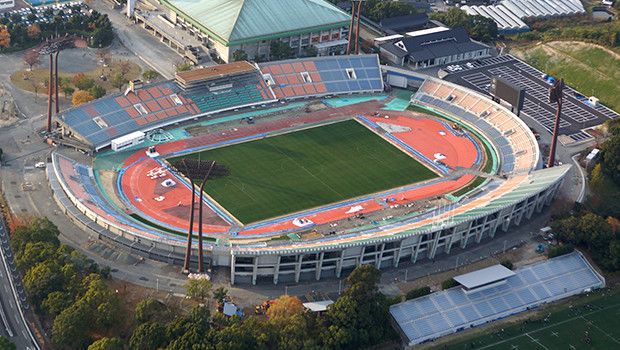
Ningineer Stadium, formerly known as Ehime Matsuyama Athletic Stadium, is a multi-purpose sports venue located in the southern part of Matsuyama, Ehime Prefecture, Japan. Opened in 1979, the stadium has a seating capacity of 30,000 spectators and serves as the home ground for J2 League club Ehime FC. Over the years, it has undergone several expansions and renovations to meet the growing demand of both football and athletics events. The stadium is also known for its distinctive floodlight masts, which were added in the 1990s, and for its connection to local history and sports culture in Ehime.
Stadium Details
| Feature | Information |
|---|---|
| Name | Ningineer Stadium (formerly Ehime Matsuyama Athletic Stadium) |
| Capacity | 30,000 |
| Country | Japan |
| City | Matsuyama |
| Home Club | Ehime FC |
| Inauguration | 1979 |
| Renovations | 1994, 2005, 2012-2014, 2015 |
| Location | 46 Ueno-cho B, Matsuyama, Ehime Prefecture |
| Surface | Grass |
Origins and Construction
Ningineer Stadium was originally built in 1979 as a multi-use athletic venue. Its initial design featured a single concrete grandstand on the west side, with other stands being low artificial embankments covered in grass. The original capacity was set at around 15,000 spectators, which was sufficient for local and regional events at the time.
In the early 1990s, as the popularity of football increased in Japan, especially with the formation of the J.League, the demand for larger stadiums grew. To meet these needs, the stadium was expanded, with floodlights installed in 1994, allowing it to host evening games. Temporary lighting was even used for the first time in 1993 for a game between Sanfrecce Hiroshima and Kashima Antlers, marking a key moment in the stadium’s evolution.
Football and Athletics Hub
Ningineer Stadium has been the primary venue for football in Matsuyama, with Ehime FC calling it home since 2005. The stadium’s grass pitch is surrounded by a traditional 8-lane athletic track, reflecting its dual-purpose nature. Ehime FC typically uses the north and east stands for their matches, making the venue a perfect fit for football games. Despite being a multi-sport venue, the stadium is better suited for football events, with the stands located in close proximity to the pitch for a more intimate fan experience.
The stadium’s versatility extends beyond football. In 2002, it hosted several football training camps for the 2002 FIFA World Cup, further cementing its role as an important venue in Japan’s football infrastructure. Over the years, it has also hosted athletic competitions, including the annual Ehime Prefecture Athletics Championship and other regional events.
Renovations and Naming Rights
The stadium has undergone several significant renovations to accommodate the needs of its users. The most notable of these renovations took place between 2005 and 2008 when the stadium was expanded to meet the growing demands of the J.League. In 2008, the stadium secured a naming rights deal with Ningineer Network Co., Ltd., leading to the stadium being renamed Ningineer Stadium. This partnership was crucial for funding future upgrades and maintaining the stadium as a top-tier venue for football and athletics.
The 2012-2014 renovation added more seating and improved facilities to meet J.League requirements. These upgrades allowed the stadium to accommodate a larger crowd and offer better amenities for both fans and players. The most recent renovation in 2015 focused on improving the track and field area, ensuring the stadium remains a viable option for athletics events.
Key Events and Uses
Ningineer Stadium has been home to numerous important events in Japanese football. It has hosted key J.League matches for Ehime FC, as well as other sports events, including rugby and athletics competitions. The stadium has also been used as a training ground for national teams during the World Cup years.
In 2019, the stadium hosted rugby matches as part of the Rugby World Cup, further demonstrating its versatility and capacity to accommodate different sporting codes.
Location and Accessibility
The stadium is located in the heart of Matsuyama, Japan’s capital of Ehime Prefecture. It is easily accessible by public transportation, with bus and train services available nearby. The stadium is within a 30-minute walk from JR Matsuyama Station, making it convenient for visitors to access from all parts of the city.
Conclusion
Ningineer Stadium is an iconic venue in Matsuyama, serving as the heart of sports in Ehime Prefecture. It has played a significant role in both football and athletics, providing a platform for local and international sporting events. Over the years, the stadium has undergone several upgrades, ensuring it remains a key part of the region’s sporting infrastructure. With its rich history, ongoing renovations, and strong connection to Ehime FC, Ningineer Stadium is sure to continue serving as a vital hub for sports fans in Matsuyama for many years to come.