Net Worth: $2 Million
Category: Richest Politicians › Presidents
Birthdate: July 24, 1981
Birthplace: San Salvador, El Salvador
Profession: Politician
Nationality: El Salvador
What is Nayib Bukele’s Net Worth?
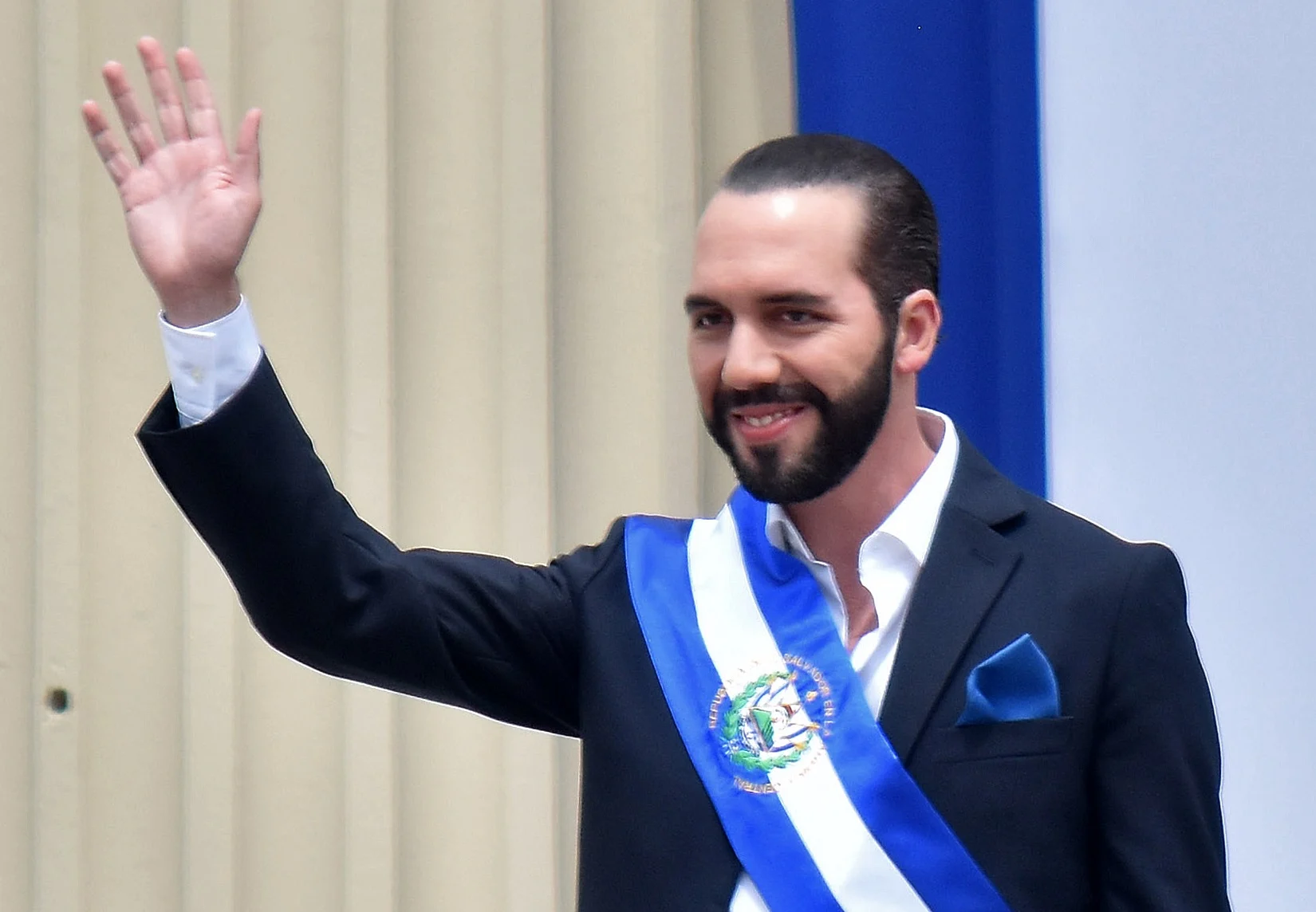
Nayib Bukele, the President of El Salvador, has an estimated net worth of $2 million. His wealth primarily comes from his business ventures, political career, and real estate investments. Before becoming the leader of El Salvador in 2019, Bukele served as the mayor of Nuevo Cuscatlán and San Salvador.
Although Bukele remains one of Latin America’s most popular presidents, his leadership has been marred by allegations of authoritarian rule, media suppression, and corruption. His financial dealings, especially regarding Bitcoin adoption and government expenditures, have drawn significant global scrutiny.
Early Life and Education
Nayib Armando Bukele Ortez was born in San Salvador, El Salvador, into a politically and economically influential family. His father, Armando Bukele Kattán, was a prominent businessman of Palestinian descent and a religious leader in El Salvador. His mother, Olga Ortez de Bukele, is of Christian background, making Nayib Bukele one of the few world leaders with both Islamic and Christian influences in his upbringing.
Bukele attended Central American University (Universidad Centroamericana – UCA), where he initially studied law but later dropped out to pursue business ventures. He went on to own and operate Yamaha Motors El Salvador, a company specializing in motorcycle and equipment sales. This early business experience gave him financial independence before transitioning into politics.
Business Ventures and Financial Growth
Before entering politics, Bukele was active in private business, with interests in automobile dealerships, advertising, and telecommunications. Some of his financial assets include:
- Yamaha Motors El Salvador: Owned and operated before his political career.
- Media and Advertising Companies: He was involved in multiple advertising agencies that handled government contracts and private sector promotions.
- Real Estate Investments: Bukele has been linked to several properties in San Salvador and other high-end locations, increasing his wealth.
Despite his $2 million official net worth, critics and investigative reports suggest that his actual wealth could be significantly higher due to unverified offshore accounts and business interests tied to government contracts.
Political Career and Financial Impact
Mayor of Nuevo Cuscatlán (2012-2015)
Bukele entered politics in 2012, winning the mayorship of Nuevo Cuscatlán, a small but economically important town. During his tenure, he:
- Provided financial aid to residents over 55 years old to cover essential living needs.
- Funded university scholarships for students with high academic performance.
- Reduced the homicide rate, which improved his reputation as a pro-security candidate.
His mayoral position gave him access to public funds and infrastructure projects, which some analysts believe helped him build personal wealth through government contracts.
Mayor of San Salvador (2015-2018)
In 2015, Bukele defeated businessman Edwin Zamora to become the Mayor of San Salvador, the capital of El Salvador. His administration focused on:
- Modernizing infrastructure by expanding roads and telecommunications.
- Revitalizing historic districts to attract tourism and investment.
- Strengthening law enforcement to curb gang-related crimes.
However, reports surfaced that millions of dollars in government contracts were awarded to companies linked to Bukele’s allies, sparking corruption accusations.
Presidential Election and Political Ascent
Expulsion from FMLN and Presidential Candidacy
In 2017, Bukele was expelled from the Farabundo Martí National Liberation Front (FMLN), his former political party, due to allegations of internal sabotage and physical assault against fellow party members.
Determined to run for President of El Salvador, he founded Nuevas Ideas, a new political party. However, after legal challenges from the Supreme Electoral Court, he instead ran under the center-right Grand Alliance for National Unity (GANA).
Victory in 2019 and Financial Implications
In 2019, Bukele won the presidency, becoming the first Salvadoran president since the 1980s to be elected without representing one of the two dominant political parties (FMLN or ARENA). His presidency significantly changed El Salvador’s economy, leading to both praise and controversy.
Presidency and Financial Policies
Anti-Crime Crackdown and Allegations of Secret Deals
Upon taking office, Bukele implemented an aggressive crackdown on crime, equipping the police and military with modern weapons and surveillance technology. While crime rates dropped, reports emerged that he secretly negotiated with criminal gangs to reduce violence, raising concerns about backdoor financial deals.
Authoritarian Moves and Asset Seizures
In 2020, Bukele sent soldiers into the Legislative Assembly to force lawmakers to approve military funding. In 2021, he removed five Supreme Court judges and the Attorney General, consolidating power in a move seen as a self-coup. These actions raised suspicions about government financial mismanagement and undisclosed state assets.
Bitcoin and the $22 Million Crypto Controversy
In 2021, Bukele made Bitcoin legal tender in El Salvador, the first country in the world to do so. He invested millions of taxpayer dollars into Bitcoin, claiming it would attract foreign investment and reduce remittance costs.
However, Bitcoin’s value plummeted, leading to $22 million in national reserves disappearing and causing El Salvador’s national debt to reach record highs. Many Salvadorans rejected the move, and financial institutions like the IMF warned that Bitcoin adoption posed major economic risks.
Despite the controversy, Bukele continues to promote Bitcoin as a financial revolution, even planning to build a “Bitcoin City” funded by cryptocurrency-backed bonds.
Personal Wealth and Lifestyle
Bukele lives a luxurious lifestyle, often seen in designer suits, Rolex watches, and high-end cars. His official salary as president is relatively modest, yet he continues to fund extravagant government projects, raising concerns about undisclosed sources of income.
His assets and potential offshore accounts remain largely unverified, but opposition parties and investigative journalists have questioned how his personal wealth aligns with his government’s economic struggles.
Personal Life
Bukele is married to Gabriela Rodríguez, an educator and prenatal psychologist. The couple welcomed their first child in 2019, shortly after Bukele assumed the presidency.
Despite his political dominance and popularity, Bukele’s legacy remains a subject of intense debate. His concentration of power, financial dealings, and Bitcoin experiment have left a lasting impact on El Salvador’s economy and governance.
Conclusion
Nayib Bukele’s $2 million net worth represents only his publicly declared assets, but his actual financial influence is likely far greater. As a businessman-turned-populist leader, his presidency has been marked by economic experiments, media suppression, and financial secrecy.
While he continues to receive overwhelming support from many Salvadorans, his handling of Bitcoin investments, authoritarian governance, and military-backed policies have raised serious ethical and financial concerns. His long-term impact on El Salvador’s economy and democracy remains uncertain.