Net Worth: $12 Million
Category: Richest Politicians › Presidents
Birthdate: November 20, 1957 (67 years old)
Birthplace: Ogbia, Nigeria
Gender: Male
Profession: Politician
Nationality: Nigeria
What is Goodluck Jonathan’s Net Worth?
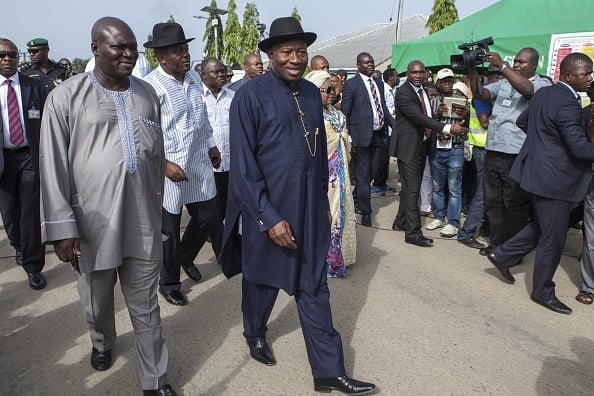
Goodluck Jonathan, Nigeria’s former president, has an estimated net worth of $12 million. His wealth primarily comes from his political career, investments, and post-presidency engagements. He served as Nigeria’s Vice President (2007-2010) under Umaru Yar’Adua and became President (2010-2015) following Yar’Adua’s death. Before his tenure at the national level, Jonathan was the Governor of Bayelsa State (2005-2007).
Despite his official net worth declaration, his finances have been subject to controversy, with some reports speculating that he could be worth as much as $250 million. However, these claims have been dismissed by his administration, and the Nigerian government has threatened legal action against publications spreading such figures.
Wealth Debate and Controversies
Goodluck Jonathan’s financial status has been a highly debated topic in Nigeria. Upon assuming the vice presidency in 2007, he publicly declared his wealth at approximately $8.5 million. However, critics have argued that his wealth grew significantly during his time in office, with unverified claims suggesting he might be among Nigeria’s richest politicians.
In 2014, the Nigerian presidency denied allegations that Jonathan was worth hundreds of millions of dollars, maintaining that he regularly disclosed his assets as required by law. The administration also warned media houses against publishing exaggerated estimates of his net worth.
Jonathan’s time in office was marred by allegations of corruption and financial mismanagement, with reports indicating that billions of dollars went unaccounted for. One of the most significant controversies involved an alleged $15 billion withdrawal from the Central Bank of Nigeria under the guise of national security. Critics claim the funds were used for his reelection campaign in 2015, though Jonathan never faced legal prosecution for the allegations.
Early Life and Education
Goodluck Jonathan was born on November 20, 1957, in Ogbia, then part of British Nigeria. He hails from a Christian family of canoe-makers and belongs to the Ijaw ethnic group.
He pursued higher education at the University of Port Harcourt, where he earned:
- A Bachelor’s degree in Zoology
- A Master’s degree in Fisheries Biology and Hydrobiology
- A Doctorate in Zoology
Before entering politics, Jonathan worked in various capacities, including:
- Education Inspector
- Lecturer
- Environmental Protection Officer
- Assistant Director at the Oil Mineral Producing Areas Development Commission (1993-1998)
Political Career and Rise to Power
Governor of Bayelsa State (2005-2007)
Jonathan’s political career began when he was appointed as Deputy Governor of Bayelsa State in 1999 under Governor Diepreye Alamieyeseigha. However, in 2005, when Alamieyeseigha was impeached for money laundering, Jonathan was sworn in as Governor of Bayelsa.
Vice Presidency (2007-2010)
In 2007, Jonathan was selected as the Vice Presidential candidate for the People’s Democratic Party (PDP) alongside Umaru Yar’Adua, who won the election. As Vice President, Jonathan was:
- A member of the National Security Council
- A member of the Federal Executive Council
- A member of the National Defence Council
- The Chairman of the National Economic Council
- A key negotiator with Niger Delta militant groups, helping to restore peace in the oil-rich region.
Presidency (2010-2015)
Following Umaru Yar’Adua’s prolonged illness, Jonathan was sworn in as Acting President in early 2010. After Yar’Adua’s death on May 5, 2010, Jonathan officially became Nigeria’s President.
Achievements and Economic Growth
During his tenure, Jonathan oversaw:
- Economic expansion: Nigeria’s GDP was recalibrated, making it Africa’s largest economy.
- Infrastructure development: New railways, airports, and federal roads were constructed.
- Power sector reform: Jonathan pushed for privatization of electricity production to improve power supply.
Controversies and Security Issues
Despite economic growth, Jonathan’s presidency faced serious challenges:
- Corruption allegations: Billions of dollars in public funds were reported missing or misused.
- Security failures: Boko Haram, a violent terrorist group, launched numerous attacks, bombings, and kidnappings under Jonathan’s leadership. His handling of the Chibok schoolgirl kidnappings (2014) drew heavy criticism.
- Anti-LGBTQ+ law: Jonathan signed the Same-Sex Marriage Prohibition Act (2014), criminalizing homosexual relationships with severe penalties.
Reelection Defeat (2015)
In the 2015 presidential election, Jonathan lost to Muhammadu Buhari, a former military ruler. He became the first incumbent Nigerian president to concede defeat, a move that earned him international praise for strengthening Nigeria’s democracy.
Post-Presidency Career
After leaving office, Jonathan continued to play a role in national and international affairs:
- Bayelsa Education Trust Fund Board (2019): Honorary Special Adviser.
- Chairperson of the International Summit Council for Peace (2019).
- Special Envoy of the Economic Community of West African States (2020).
Jonathan remains an influential political figure and has been involved in international peace efforts.
Personal Life and Legacy
Goodluck Jonathan is married to Patience Jonathan, a former First Lady known for her outspoken nature. The couple has two children, Ariwera and Aruabai.
His legacy remains divisive:
- Supporters credit him for stabilizing Nigeria’s economy and advancing democratic governance.
- Critics blame him for corruption, weak security policies, and mishandling terrorist threats.
Conclusion
Goodluck Jonathan’s net worth of $12 million is officially modest for a former Nigerian president. However, debates over possible hidden wealth and alleged financial mismanagement persist. His role in conceding electoral defeat in 2015 is widely regarded as a milestone for Nigerian democracy, making him a controversial yet historically significant figure in African politics.