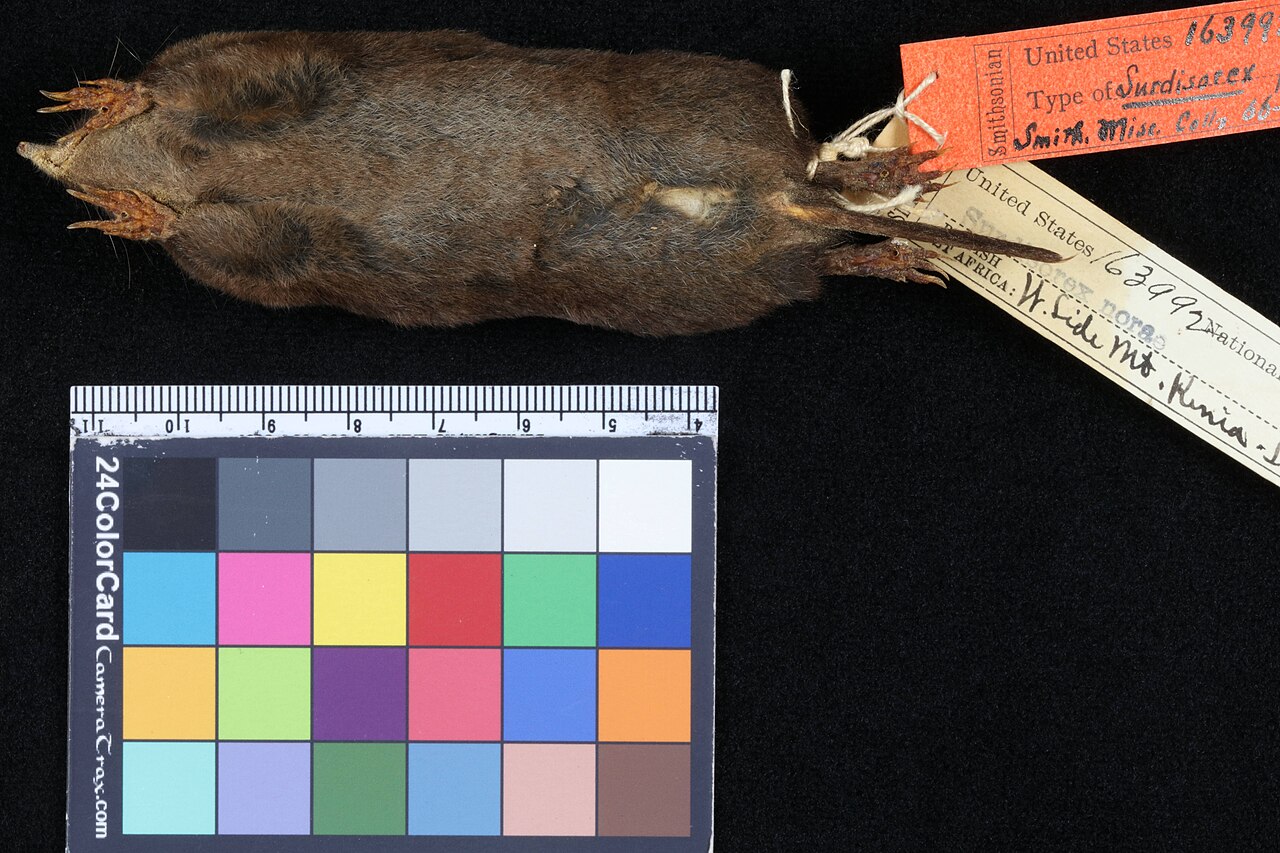
The Mount Kenya mole shrew (Surdisorex polulus) is a small, elusive mammal in the Soricidae family, found exclusively on Mount Kenya, one of Africa’s most prominent volcanic peaks. Known for its secretive, subterranean lifestyle, this insectivorous species thrives in high-altitude bamboo forests and montane grasslands, particularly in the bamboo belt that rings Mount Kenya.
Classified as vulnerable by the International Union for Conservation of Nature (IUCN), the Mount Kenya mole shrew is one of only two known species in the Surdisorex genus, the other being the Aberdare mole shrew (Surdisorex norae), found on the nearby Aberdare Range. These two species represent the only endemic mammals of Kenya restricted solely to high montane ecosystems, making them biologically significant and ecologically sensitive indicators of environmental health.
Habitat and Ecology
The natural habitat of the Mount Kenya mole shrew includes tropical high-elevation bamboo forests, dense montane grasslands, and adjacent heath zones, generally found at altitudes exceeding 2,800 meters (9,186 feet). These environments offer both cover and food sources—primarily invertebrates such as insects, earthworms, and larvae, which the shrew locates using its keen sense of smell.
The dense vegetation and soft, moist soils in these habitats facilitate the shrew’s burrowing behavior, which is typical of mole shrews. Though rarely observed directly, signs of its presence are inferred from tunnel systems and feeding marks, especially in the bamboo forest undergrowth, which is rich in leaf litter and decaying organic matter.
Endemism and Conservation Status
The Mount Kenya mole shrew is listed as Vulnerable on the IUCN Red List due to its extremely limited range—confined entirely to a single montane location in central Kenya. Its extent of occurrence is estimated at less than 2,000 square kilometers, and there is no evidence of populations outside Mount Kenya.
This narrow habitat preference makes the species particularly susceptible to environmental disturbances, such as:
- Deforestation and bamboo harvesting
- Land conversion for agriculture
- Climate change, which threatens high-elevation ecosystems by altering temperature and precipitation patterns
Although part of its range lies within the Mount Kenya National Park, a UNESCO World Heritage Site, conservationists have raised concerns about the lack of active monitoring programs for this and other lesser-known endemic species.
Taxonomic Uniqueness
The genus Surdisorex, to which the Mount Kenya mole shrew belongs, is Kenya’s only endemic mammal genus. As such, its preservation is of exceptional scientific importance. Surdisorex polulus was first described in 1915, and since then, sightings and specimen collection have remained extremely rare due to its cryptic habits.
Its close relative, the Aberdare mole shrew, shares similar ecological characteristics but is found on a separate mountain range—suggesting isolated evolutionary paths and limited gene flow. This biogeographic isolation makes the Mount Kenya mole shrew a priority species for endemic biodiversity research and conservation.
Threats and Conservation Efforts
Despite its location within a protected area, the Mount Kenya ecosystem faces human-induced pressures. Unregulated tourism, illegal logging, firewood collection, and agricultural expansion continue to fragment and degrade the shrew’s specialized habitat.
Conservation priorities for this species include:
- Long-term ecological monitoring to track population trends
- Habitat restoration in degraded bamboo and grassland areas
- Environmental education programs targeting local communities
- Targeted surveys and research to map the species’ exact range and understand its ecological requirements
Research efforts are currently limited, and more studies are needed to inform species-specific action plans under Kenya’s broader wildlife conservation strategy.
Scientific Significance
As a highland specialist with limited mobility and habitat specificity, the Mount Kenya mole shrew provides valuable insights into:
- Montane ecosystem health
- Effects of climate change on endemics
- Evolutionary biology of African shrews
Its presence indicates a functioning, relatively undisturbed high-altitude habitat—making it a valuable bioindicator species. Any significant decline in its population could signal broader ecological disruptions.
Conclusion
The Mount Kenya mole shrew remains one of the least understood mammals in Kenya, yet its importance in ecosystem monitoring, scientific research, and conservation biology cannot be overstated. With its survival tied closely to the health of Mount Kenya’s fragile highland zones, protecting this rare creature requires dedicated research, habitat protection, and policy support.