In 2025, Africa’s AI startup ecosystem is no longer an underdog—it’s a rising force with serious funding and global impact. A new breed of startups is leading the charge, building AI products for healthcare, manufacturing, logistics, agriculture, and financial services.
This article explores the most funded AI startups in Africa, what they do, how much they’ve raised, and why they matter.
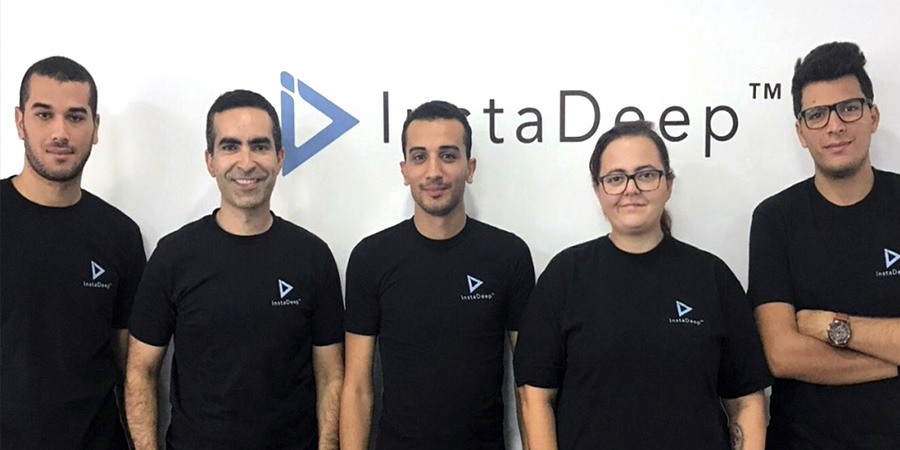
🥇 InstaDeep (Tunisia / Global)
- Total funding: Approximately $107 million
- Focus: Decision-making AI for biotech, logistics, and energy
- Why it stands out: InstaDeep has become Africa’s AI success story by building deep reinforcement learning and predictive systems. Its global partnerships and eventual acquisition by a major biotech player marked a milestone for African AI.
🥈 Sama (Kenya)
- Total funding: Around $85 million
- Focus: Data annotation and training infrastructure for global AI systems
- Why it stands out: Sama’s business model combines AI infrastructure services with social impact by employing thousands in underserved communities. It powers machine learning pipelines for some of the world’s largest tech companies.
🥉 DataProphet (South Africa)
- Total funding: About $16 million
- Focus: AI-driven quality control and yield optimization in manufacturing
- Why it stands out: DataProphet provides actionable insights to manufacturers through AI. Their predictive analytics help reduce waste, improve product quality, and save costs—bringing smart manufacturing to African industries.
💡 Rwazi (Pan-Africa)
- Recent raise: $12 million Series A
- Focus: Geospatial analytics, market intelligence, and real-time data
- Why it stands out: Rwazi collects and analyzes ground-level and satellite data to track infrastructure, supply chains, and retail performance. It’s enabling smarter economic planning and logistics for African governments and businesses.
🧪 RxAll (Nigeria)
- Total funding: Approximately $7 million
- Focus: AI and IoT-powered authentication for pharmaceutical drugs
- Why it stands out: RxAll combats counterfeit medicine by using hyperspectral scanners and AI to verify drug authenticity in real-time. It serves hospitals, pharmacies, and regulators across Africa.
🌍 Amini (Kenya)
- Total funding: Around $6 million
- Focus: Environmental data modeling and climate intelligence
- Why it stands out: Amini uses satellite imagery, sensors, and machine learning to provide environmental insights to agriculture, climate finance, and conservation efforts. It’s helping Africa tackle climate challenges with data-driven precision.
🤖 DXwand (Egypt)
- Total funding: Around $7 million
- Focus: Conversational AI, chatbots, and customer automation
- Why it stands out: DXwand is enabling small and medium enterprises across the Middle East and Africa to automate customer service and sales using multilingual chatbots and AI call center solutions.
📈 African AI Funding Trends
- Dominant countries: Nigeria, Kenya, South Africa, and Egypt continue to lead in both funding and startup volume.
- Key sectors attracting capital: Healthcare, manufacturing, enterprise automation, logistics, and environmental intelligence.
- Average Series A funding in 2025: Between $5–15 million for top-tier AI startups.
- Investor appetite: Strong interest from global VC funds, development finance institutions, and impact investors targeting both returns and inclusive tech development.
🌐 Why These Startups Matter
These AI startups are not only winning capital—they are building infrastructure for:
- Ethical AI data sourcing (Sama)
- Life-saving drug verification (RxAll)
- Climate and food system resilience (Amini)
- Smarter manufacturing (DataProphet)
- Continental logistics visibility (Rwazi)
Their success is a sign that Africa is producing globally competitive AI companies capable of solving local and international problems.
🔮 What’s Next for AI in Africa?
- More unicorns: As these companies scale, several could cross the billion-dollar valuation mark by 2026.
- Cross-border expansion: African AI leaders will begin setting up regional offices across the continent and Middle East.
- Vertical integration: Expect more AI startups to blend hardware, cloud infrastructure, and data into full-stack offerings.
- Government partnerships: With their success, startups will increasingly support national infrastructure projects and public service delivery.
Conclusion
The most funded AI startups in Africa are laying the foundation for a smarter, faster, and more inclusive future. They’re proving that world-class AI can be built—and scaled—on African soil. With each funding milestone, they open doors for the next generation of AI founders, engineers, and ecosystem builders.
If Africa is the next frontier for AI innovation, these startups are already charting the map.