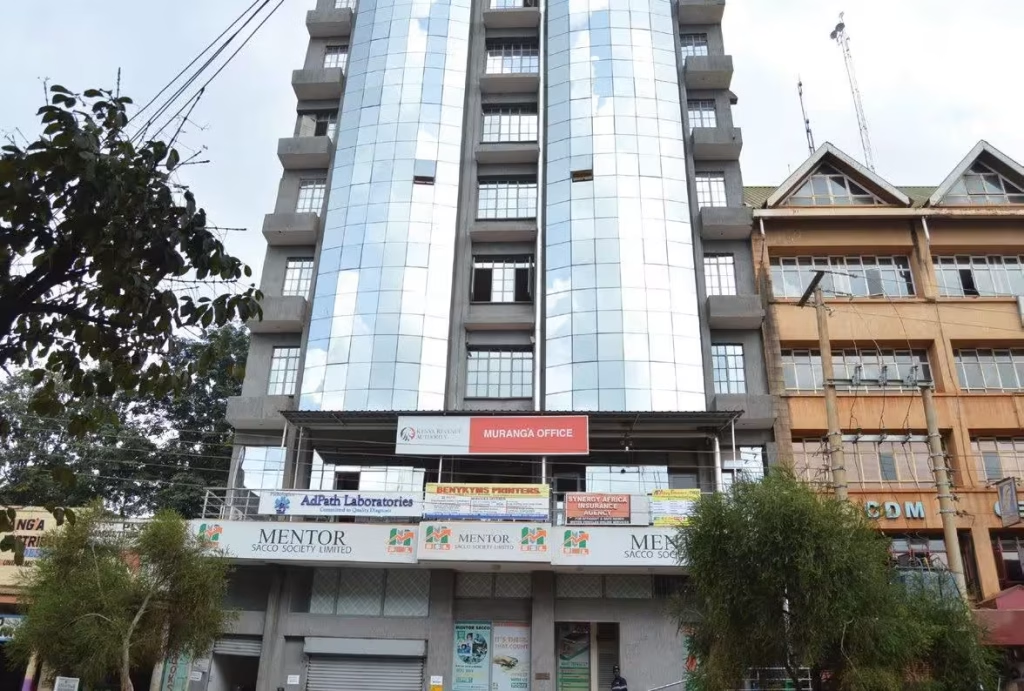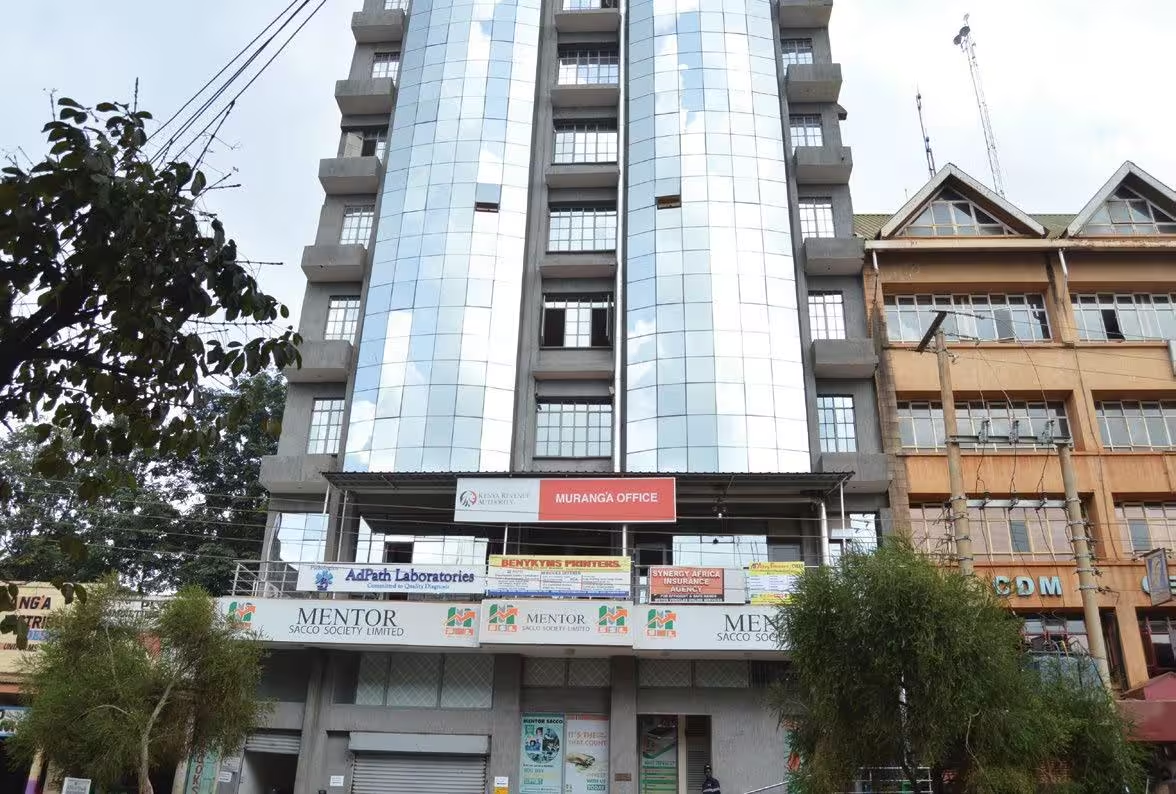
Mentor Sacco has evolved into one of Kenya’s steadily growing cooperative financial institutions, anchored in Murang’a County but serving a broader national membership. Since its establishment in 1977, Mentor Sacco has transitioned from a localized society into a more inclusive financial institution.
As financial markets in Kenya modernized, Mentor Sacco amended its by-laws to expand membership. Today, Mentor Sacco serves civil servants, disciplined forces, county and national government employees, private sector workers, entrepreneurs, chamas and institutions. This diversification reflects the wider shift in Kenya’s SACCO sector from employer-based cooperatives to open-bond financial institutions.
Mentor Sacco Background and Institutional Growth
Mentor Sacco was founded in 1977 during a period when Kenya’s cooperative movement primarily served sector-specific groups. Over time, the society rebranded to Mentor Sacco Society Limited to reflect its broader reach and inclusive strategy.
The Sacco emphasizes dignity, affordability and member-focused innovation. For nearly four decades, Mentor Sacco has positioned itself as a customer-driven cooperative. Its growth aligns with Kenya’s expanding middle-income workforce and evolving financial expectations.
Mentor Sacco Branch Network
Mentor Sacco operates several branches across Murang’a County and Nairobi. Key branches include:
Murang’a Branch – Mentor House, Uhuru Highway
Thika Town Branch
Kenol Town Branch – Highway Villa Building
Nairobi Branch – Ngara
Kiriaini Town Branch
Ithanga Branch
Kangari Town Branch
Kandara Town Branch
This branch network ensures accessibility for members in both rural and urban centers.
Mentor Sacco Paybill Number
Mentor Sacco Paybill Number is 540800.
Members can use this paybill to deposit funds directly into their Sacco accounts via M-PESA. Mobile integration enhances convenience and supports real-time transactions.
In Kenya’s digital finance ecosystem, M-PESA paybill services remain a critical channel for SACCO deposits and loan repayments.
Mentor Sacco Savings Account
Mentor Sacco offers a transactional savings account that channels all Sacco proceeds. Key features include:
• Minimum operating balance of Ksh 500
• No account opening balance requirement
• ATM card upon application
• Access at any branch
• No cash deposit charges
• Free internal standing orders
• Access via Quickcash mobile banking platform
These features align with the cooperative principle of affordability while supporting everyday transactions.
Mentor Sacco Mobile Banking
Mentor Sacco provides mobile banking access through USSD code 2761#.
The platform enables members to perform menu-driven transactions without downloading applications. Mobile banking offers 24-hour access, strengthening convenience and reducing branch traffic.
As Kenya’s SACCO sector digitizes, USSD platforms remain essential for members without smartphones.
Mentor Sacco Contacts
Head Office
Mentor House, Uhuru Highway
Murang’a Town
P.O. Box 789–10200, Murang’a
Phone: 0704 066 827 / 020 3580167
Email: [email protected]
Nairobi Branch – Ngara
Phone: 0713 072 137
Kenol Town Branch
Phone: 0704 350 662
Other branches can be contacted through the main office line.
Mentor Sacco in Kenya’s Cooperative Sector
Kenya’s SACCO movement continues to adapt to regulatory oversight and fintech competition. Institutions that expand membership while maintaining governance standards remain competitive.
Mentor Sacco’s expansion beyond Murang’a signals strategic diversification. By broadening its common bond, it reduces sector concentration risk and increases capital mobilization.
Why This Matters
SACCOs remain central to Kenya’s financial inclusion strategy. They provide structured savings and affordable credit to civil servants, entrepreneurs and community groups.
Mentor Sacco contributes to local economic development by channeling member savings into productive loans.
What Happens Next
Mentor Sacco will likely deepen digital adoption and refine its product range. Continued expansion into urban centers may strengthen its market position.
For members, evaluating dividend performance, service efficiency and digital accessibility remains crucial when selecting a cooperative partner.