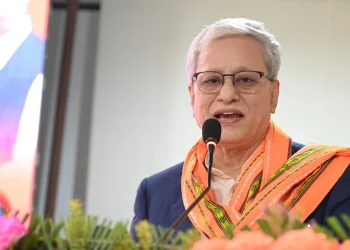
Makali Mulu has built a reputation as one of Kenya’s experienced legislators, combining academic training in economics with sustained parliamentary service. Currently representing Kitui Central Constituency in the National Assembly, Makali Mulu has served across multiple parliamentary terms, positioning himself as a key figure within the Wiper Democratic Movement–Kenya party.
His political journey reflects a progression from public sector economics into elective office. Before entering full time politics in 2013, he had already accumulated extensive experience in national planning, monitoring and evaluation and project consultancy. That background continues to inform his committee assignments and policy focus areas.
Understanding Makali Mulu requires examining both his academic foundation and his professional career. His path from rural Kitui to advanced economic studies and eventually Parliament illustrates the interplay between education, public service and political leadership in Kenya.
Early Life and Educational Background
Childhood and Naming Legacy
Born around 1965, Makali Mulu’s early life in Kitui County shaped his formative years. His given name, “Makali,” which translates to “bricks” in Kamba, carries cultural significance. It reflects a history of resilience within his family, as his mother endured the loss of three children before his birth.
Primary and Secondary Education
He began his education at Mulundi Primary School in 1973. He completed his Certificate of Primary Education in 1979, reportedly excelling in his Standard 7 examinations. He later joined Kyagwathya Secondary School for his O-Level studies between 1980 and 1983.
From 1984 to 1985, he attended St. Charles Lwanga School for his A-Level education. These formative academic years laid the groundwork for his subsequent university studies.
University and Advanced Studies
In 1987, Makali Mulu enrolled at the University of Nairobi, where he earned a Bachelor of Arts in Economics in 1990. He continued at the same institution to complete a Master of Arts in Economics in 1992.
His academic pursuit extended internationally in 1995 when he obtained a Certificate in Monitoring and Evaluation of Public Programmes and Projects from the University of East Anglia in the United Kingdom. Later, between 2009 and 2015, he undertook a Doctor of Philosophy in Economics at Kenyatta University.
This combination of undergraduate, postgraduate and doctoral studies underscores his strong grounding in economic policy and development planning.
Professional Career Before Politics
Government Economist
Makali Mulu began his professional career in 1991 as an Economist in the Ministry of Planning and Finance, serving until 1997. In this role, he applied macroeconomic principles to national development frameworks, contributing to public sector planning and fiscal analysis.
Monitoring and Evaluation Roles
After his tenure in government, he joined the Constituency Development Trust Fund from 1997 to 2004 as a Monitoring and Evaluation Officer. This position involved overseeing development projects and assessing performance outcomes.
Between 2004 and 2007, he served as a Monitoring and Evaluation Specialist at GJLOS. He later worked as an independent consultant from 2007 to 2012, specializing in project management and evaluation. These roles reinforced his expertise in public finance oversight and development implementation.
Political Career and Parliamentary Service
Entry Into Elective Politics
In 2013, Makali Mulu transitioned into full time politics and won the Kitui Central parliamentary seat. His election marked the beginning of his tenure in the National Assembly during the 11th Parliament.
He has since been re elected and continues to serve in the 12th and 13th Parliaments under the Wiper Democratic Movement–Kenya party.
Committee Work and Legislative Engagement
Within Parliament, Makali Mulu has served on several influential committees. These include the Budget and Appropriations Committee, the Finance and Planning Committee and the Constitutional Implementation Oversight Committee.
In 2024, he was appointed to a mediation committee tasked with resolving the legislative stalemate over the County Governments Additional Allocations Bill between the National Assembly and the Senate. Participation in such mediation roles reflects recognition of his experience in fiscal matters.
Focus on Education and Human Capital
Makali Mulu is known for prioritizing human capital development in his constituency. Reports indicate that he has facilitated bursary disbursements amounting to Ksh47 million, benefiting over 12,500 students. These initiatives align with his stated emphasis on education and infrastructure support within Kitui Central.
Family and Personal Life
Public information about Makali Mulu’s family life remains limited. Like many legislators, he maintains privacy regarding personal matters while focusing public communication on policy issues and constituency development.
His long academic journey and public service career suggest a life shaped by structured planning and sustained engagement in governance.
Earnings and Net Worth
Parliamentary Salary Structure
Makali Mulu’s net worth is not publicly disclosed in verified financial records or official declarations. However, as a Member of Parliament, he earns a gross monthly salary of Ksh739,600.
This includes a Basic Salary of Ksh443,760, a House Allowance of Ksh150,000 and a Salary Market Adjustment of Ksh145,840.
Allowances and Benefits
In addition to the gross salary, he earns Ksh7,500 per parliamentary sitting, capped at Ksh120,000 monthly. He is also entitled to a Mileage Allowance of Ksh116.63 per kilometre, capped at Ksh353,778 monthly.
Further benefits include a Car Maintenance Allowance of Ksh356,525 monthly and an Airtime Allowance of Ksh15,000 monthly. These allowances form part of the standardized remuneration package for Kenyan legislators.
While specific details regarding his personal wealth are not publicly available, his earnings from parliamentary service and previous consultancy work constitute his documented income sources.
A Career Anchored in Economics and Governance
Makali Mulu’s professional path reflects continuity between academic economics and legislative responsibility. From national planning roles in the early 1990s to committee leadership in Parliament, his career illustrates sustained engagement in fiscal and development policy.
As Kitui Central continues to address infrastructure and education priorities, his economic training and monitoring background remain central to his legislative contributions. Through multiple parliamentary terms, Makali Mulu has maintained a presence at the intersection of economic expertise and political leadership within Kenya’s governance landscape.