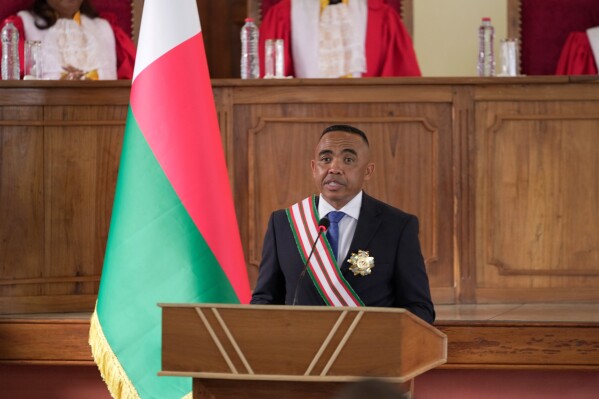
Madagascar coup leader Colonel Michael Randrianirina has officially been sworn in as president, following a military takeover that ended the rule of former President Andry Rajoelina. The swearing-in ceremony took place at the High Constitutional Court in Antananarivo on Friday, October 17, 2025, marking a major shift in Madagascar’s political landscape.
In his inaugural address, Randrianirina vowed to uphold the constitution, safeguard the rule of law, and restore national stability. “Today marks a turning point for our nation, for the Malagasy people themselves are thirsting for profound change,” he said. “We give our solemn assurance to break away from the harmful practices of the past. We will protect and rebuild the system of governance to align it with the aspirations of our people.”
Military Takeover and International Response
Randrianirina’s rise to power came three days after the military seized control of the Indian Ocean island nation, following weeks of youth-led protests demanding better governance, affordable living conditions, and an end to corruption. The United Nations condemned the coup, while the African Union suspended Madagascar’s membership, calling for a swift return to civilian rule.
The coup forced President Andry Rajoelina to flee the country, with his whereabouts currently unknown. Randrianirina later announced that Madagascar would be governed by a military council under his leadership for 18 to 24 months, after which new democratic elections would be held.
Voices from the Streets
Outside the court, young protestors who had led the demonstrations viewed the moment as both historic and symbolic. Rabemanantsoa Emmanuel, a member of Gen Z, told reporters that Randrianirina’s rise represented a consequence of leaders ignoring youth voices. “This change happened because our government failed to listen to us,” he said.
Another local leader, Rakotoarisoa Alban, described the event as “a victory for all Malagasy people,” emphasizing that citizens across generations shared the same hope for renewal and accountability.
Economic and Social Pressures
The recent unrest in Madagascar was fueled by power and water shortages, rising costs of living, and deep-seated corruption within the elite class. Many young people, frustrated by unemployment and systemic inequality, mobilized under grassroots movements that eventually gained national traction.
As Colonel Randrianirina takes office, the nation faces mounting international pressure to restore democratic order and rebuild trust among citizens. His promise to hold elections within two years will be closely watched by both regional observers and global institutions eager to see Madagascar stabilize after another turbulent political transition.