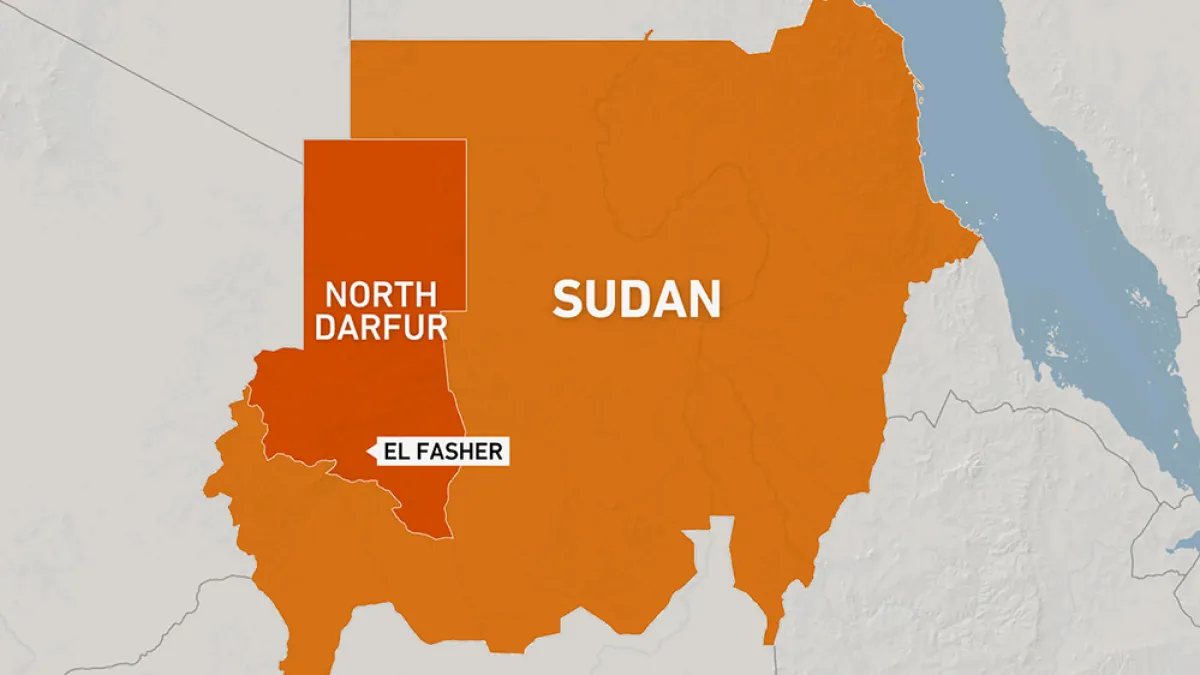
Intensified fighting in North Darfur’s capital, El-Fasher, has triggered a new humanitarian emergency, with the number of displaced people tripling this year in Tawila, a town just 60 kilometers away, according to the International Organization for Migration (IOM).
Ugochi Daniels, IOM’s Deputy Director General for Operations, told the Associated Press on Thursday that El-Fasher’s population has dropped by 62 percent in 2025 alone. She warned that Sudan now faces the world’s largest displacement crisis, with millions struggling to survive amid deteriorating conditions.
“The situation in North Darfur remains the epicenter of the crisis,” Daniels said. “We need peace to access the most difficult places where needs are greatest.”
Worsening Humanitarian Situation
The escalation in El-Fasher — the army’s last major stronghold in the vast Darfur region — has fueled violent clashes between the Sudanese Armed Forces and the Rapid Support Forces (RSF). The two groups, once allies during Sudan’s 2019 transition, have been locked in a brutal conflict since 2023, following a breakdown in their power-sharing agreement.
The World Health Organization (WHO) estimates that at least 40,000 people have been killed, while 12 million have been forced to flee their homes. The World Food Programme (WFP) reports that more than 24 million Sudanese now face acute food insecurity as conflict cuts off supply routes and aid access.
Daniels emphasized that the sudden influx of displaced people has overwhelmed humanitarian agencies trying to provide shelter, food, and medical care in a region already crippled by collapsed infrastructure and healthcare systems.
Health and Disease Outbreaks
Sudan’s Health Minister Haitham Ibrahim said that healthcare services have been partially restored in 60 percent of hospitals under army control, including those in Khartoum. However, he acknowledged that cholera, malaria, and dengue fever continue to spread rapidly amid water shortages and poor sanitation.
According to WHO data, over 113,000 cholera cases and more than 3,000 deaths have been reported since the outbreak began in July 2024. Dengue fever has also spread across 14 provinces, further straining the fragile health system.
Ibrahim noted that aid deliveries remain inadequate, as medical supply trucks are frequently attacked or looted before reaching communities in need.
As Sudan enters another year of war, North Darfur remains a flashpoint, with humanitarian agencies warning that without immediate ceasefire and unrestricted aid access, the crisis could surpass previous conflicts in scale and devastation.