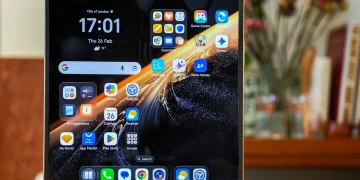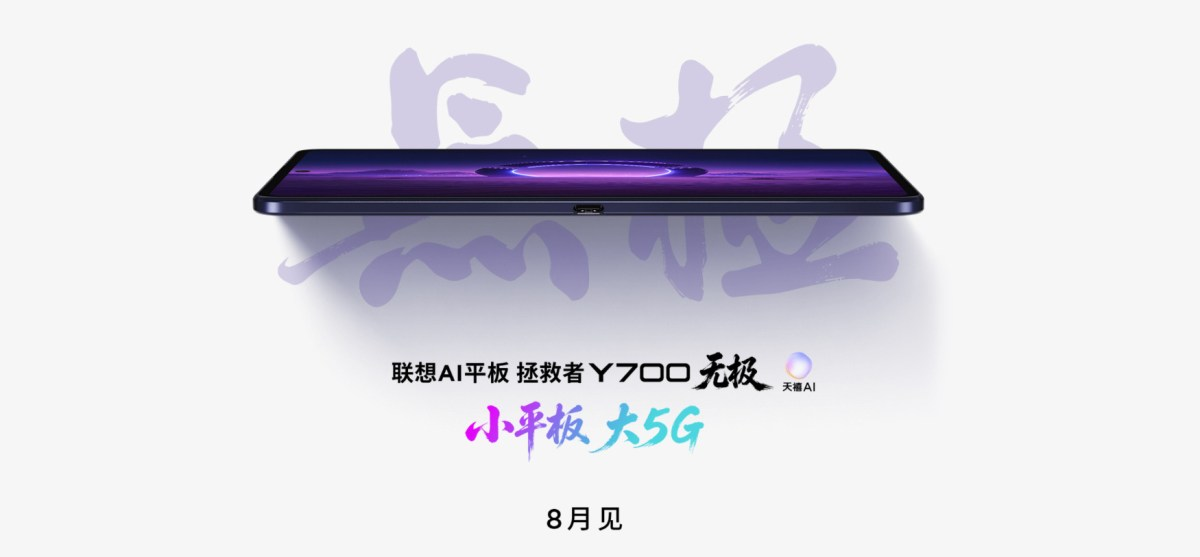
Lenovo Legion tablet buyers are getting an early look at the company’s next gaming-focused Android slate, with Lenovo teasing a new model that will support 5G and arrive in August.
The device is currently being teased as the Y700 Unlimited, based on machine-translated Chinese material. Lenovo has not yet provided a full international name, pricing, market availability or complete specifications for the tablet.
What the company has shown so far points to an update to the Legion Y700 gaming-tablet line, which Lenovo refreshed earlier this year. The new model follows the Legion Y700 Gen 5, launched in March, and appears designed to add mobile connectivity to a device category usually focused on performance, portability and display quality.
The early teaser centers on the tablet’s rear design. Lenovo’s video shows a revised camera island and an RGB LED ring, signaling that the new model will retain the gaming visual language associated with the Legion brand.
Lenovo Legion Tablet Adds 5G to the Y700 Line
The key confirmed feature for the upcoming Lenovo Legion tablet is 5G support.
That addition could make the device more useful for players who want a gaming tablet that does not depend entirely on Wi-Fi. For mobile gamers, cloud gaming users and frequent travelers, cellular connectivity can be an important practical upgrade.
Lenovo has not disclosed whether the 5G model will differ from the existing Legion Y700 Gen 5 in processor, battery, charging speed, display hardware or memory options. For now, the company has only confirmed the August timing and shown early design elements.
The 5G detail also suggests Lenovo is broadening the role of its compact gaming tablet. Rather than positioning the Y700 line only as a Wi-Fi gaming device, the company appears to be preparing a version that can stay connected outside the home.
August Launch Window Confirmed
Lenovo plans to make the new tablet official in August, according to the teaser information.
The exact launch date has not been provided. Lenovo is expected to release more teasers in the weeks before the announcement, though it has not yet outlined the full promotional schedule.
That timing gives Lenovo a short runway to build interest around the device. The March launch of the Legion Y700 Gen 5 means the new model is arriving only months after the latest known version of the tablet.
It remains unclear whether the August device will replace the current Gen 5 model, sit above it as a connected variant or launch as a limited-market version under a different name.
New Rear Design and RGB Detail
Lenovo’s teaser video highlights the tablet’s updated camera island. The company also shows an RGB LED ring, a design element that reinforces the product’s gaming identity.
The source material does not provide details about the camera sensor used in the upcoming model. It also does not say whether the camera hardware will change from the Legion Y700 Gen 5.
However, the design focus is notable. Gaming tablets often compete not only on specifications, but also on brand identity. RGB lighting, sharper visual accents and distinctive rear panels help manufacturers separate gaming devices from standard Android tablets.
Lenovo appears to be using the teaser to establish that the new Y700 model will remain part of the Legion gaming ecosystem, even before it confirms the internal hardware.
What the Legion Y700 Gen 5 Offers Today
The current Legion Y700 Gen 5 gives useful context for what Lenovo’s next gaming tablet may build on.
That model features an 8.8-inch LCD screen with a 1904 x 3040 resolution, a 165Hz refresh rate and 800 nits of peak brightness. Those display specifications place the tablet firmly in gaming territory, where smooth motion and compact handling matter.
The Legion Y700 Gen 5 is powered by the Snapdragon 8 Elite Gen 5 chipset. It is offered with 12GB, 16GB or 24GB of RAM, paired with 256GB, 512GB or 1TB of storage.
The tablet also includes a 50-megapixel rear camera, an 8-megapixel front camera and a 9,000 mAh battery. It supports 68W wired charging and runs Android 16.
Lenovo has not said whether the new 5G model will carry over these specifications. As a result, the existing Gen 5 hardware should be treated as context rather than a confirmed specification sheet for the upcoming device.
Why 5G Matters for Gaming Tablets
Adding 5G could make the upcoming Lenovo Legion tablet more flexible for users who play online games, stream content or rely on cloud-based gaming platforms.
Gaming tablets are often purchased for their larger screens, better cooling potential and longer battery life compared with smartphones. However, Wi-Fi-only models can be less convenient outside fixed locations.
A 5G version may help Lenovo appeal to users who want a more portable gaming device with fewer connectivity limits. It could also make the tablet more useful for video streaming, downloads and online multiplayer sessions while traveling.
The business logic is straightforward. If Lenovo can pair compact gaming hardware with mobile data access, the company may give the Y700 line a clearer point of difference in the Android tablet market.
Remaining Questions Before Launch
Several important details remain unknown.
Lenovo has not revealed the upcoming model’s chipset, display specifications, RAM and storage configurations, camera hardware, battery capacity or charging speed. The company also has not confirmed pricing or whether the tablet will launch outside China.
Availability will be especially important. Some Legion Y700 models have historically drawn interest from users beyond their initial launch markets, but the source information does not state where the new 5G version will be sold.
The naming is also not final for global audiences. The Y700 Unlimited name comes from machine-translated Chinese material, so Lenovo may use different branding when it formally announces the device.
For now, the next thing to watch is Lenovo’s teaser campaign ahead of the August launch. The company’s upcoming disclosures should clarify whether the new Lenovo Legion tablet is simply a 5G version of the Y700 Gen 5 or a broader hardware refresh with additional changes.
Source (in Chinese)
Read Also: Android 17 Makes It Much Harder to Brute-Force Your Phone’s Lock Screen