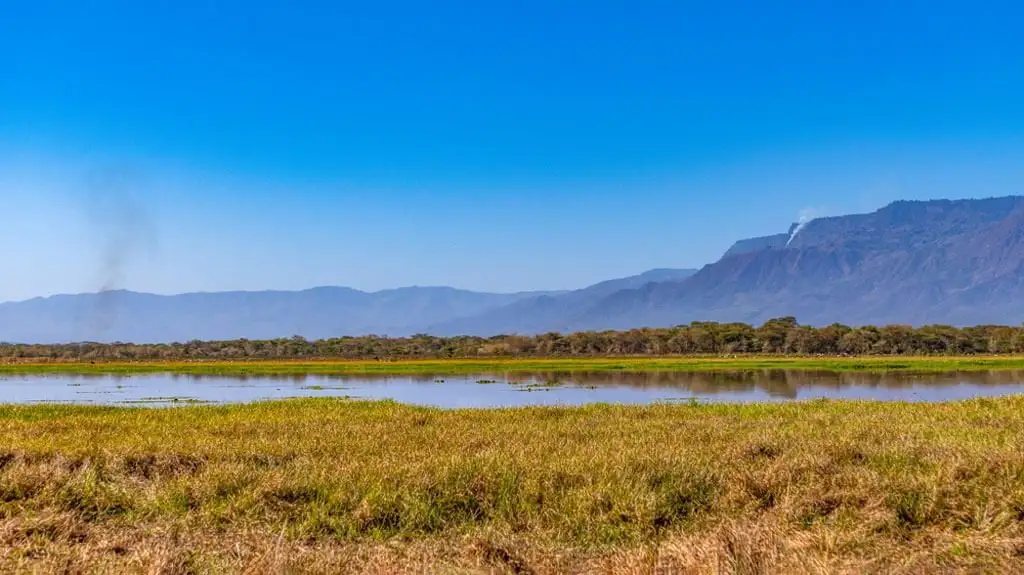
Descending from Kabarnet Town toward Iten, the breathtaking panorama of the Kerio Valley opens dramatically before you—a vast, sun-drenched expanse framed by the steep, wooded ridges of the Tugen Hills. Amid this arid beauty lies Lake Kamnarok, a tiny yet captivating freshwater lake glimmering like a jewel in the desolate valley floor. Formed in 1961 when the Kerio River altered its course, this one-square-kilometre oxbow lake became the heart of the 66 km² Kerio Valley National Reserve, gazetted in 1984 to conserve its fragile ecosystem and stunning landscapes.
Though small, Lake Kamnarok holds a story of resilience. In its prime during the 1980s, it was a bustling wildlife haven—its shores teeming with up to 500 elephants, buffalo, crocodiles, and countless bird species. It was the lifeline of the Kerio Valley ecosystem, sustaining both wildlife and pastoral communities. But in later years, unsustainable farming, deforestation, and sedimentation caused the lake to nearly vanish. By 2008, what was once a sanctuary had turned into a cracked basin of despair.
Determined to restore its glory, the governments of Baringo and Elgeyo-Marakwet counties, in collaboration with conservation partners, launched a Ksh 11 million rehabilitation project. The revival included desilting efforts, catchment protection, and reforestation, breathing life back into the lake. Today, wildlife is returning—from elephants and warthogs to herons and pelicans—and Kamnarok once again reflects the enduring spirit of nature.
Part of the Kerio Valley Conservation Area, the reserve offers an unforgettable contrast between the dry valley plains and the lush escarpments above. Its altitude—just 1,000 meters above sea level—and the dramatic terrain make it ideal for photography, birdwatching, and scenic drives. The best views of the lake and valley can be seen from the Kabarnet–Iten road, where the vastness of the Rift Valley reveals itself in all its majesty.
For travellers seeking untouched landscapes, Lake Kamnarok National Reserve is a reminder of nature’s fragility and endurance—a small but powerful testament to Kenya’s ongoing conservation story.