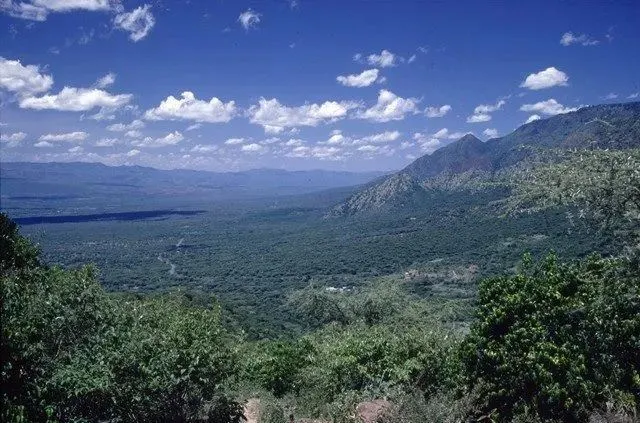
Stretching majestically between the Elgeyo Escarpment and the Tugen Hills, the Kerio Valley National Reserve captures the raw beauty and geological wonder of Kenya’s Great Rift Valley like few other places can. This 80-kilometre-long valley floor, lying at an elevation of around 1,000 meters, is a dramatic landscape of rolling plains, rugged cliffs, and the winding Kerio River, which carves its way through the heart of the valley.
Seen from above—especially from Iten’s famed viewpoints—the Kerio Valley unfurls as a vast, sunlit canvas of contrasts: golden lowlands merging into green escarpments, and shimmering heat giving way to endless horizons. Though not teeming with wildlife like Kenya’s better-known reserves, it compensates with sheer scenic grandeur. The reserve shelters baboons, monkeys, small antelopes, and a dazzling array of birds, including eagles, kingfishers, and bee-eaters that thrive along the riverbanks.
The Kerio River is the valley’s lifeline, nourishing both the ecosystem and the local communities who depend on it for irrigation, fishing, and domestic use. It has sculpted a deep gorge through the valley, creating a unique geological wonder that reflects the immense forces shaping the East African Rift. The surrounding slopes are clothed in semi-tropical vegetation, while the sun-soaked valley floor hosts dry acacia bushland, forming a beautiful ecological contrast.
Beyond its natural charm, the Kerio Valley is steeped in cultural heritage. The communities inhabiting the region—mainly the Tugen and Marakwet—have lived here for centuries, adapting ingeniously to the challenging environment through traditional irrigation systems, terraced farming, and rich oral traditions. A visit here offers not only breathtaking views but also a deep insight into the resilience and harmony between humans and nature.
Though Kerio Valley National Reserve remains relatively underdeveloped as a tourist destination, it is ideal for those seeking serenity, photography, birdwatching, or geological exploration. Whether viewed from the cliffs of Iten or explored on the valley floor near Lake Kamnarok, its scenic splendor leaves a lasting impression—an unspoiled treasure in Kenya’s natural tapestry.