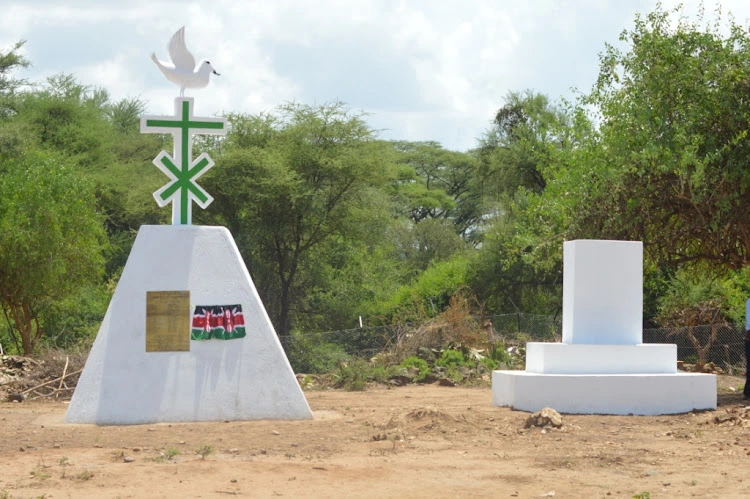
In the remote northern reaches of Baringo County, far from modern amenities and largely untraveled due to insecurity, stands the Kolloa Cross Monument—a solemn and fading relic of one of Kenya’s lesser-known yet profoundly symbolic uprisings. Located in the village of Kolloa (or Kolowa), this national shrine serves as a poignant reminder of the 1950 Kolloa Affray, a tragic confrontation that foreshadowed Kenya’s struggle for independence.
The Kolloa Monument was erected to honor the memory of over 100 Pokot men and women who perished during the clash between local followers of the anti-colonial religious movement Dini ya Msambwa and the British colonial forces. The uprising was led by Lukas Pkech, a former pupil of a Catholic school in West Suk, who became a fervent preacher of cultural revival and anti-colonial defiance. On April 24, 1950, Pkech and approximately 300 spear-wielding followers confronted a contingent of armed British troops led by District Officer Alan Stevens. What began as a standoff quickly descended into violence, culminating in a massacre that claimed over a hundred lives.
The colonial administration viewed Dini ya Msambwa—founded earlier by Elijah Masinde in western Kenya—as a threat to British authority and Christian orthodoxy. To the local Pokot, however, it was a spiritual refuge, a movement that sought to restore dignity, unity, and resistance to foreign domination. The Kolloa Affray thus became both a religious and political symbol of defiance, marking one of the last indigenous uprisings before the eruption of the Mau Mau Rebellion a few years later.
Today, the Kolloa Cross Monument, adorned with stone cairns and weathered plaques, stands as a quiet tribute to those who fought and fell in that remote battlefield. Despite its decaying state and isolation, it remains one of the few tangible memorials commemorating early resistance movements in Kenya’s northern frontier. The monument, more visited by animals than humans, is a stark emblem of both neglect and endurance—a testament to the resilience of local memory against the erasures of time and distance.
As Kenya continues to reclaim its past through preservation and storytelling, the Kolloa Monument calls for recognition not only as a national shrine but as a sacred space of reflection, symbolizing faith, sacrifice, and the eternal quest for self-determination.