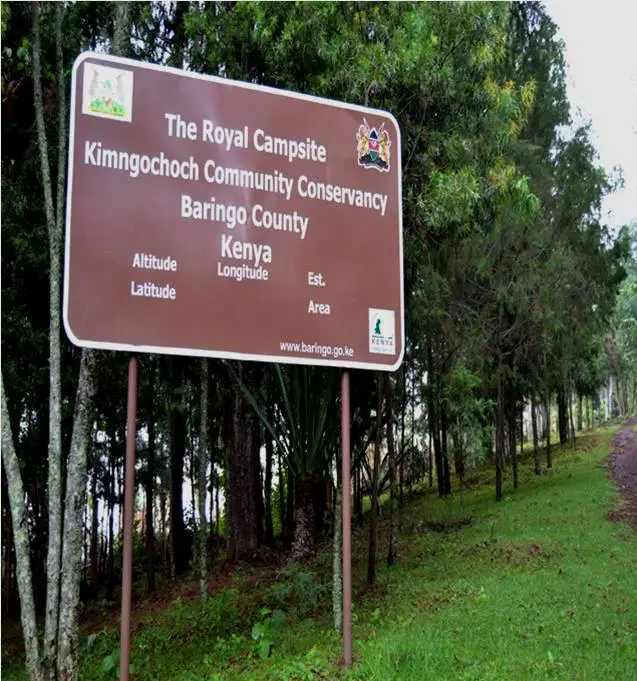
Tucked within the scenic ridges overlooking the Kerio Valley, the Kimng’ochoch Community Conservancy is one of Baringo County’s oldest and least-known conservation areas—a place where wildlife, culture, and spirituality converge in timeless harmony. Established in 1979 by Former President Daniel arap Moi, in collaboration with the Morop–Tarambas community, Kimng’ochoch was founded to protect indigenous trees, wildlife, and sacred cultural sites cherished by the local people.
Set on the western fringes of the Tugen Hills, approximately 51 kilometers from Kabarnet Town, Kimng’ochoch Conservancy remains a tranquil retreat for those who appreciate the raw and authentic side of nature. The area is rich in native red cedar forests, home to playful Colobus monkeys, diverse birdlife, and other fauna that thrive in the serene environment. From the conservancy’s hilltop, visitors are treated to breathtaking panoramic views of the Kerio Valley, stretching endlessly into the Rift Valley escarpments.
Yet, the magic of Kimng’ochoch extends beyond its ecology—it is a site steeped in cultural heritage. At its summit lies a traditional shrine, once a gathering place for Kalenjin elders who performed rituals to bless the land, pray for rain, and resolve communal issues. The sacred site still bears three rustic sheds and an old wooden cross, remnants of a time when spiritual and natural harmony were deeply intertwined. This living heritage now serves as a powerful symbol of sustainable tourism, where visitors can learn about indigenous traditions while helping preserve the ecosystem.
The Royal Campsite, a modest 5-acre camping area within the conservancy, serves as a base for hiking expeditions across the Kerio Valley and toward Iten. While basic and self-catering—with no built facilities such as water points or latrines—it offers a truly off-grid camping experience. Campers are encouraged to come prepared, carrying essentials for an independent stay.
Despite its potential for eco-tourism, Kimng’ochoch Conservancy remains relatively undiscovered, largely due to minimal promotion and limited online visibility. However, its quiet beauty, spiritual depth, and raw wilderness make it one of Baringo’s most meaningful escapes, ideal for travelers seeking connection with both nature and tradition.