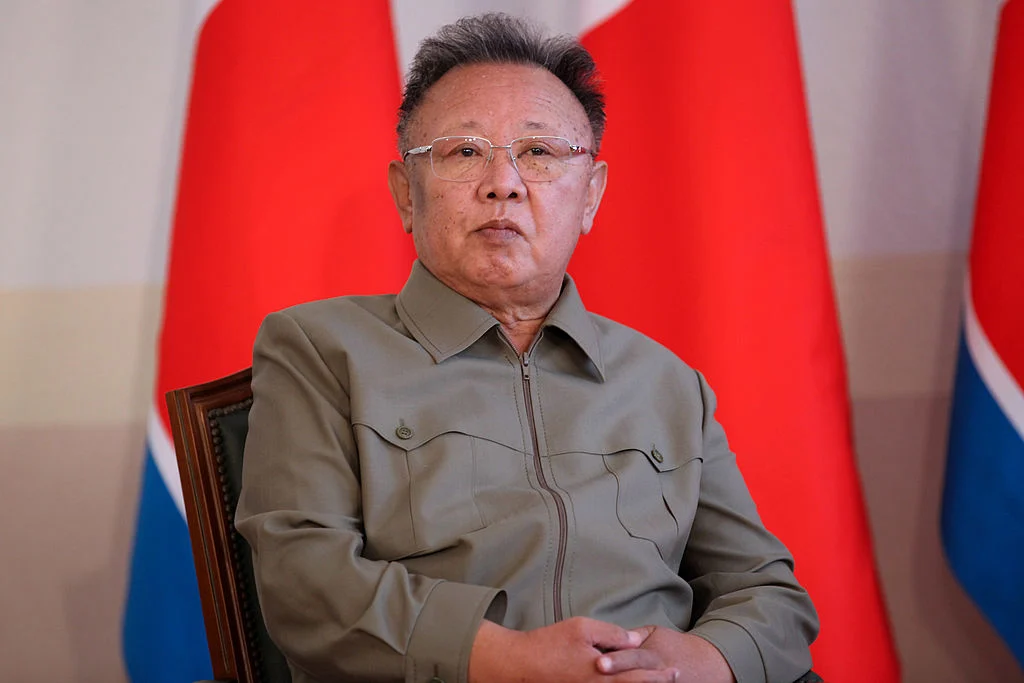
Kim Jong-il, the enigmatic and authoritarian leader of North Korea from 1994 until his death in 2011, was known for his iron grip on power, cult of personality, and a lifestyle of lavish excess that stood in stark contrast to the poverty of his nation. While the exact details of his wealth remain shrouded in secrecy, estimates suggest that Kim Jong-il’s net worth reached approximately $4 billion at its peak. This fortune was amassed through a combination of state-controlled resources, illicit activities, and an extensive portfolio of luxurious real estate. Below, we explore the components of his wealth, with a particular focus on his sprawling property empire.
Net Worth Overview: $4 Billion
Kim Jong-il’s estimated $4 billion net worth was not the product of personal entrepreneurship or legitimate business ventures but rather a reflection of his absolute control over North Korea’s economy and resources. As the Supreme Leader of one of the world’s most isolated and militarized states, Kim diverted funds from the national treasury, state-run enterprises, and alleged illegal operations to fund his opulent lifestyle. Reports from defectors, intelligence agencies, and investigative journalists have long pointed to a web of financial schemes—including counterfeiting, arms trafficking, and drug smuggling—that bolstered his personal coffers.
While the average North Korean citizen struggled with famine and deprivation, particularly during the 1990s, Kim Jong-il’s wealth afforded him a life of extravagance. His fortune reportedly included cash reserves held in foreign bank accounts (allegedly in Switzerland and Luxembourg), stockpiles of luxury goods, and one of the most extensive real estate portfolios of any world leader.
Real Estate: The Crown Jewel of Kim’s Wealth
A significant portion of Kim Jong-il’s net worth was tied up in his vast collection of real estate, estimated to include 20 to 30 properties across North Korea. These residences were not mere homes but palatial compounds designed for luxury, security, and self-sufficiency. Many of these properties were equipped with features that underscored his paranoia and penchant for excess, such as private train stations, fortified bunkers, and elaborate recreational facilities.
- Pyongyang Compound
At the heart of Kim’s real estate empire was his primary residence in Pyongyang, the capital of North Korea. This sprawling compound, located in the Ryongsong Residence district, served as both a personal retreat and a command center. Reports from defectors describe it as a heavily guarded complex featuring multiple villas, manicured gardens, and artificial lakes. The compound reportedly included a private cinema, a banquet hall capable of seating hundreds, and underground tunnels linking it to other key locations in the city. Valued in the tens of millions, this property alone was a testament to Kim’s ability to command resources in a nation plagued by scarcity. - Beach House Retreat
Kim Jong-il’s coastal properties offered a stark contrast to the austere lives of most North Koreans. His beach house, rumored to be located near the port city of Wonsan on the east coast, was a luxurious escape complete with sandy shores, swimming pools, and water sports facilities. This retreat was reportedly a favorite of Kim’s, where he entertained foreign dignitaries and indulged in his love of seafood and fine liquors. The property’s private train station ensured that Kim could travel to and from the coast undetected, reinforcing his obsession with secrecy and mobility. - Homes Outside Pyongyang
Beyond the capital, Kim owned an array of residences scattered throughout the country, many in scenic or strategic locations. These included mountain retreats in the Myohyang Mountains, lakeside villas near Mount Paektu (a site of cultural significance in North Korean mythology), and rural estates designed for hunting and relaxation. Each property was said to feature amenities like swimming pools, saunas, and private lakes stocked with fish—luxuries unimaginable to the vast majority of North Korea’s population. Some estimates suggest that maintaining these homes cost millions annually, funded through state revenues and illicit profits. - Private Train Stations
A unique feature of Kim Jong-il’s real estate holdings was the inclusion of private train stations at many of his properties. A known enthusiast of rail travel, Kim reportedly feared flying and preferred to traverse his country in a fleet of armored trains. These stations, built exclusively for his use, connected his residences to Pyongyang and other key locations, ensuring he could move between properties without relying on public infrastructure. The cost of constructing and maintaining this private rail network likely added tens of millions to the value of his real estate empire.
Beyond Real Estate: Sources of Wealth
While real estate was a visible symbol of Kim Jong-il’s fortune, his $4 billion net worth was bolstered by other assets and income streams:
- Luxury Goods and Collections
Kim was renowned for his lavish tastes, reportedly spending millions on imported goods. His collection included hundreds of thousands of bottles of fine wines and cognacs (with a particular fondness for Hennessy), a fleet of luxury cars (Mercedes-Benz and Rolls-Royce among them), and one of the world’s largest private film libraries, boasting over 20,000 titles. These indulgences were often smuggled into the country, bypassing international sanctions. - Foreign Bank Accounts
Intelligence reports have long speculated that Kim Jong-il stashed significant portions of his wealth in secret bank accounts abroad. Countries like Switzerland, known for their banking secrecy, were rumored to hold hundreds of millions in cash and gold on his behalf. These funds provided a financial cushion and a means to procure luxury items despite North Korea’s economic isolation. - State-Sponsored Illicit Activities
To sustain his lifestyle, Kim Jong-il allegedly oversaw a range of illegal enterprises operated by the North Korean government. These included the production and distribution of counterfeit U.S. dollars (known as “supernotes”), methamphetamine trafficking, and arms sales to rogue states and militias. While exact figures are elusive, some estimates suggest these activities generated hundreds of millions annually, much of which flowed directly into Kim’s personal wealth.
Legacy and Controversy
When Kim Jong-il died on December 17, 2011, his wealth did not vanish—it was largely inherited by his son and successor, Kim Jong-un, who has continued the family tradition of opulence. The $4 billion fortune, built on the backs of an impoverished nation, remains a point of contention and fascination. Critics argue that Kim’s wealth was a grotesque misuse of power, siphoned from a population that endured starvation and repression. Supporters within North Korea, shaped by state propaganda, view his lavish lifestyle as a rightful perk of the “Dear Leader” who protected the nation from external threats.
Conclusion
Kim Jong-il’s net worth of $4 billion paints a picture of a dictator who lived like a king while ruling over one of the world’s poorest countries. His real estate holdings—ranging from the Pyongyang compound to coastal retreats and mountain villas—were the most tangible expression of his wealth, complete with private train stations, swimming pools, and lakes. Yet, this fortune was inseparable from the mechanisms of his regime: absolute control, secrecy, and exploitation. Even years after his death, the legacy of Kim Jong-il’s wealth continues to captivate and horrify, a stark reminder of the divide between North Korea’s elite and its people.