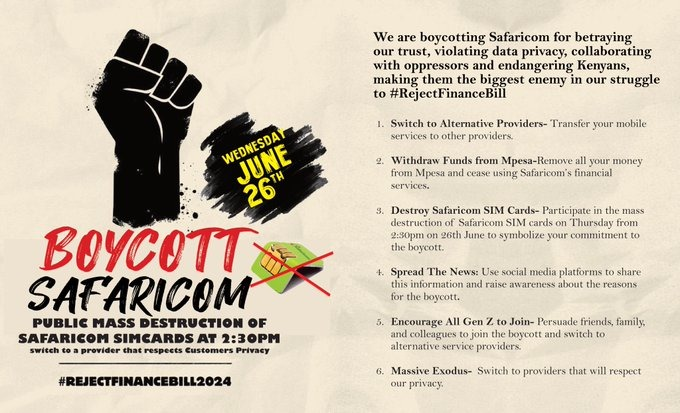
In an unprecedented show of collective action, Kenyans are massively boycotting Safaricom, the nation’s largest telecommunications provider, in response to allegations of collaboration with government actions that critics say undermine civil liberties. This movement, encapsulated by the trending hashtag #BoycottSafaricom, has seen thousands switch allegiance to Airtel, a rival telecom giant, in a dramatic turn of events that highlights the growing interplay between consumer power and political activism in Kenya.
Background to the Boycott
The catalyst for this mass migration from Safaricom to Airtel was the controversial Finance Bill 2024, which ignited widespread protests across the country. Amidst these demonstrations, Safaricom was accused of facilitating a government-led internet shutdown, a move perceived by many as an act of suppression against free speech and the right to protest. This act was seen as a betrayal by a corporation that had long been woven into the daily lives of Kenyans, prompting calls for a boycott.
The Role of Social Media in the Movement
Social media platforms have been instrumental in accelerating the boycott against Safaricom. With viral tweets, impactful visuals, and hashtags like #RutoMustGo and #RejectFinanceBill2024, Kenyans have mobilized a formidable campaign encouraging others to switch to Airtel. This digital activism has not only amplified the boycott but also created a communal space for expressing dissatisfaction and organizing collective action.
Consumer Sentiment and Corporate Trust
The boycott reflects a deeper crisis of trust between Safaricom and its customers. Long seen as a beacon of Kenyan innovation and success, the telecom giant’s alleged actions during the protests have starkly realigned public perception. Consumers are increasingly demanding that corporations uphold not only quality service but also ethical standards that align with societal values, especially concerning human rights and freedom of expression.
Economic and Social Implications
The shift from Safaricom to Airtel is not merely a change of service providers; it represents a significant economic blow to Safaricom and a potential shift in the telecommunications market dynamics in Kenya. For Airtel, this sudden influx of new customers presents both an opportunity and a challenge, as it must now scale operations to meet increased demand while maintaining the trust of its new user base.
The Government’s Role
The government’s involvement in the alleged internet shutdown has also come under scrutiny. Accusations of using state machinery to suppress dissent have led to broader discussions about governance, digital rights, and the role of private corporations in public crises. The Safaricom boycott has thus transcended its initial economic intent, morphing into a larger critique of government policies and practices.
Corporate Response
In response to the mounting pressure, Safaricom’s leadership has made several public statements attempting to navigate the company’s stance and actions during the protests. However, these have been met with skepticism and continued outrage, as seen in various online platforms where users express their discontent and resolve to continue the boycott.
The Future of Telecoms in Kenya
As this boycott continues to unfold, it poses critical questions about the future of telecommunications in Kenya. It highlights the need for transparency and corporate accountability, urging other companies to take heed. For Airtel, the challenge will be to capitalize on this moment by reinforcing positive corporate practices and ensuring they do not fall into the same pitfalls as their competitor.
Conclusion
The #BoycottSafaricom movement is a powerful testament to the impact of consumer choice in the digital age. It underscores how deeply entwined technology companies are with political and social issues and the consequences of betraying public trust. As Kenyans continue to advocate for their rights through this boycott, the episode serves as a reminder of the potent force of united consumer action and the inevitable demand for corporate entities to uphold ethical standards in their operations.