Kenya’s fight against corruption has faced a setback, with the country dropping nine places in the global rankings according to the 2025 Corruption Perceptions Index (CPI). The latest report, released on February 10, reveals a troubling trend for Kenya, which now sits at position 130 out of 182 countries. This is a significant decline from the previous year’s position of 121, underscoring the persistent challenges in the country’s battle against graft.
The CPI, compiled by Transparency International (TI), ranks countries based on perceptions of public sector corruption. Kenya’s score of 30 out of 100 points, down from 32 in 2024, signals a worsening situation despite years of anti-corruption pledges and reforms. This latest ranking places Kenya among the worst performers globally, a stark contrast to the global average of 42 points.
Kenya’s decline is reflective of broader struggles within Sub-Saharan Africa, a region that remains the worst-performing globally in tackling public sector theft and corruption. With rising public anger over failed corruption cases, and allegations of impunity among political elites, the nation faces mounting pressure to address systemic governance weaknesses that perpetuate corruption.
The grim outlook for Kenya and Sub-Saharan Africa
Sub-Saharan Africa recorded an average score of 32 out of 100 in the 2025 CPI, with only four out of 49 countries in the region scoring above 50 points. Botswana, Rwanda, Cabo Verde, and Seychelles were the standout performers, with Seychelles leading the region at 68 points, followed by Cabo Verde at 62 points.
The report indicates a worrying trend, with 10 countries in the region experiencing significant declines since 2012, while only seven have shown improvements. This highlights a continent-wide struggle with deep-rooted corruption and poor governance. Kenya’s poor performance in this year’s CPI report fits within this broader pattern, underscoring the urgency of comprehensive anti-corruption reforms.
Sheila Masinde’s assessment of Kenya’s worsening corruption situation
Sheila Masinde, the Executive Director of Transparency International Kenya (TI-Kenya), expressed concern over the country’s worsening corruption situation, describing it as a “sophisticated, resilient system” that permeates all levels of government. According to Masinde, the failure to secure high-profile convictions, along with the frequent withdrawal of corruption cases, perpetuates a culture of impunity.
“The latest score indicates that corruption is no longer a series of isolated incidents,” Masinde said. “It has evolved into a deeply entrenched system with significant power structures shielding offenders from accountability.” She also pointed to the weak enforcement of anti-corruption laws, particularly the leadership and integrity provisions in the Constitution that are intended to prevent corrupt individuals from holding public office.
The TI-Kenya director’s assessment points to deep-rooted systemic weaknesses that continue to undermine efforts to combat corruption. With impunity continuing to thrive, there are serious questions about the effectiveness of current anti-corruption frameworks.
Kenya Kwanza administration faces increasing corruption accusations
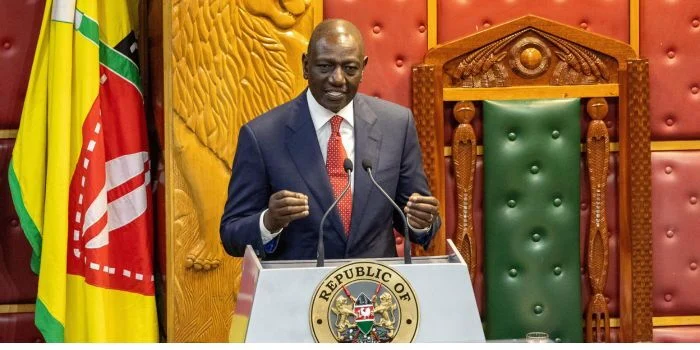
The current government under President William Ruto has faced increasing allegations of corruption within its institutions. Ruto himself has publicly criticized some Members of Parliament (MPs), accusing them of turning parliamentary committees into “extortion rings” during the 2025 Devolution Conference in Homa Bay.
The president’s comments highlight a growing concern that certain MPs are demanding bribes from state officers, governors, and ministers in exchange for favorable reports. This level of corruption in high-profile government bodies has sparked public outrage and calls for stronger oversight and accountability within the political class.
In an era where public trust in government institutions is crucial for development, these allegations further erode confidence in the ability of Kenya’s leadership to address corruption effectively. With such claims becoming increasingly frequent, the government faces mounting pressure to take decisive action to restore integrity and accountability within its ranks.
Global corruption trends: A decade of rising concerns
Globally, the picture is equally bleak. The 2025 CPI reveals a worldwide average score of 42 out of 100, the lowest in over a decade. Even established democracies are struggling with rising levels of corruption, with concerns about transparency, political influence, and accountability becoming more widespread.
Denmark continues to top the global index for the eighth consecutive year with 89 points, followed by Finland with 88 points and Singapore at 84. On the other end of the spectrum, Somalia and South Sudan share the lowest scores, underscoring the struggles faced by countries with weak governance structures.
Kenya’s declining score reflects this broader global trend and highlights the need for more robust international cooperation and reform to tackle corruption effectively. The report also points to the increasing vulnerability of countries with weak institutions, like Kenya, to corruption and political manipulation.
The way forward: Strengthening anti-corruption measures in Kenya
The decline in Kenya’s corruption score highlights the need for urgent action to strengthen anti-corruption measures. While Kenya has made strides in setting up anti-graft agencies and instituting reforms, the lack of high-profile convictions and ongoing cases of impunity suggest that more robust enforcement mechanisms are needed.
Experts argue that improving institutional transparency, bolstering judicial independence, and enforcing leadership and integrity provisions in the Constitution are critical steps in reversing Kenya’s declining corruption score. Public demand for accountability is growing, and the government must act swiftly to address systemic weaknesses and restore public trust in its commitment to tackling corruption.
As the global fight against corruption intensifies, Kenya must confront its own challenges head-on to ensure that its governance systems remain accountable, transparent, and free from the influence of corruption.