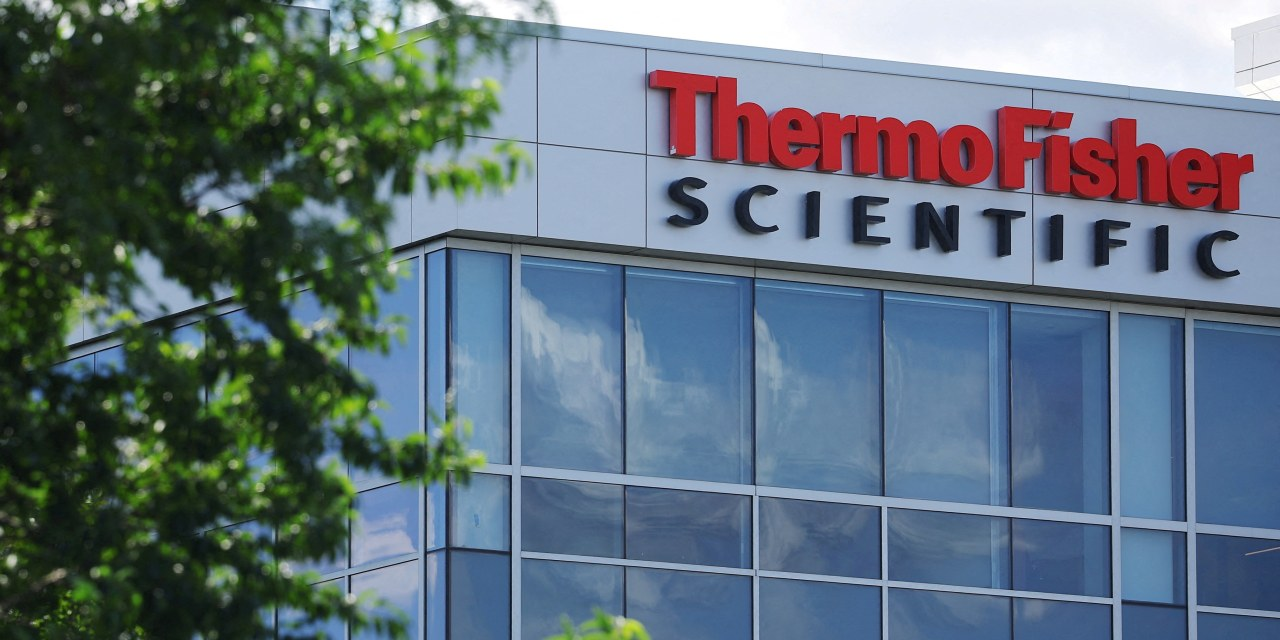
Thermo Fisher acquisitions show how one of the world’s most important scientific products and services companies built scale across biotechnology, diagnostics, laboratory equipment, life sciences tools, clinical research, bioproduction, analytical instruments, genetics, and healthcare.
From 2003 to 2025, Thermo Fisher Scientific completed 26 acquisitions with a total disclosed deal value of about $67.8 billion and an average disclosed deal size of roughly $2.6 billion. Its M&A activity has focused mainly on biotechnology, manufacturing, healthcare, life science, and genetics.
That deal pattern reflects Thermo Fisher’s role in the scientific ecosystem. The company provides products and services used by pharmaceutical companies, biotechnology firms, hospitals, academic researchers, clinical laboratories, diagnostics companies, industrial customers, and government agencies.
Its largest acquisitions helped transform the company. Life Technologies strengthened genetics and molecular biology. Patheon added pharmaceutical development and manufacturing services. PPD expanded clinical research. FEI strengthened electron microscopy and high-end analytical instruments. Olink added protein biomarker analysis. Solventum’s Purification & Filtration business deepened Thermo Fisher’s bioproduction offering.
Together, these acquisitions show a clear strategy: Thermo Fisher has used M&A to become a broader partner to science, from early-stage research to clinical trials, manufacturing, diagnostics, and commercial biopharma production.
What Is Thermo Fisher Scientific?
Thermo Fisher Scientific is a global biotechnology, laboratory equipment, diagnostics, and scientific services company. Its mission is commonly described around helping customers make the world healthier, cleaner, and safer.
The company serves a wide range of customers. These include biopharmaceutical companies developing new medicines, academic labs conducting research, hospitals running diagnostics, government agencies monitoring safety, industrial companies testing materials, and manufacturers producing biologics or vaccines.
Thermo Fisher’s business includes laboratory instruments, reagents, consumables, diagnostics, genetic analysis tools, bioproduction systems, clinical research services, pharmaceutical development and manufacturing, chemicals, analytical instruments, and laboratory support services.
Because the scientific market is highly specialized, acquisitions are especially important. Many valuable capabilities begin in focused companies with advanced technology, expert teams, intellectual property, or niche customer relationships. Thermo Fisher can acquire these businesses and scale them globally.
Why Thermo Fisher Acquisitions Matter
Thermo Fisher acquisitions matter because they show how scientific infrastructure has become a strategic business.
Modern medicine, diagnostics, drug development, genomics, and biomanufacturing depend on tools, services, instruments, data, reagents, and manufacturing workflows. The companies that supply those tools are critical to the healthcare and life sciences economy.
Thermo Fisher’s acquisition history reflects that reality.
The company has expanded in genetic analysis, protein research, allergy diagnostics, molecular testing, electron microscopy, clinical research, biologics manufacturing, cell and gene therapy services, recombinant proteins, bioprocessing filtration, and real-world evidence.
This matters because biotechnology has become more complex. Drug developers often need support across the full lifecycle: discovery, analytical testing, clinical trials, biomarker development, manufacturing, quality control, and post-market evidence.
Thermo Fisher’s acquisitions make it more capable of serving that full lifecycle.
Full List of Thermo Fisher Scientific Acquisitions
| Acquiree | Announced Date | Price | Main Category | Strategic Value |
|---|---|---|---|---|
| Solventum Purification & Filtration Business | Feb 25, 2025 | $4.1B | Filtration and Bioproduction | Adds filters, membranes, and purification technologies for bioprocessing, healthcare, and industrial filtration. |
| Olink | Oct 17, 2023 | $3.1B | Biotechnology and Proteomics | Adds protein biomarker analysis and molecular measurement technologies. |
| CorEvitas | Jul 6, 2023 | $912.5M | Real-World Evidence | Adds registry data and analytics services for biopharmaceutical companies. |
| The Binding Site Group | Oct 31, 2022 | $2.6B | Diagnostics and Life Science | Adds specialist protein diagnostics and related research capabilities. |
| PeproTech | Jan 5, 2022 | $1.9B | Recombinant Proteins | Adds cytokines and growth factors for life science research and cell culture workflows. |
| PPD | Apr 15, 2021 | $17.4B | Clinical Research | Adds contract research organization services, clinical development, and analytical solutions. |
| Mesa Biotech | Jan 19, 2021 | $450.0M | Molecular Diagnostics | Adds DNA and RNA molecular testing services and point-of-care capabilities. |
| Henogen | Jan 15, 2021 | $876.0M | Biomanufacturing | Adds gene-to-clinical-product biomanufacturing capabilities. |
| Brammer Bio | Mar 24, 2019 | $1.7B | Cell and Gene Therapy CDMO | Adds contract development and manufacturing capabilities for cell and gene therapies. |
| Patheon | May 15, 2017 | $7.2B | Pharmaceutical Manufacturing | Adds commercial manufacturing and pharmaceutical development services. |
| FEI Company | May 27, 2016 | $4.2B | Analytical Instruments | Adds electron microscopy and advanced imaging technologies. |
| Affymetrix | Jan 8, 2016 | $1.3B | Genetics and Biotechnology | Adds multiplex and parallel analysis technologies for biological systems. |
| Alfa Aesar | Jun 25, 2015 | $404.0M | Research Chemicals | Adds global research chemicals manufacturing and supply capabilities. |
| Advanced Scientifics | Feb 5, 2015 | $300.0M | Single-Use Systems | Adds single-use systems for healthcare and life sciences manufacturing. |
| Life Technologies | Feb 4, 2014 | $13.6B | Biotechnology and Genetics | Adds genetic analysis, applied sciences, and life science research technologies. |
| Princeton Security Technologies | Jun 13, 2012 | $13.0M | Detector Products | Adds x-ray and gamma-ray detector products. |
| Phadia | May 20, 2011 | $3.5B | Diagnostics | Adds blood test systems for allergy, asthma, and autoimmune diagnostics. |
| Dionex Corporation | Dec 13, 2010 | $2.1B | Analytical Instruments | Adds chromatography and analytical science capabilities. |
| Ahura Scientific | Jan 19, 2010 | $145.0M | Chemical Identification | Adds field-enabled optical systems for identifying chemical substances. |
| B.R.A.H.M.S. | Sep 3, 2009 | $470.0M | Diagnostics | Adds diagnostic test procedures and biomarker capabilities. |
Thermo Fisher Acquisitions Timeline
2009: Diagnostics and Biomarkers
Thermo Fisher acquired B.R.A.H.M.S. in 2009 for $470.0 million. B.R.A.H.M.S. developed and produced diagnostic test procedures.
This acquisition strengthened Thermo Fisher’s diagnostics platform. Diagnostic tests are critical in modern healthcare because they help clinicians identify disease, monitor patients, and guide treatment decisions.
The deal also showed Thermo Fisher’s interest in biomarkers, a theme that would become increasingly important in later acquisitions.
2010: Chemical Identification and Analytical Instruments
In 2010, Thermo Fisher acquired Ahura Scientific and Dionex Corporation.
Ahura Scientific added field-enabled optical systems for identifying and authenticating liquid and solid chemical substances. Dionex, acquired for $2.1 billion, strengthened Thermo Fisher’s analytical instrument portfolio.
Analytical instruments are essential across research, industrial testing, environmental monitoring, pharma quality control, and laboratory science. Dionex helped Thermo Fisher deepen its position in that market.
2011: Phadia and Specialty Diagnostics
Thermo Fisher acquired Phadia in 2011 for $3.5 billion. Phadia developed and manufactured complete blood test systems for allergy, asthma, and autoimmune-related clinical diagnostics.
This acquisition expanded Thermo Fisher’s specialty diagnostics business. Allergy and autoimmune testing can be recurring, clinically important, and closely tied to patient management.
2012: Detector Products
In 2012, Thermo Fisher acquired Princeton Security Technologies for $13.0 million. The company developed and manufactured detector products, including x-ray and gamma-ray detectors.
This was a small acquisition compared with Thermo Fisher’s later mega-deals, but it added specialized detector technology relevant to scientific and security applications.
2014: Life Technologies and Genetics Scale
Thermo Fisher acquired Life Technologies in 2014 for $13.6 billion. Life Technologies was involved in scientific research, genetic analysis, and applied sciences.
This was one of Thermo Fisher’s defining acquisitions. It expanded the company’s capabilities in genomics, sequencing-related workflows, molecular biology, reagents, and life science tools.
The deal also strengthened Thermo Fisher’s position as a major supplier to biotechnology and pharmaceutical research customers.
2015: Single-Use Systems and Research Chemicals
Thermo Fisher acquired Advanced Scientifics and Alfa Aesar in 2015.
Advanced Scientifics added single-use systems for healthcare and life sciences industries. Alfa Aesar added research chemicals.
These acquisitions supported two practical needs in science and biomanufacturing: flexible production systems and reliable chemical supply.
2016: Affymetrix and FEI
In 2016, Thermo Fisher acquired Affymetrix and FEI Company.
Affymetrix added technologies for multiplex and parallel analysis of biological systems. FEI, acquired for $4.2 billion, added advanced electron microscopy and imaging technologies used in materials science, life sciences, and nanoscale research.
FEI was strategically important because high-end imaging helps researchers and industrial customers understand structures at extremely small scales. This supported Thermo Fisher’s analytical instruments strategy.
2017: Patheon and Pharmaceutical Services
Thermo Fisher acquired Patheon in 2017 for $7.2 billion. Patheon provided pharmaceutical development and commercial manufacturing services to the pharmaceutical and biotechnology industries.
This acquisition moved Thermo Fisher deeper into contract development and manufacturing. It expanded the company beyond selling laboratory tools and into helping customers develop and manufacture medicines.
Patheon became a major building block in Thermo Fisher’s pharma services strategy.
2019: Brammer Bio and Cell and Gene Therapy Manufacturing
In 2019, Thermo Fisher acquired Brammer Bio for $1.7 billion. Brammer Bio specialized in contract development and manufacturing for cell and gene therapy.
This acquisition strengthened Thermo Fisher’s position in one of the most technically demanding areas of biopharma manufacturing. Cell and gene therapies require specialized facilities, regulatory expertise, quality systems, and advanced production capabilities.
2021: Biomanufacturing, Molecular Testing, and Clinical Research
Thermo Fisher was highly active in 2021. It acquired Henogen, Mesa Biotech, and PPD.
Henogen added biomanufacturing capabilities under a gene-to-clinical-product model. Mesa Biotech added DNA and RNA molecular testing services. PPD, acquired for $17.4 billion, was one of Thermo Fisher’s largest acquisitions and added contract research organization services.
PPD transformed Thermo Fisher’s clinical research capabilities. It gave the company a much larger role in clinical development, trial management, and analytical services for pharmaceutical and biotech customers.
2022: PeproTech and The Binding Site
Thermo Fisher acquired PeproTech and The Binding Site Group in 2022.
PeproTech added recombinant cytokines and related proteins used in life science research and cell culture. The Binding Site added specialist protein research, development, manufacturing, and distribution capabilities.
These deals strengthened Thermo Fisher’s position in life science reagents, protein biology, and specialty diagnostics.
2023: Real-World Evidence and Proteomics
In 2023, Thermo Fisher acquired CorEvitas and Olink.
CorEvitas added real-world evidence through registry data and analytics services for biopharmaceutical companies. Olink added biomolecular analysis technologies, especially in proteomics.
The Olink acquisition strengthened Thermo Fisher’s position in protein biomarker discovery and analysis. Proteomics is increasingly important because proteins can provide insight into disease biology, drug response, and clinical research.
2025: Solventum Purification & Filtration Business
Thermo Fisher announced in February 2025 that it would acquire Solventum’s Purification & Filtration business for about $4.1 billion. The transaction included bioprocessing filtration, healthcare and industrial filtration, and membranes. Thermo Fisher said the business would become part of its Life Sciences Solutions segment after closing.
The acquisition closed in September 2025. Thermo Fisher said the business strengthens its bioproduction offerings with filtration technologies that improve quality and efficiency across upstream and downstream workflows.
This deal fits Thermo Fisher’s bioproduction strategy. Biologic drugs require filtration and purification throughout manufacturing. Adding membranes and filtration technologies makes Thermo Fisher more important to customers producing biologics, vaccines, and advanced therapies.
Biggest Thermo Fisher Acquisitions by Deal Value
| Rank | Acquiree | Announced Date | Deal Value | Strategic Area |
| 1 | PPD | Apr 15, 2021 | $17.4B | Clinical research and CRO services |
| 2 | Life Technologies | Feb 4, 2014 | $13.6B | Genetics and life science tools |
| 3 | Patheon | May 15, 2017 | $7.2B | Pharmaceutical development and manufacturing |
| 4 | FEI Company | May 27, 2016 | $4.2B | Electron microscopy and advanced imaging |
| 5 | Solventum Purification & Filtration Business | Feb 25, 2025 | $4.1B | Bioprocessing filtration and membranes |
| 6 | Phadia | May 20, 2011 | $3.5B | Specialty diagnostics |
| 7 | Olink | Oct 17, 2023 | $3.1B | Proteomics and biomolecular analysis |
| 8 | The Binding Site Group | Oct 31, 2022 | $2.6B | Specialist protein diagnostics |
| 9 | Dionex Corporation | Dec 13, 2010 | $2.1B | Analytical instruments |
| 10 | PeproTech | Jan 5, 2022 | $1.9B | Recombinant proteins and cytokines |
The largest acquisitions show Thermo Fisher’s strategic priorities: clinical research, genetics, pharmaceutical services, analytical instruments, bioproduction, diagnostics, proteomics, and research reagents.
Most Common Acquisition Categories
| Category | Number of Deals | Strategic Meaning |
| Biotechnology | 15 | Strengthens life science tools, diagnostics, biomanufacturing, and research platforms. |
| Manufacturing | 8 | Adds production capability in chemicals, instruments, bioprocessing, and pharma services. |
| Health Care | 6 | Supports diagnostics, clinical services, and healthcare-related testing. |
| Life Science | 4 | Expands research tools, proteins, reagents, and scientific workflows. |
| Genetics | 4 | Adds genomic analysis, molecular biology, and genetic research capabilities. |
This category mix shows Thermo Fisher’s disciplined focus. The company has used acquisitions to deepen its role in science rather than diversify into unrelated industries.
Strategic Lessons From Thermo Fisher Acquisitions
Life Sciences Require Platform Breadth
Thermo Fisher acquisitions show that life sciences customers need more than one product category. They need instruments, reagents, consumables, data, diagnostics, clinical services, manufacturing support, and bioproduction tools.
Bioproduction Became a Core Growth Area
Patheon, Brammer Bio, Henogen, Advanced Scientifics, PeproTech, and Solventum’s Purification & Filtration business all support the growth of biopharma manufacturing.
Clinical Research Can Strengthen Customer Relationships
The PPD acquisition gave Thermo Fisher a deeper role in clinical development. That helps the company serve pharmaceutical customers beyond the research lab.
Diagnostics and Biomarkers Are Strategically Important
Phadia, B.R.A.H.M.S., The Binding Site, Olink, and Mesa Biotech strengthened Thermo Fisher in diagnostics, biomarkers, molecular testing, and protein analysis.
M&A Can Build a Full Scientific Ecosystem
Thermo Fisher has used acquisitions to create an ecosystem that reaches from discovery research to clinical trials, diagnostics, manufacturing, and commercial support.
How Thermo Fisher Acquisitions Fit Its Business Model
Thermo Fisher’s business model depends on serving science across many stages of research, development, testing, and production.
Acquisitions fit this model when they add products or services that customers already need. A biopharma company may use Thermo Fisher instruments in discovery, reagents in research, clinical trial services through PPD, manufacturing support through Patheon, filtration technologies from Solventum’s former business, and biomarker tools from Olink.
This creates a powerful customer relationship. Thermo Fisher can support customers across a large portion of the scientific value chain.
The strategy also creates cross-selling opportunities. A customer buying life science reagents may also need instruments, consumables, diagnostics, clinical research services, or manufacturing support.
Financial and Ownership Context
Thermo Fisher completed 26 listed acquisitions from 2003 to 2025 with total disclosed deal value of about $67.8 billion. The average disclosed acquisition size was approximately $2.6 billion.
The largest deals were highly strategic. PPD added clinical research at a cost of $17.4 billion. Life Technologies added major genetics and life science tools for $13.6 billion. Patheon added pharmaceutical development and manufacturing for $7.2 billion.
The 2025 Solventum Purification & Filtration acquisition added another major bioproduction asset. Solventum announced that it completed the sale to Thermo Fisher for $4.0 billion in cash before customary adjustments, while the original announcement described the transaction at about $4.1 billion.
These transactions show that Thermo Fisher is willing to use large acquisitions when they strengthen its long-term position in science and healthcare infrastructure.
Competitive Impact of Thermo Fisher Acquisitions
Thermo Fisher competes with companies across life science tools, diagnostics, analytical instruments, clinical research services, bioproduction, and laboratory products.
Its acquisitions strengthen its competitive position in several ways.
Life Technologies expanded genetics and life science tools. Patheon and Brammer Bio strengthened pharmaceutical services and advanced therapy manufacturing. PPD made Thermo Fisher a major clinical research player. FEI strengthened high-end imaging. Olink expanded proteomics. Solventum’s former Purification & Filtration business strengthened bioproduction filtration.
This gives Thermo Fisher a broad platform that few competitors can match. It can serve customers at multiple stages of drug discovery, clinical development, manufacturing, and diagnostics.
However, the breadth also creates complexity. Thermo Fisher must integrate large acquisitions across products, services, manufacturing sites, scientific teams, regulatory systems, and customer segments.
Advantages of the Acquisition Strategy
Broader Scientific Platform
Thermo Fisher acquisitions expanded the company across research tools, diagnostics, instruments, clinical trials, pharma services, bioproduction, and proteomics.
Stronger Biopharma Relationships
PPD, Patheon, Brammer Bio, Henogen, PeproTech, and Solventum’s former filtration business deepen relationships with pharmaceutical and biotech customers.
More Recurring Revenue Opportunities
Consumables, reagents, diagnostics, clinical services, and manufacturing services can create recurring demand.
Greater Innovation Exposure
Acquisitions give Thermo Fisher access to specialized technologies in genetics, proteomics, imaging, molecular testing, and bioproduction.
Cross-Selling Potential
A broad portfolio allows Thermo Fisher to sell more products and services to the same customers.
Disadvantages of the Acquisition Strategy
Integration Complexity
Large acquisitions require integration of systems, manufacturing, research teams, sales organizations, regulatory compliance, and quality processes.
High Purchase Prices
Deals such as PPD, Life Technologies, Patheon, FEI, and Solventum’s filtration business required significant capital.
Regulatory Scrutiny
Large healthcare and life science deals can face antitrust and regulatory review.
Market Cyclicality
Research funding, biotech capital markets, pharma spending, and clinical trial activity can fluctuate.
Portfolio Complexity
Thermo Fisher’s broad portfolio creates management complexity and requires disciplined capital allocation.
Case Studies of Major Thermo Fisher Acquisitions
PPD
PPD was Thermo Fisher’s largest listed acquisition at $17.4 billion. It added contract research organization services, including clinical development and analytical solutions.
The acquisition changed Thermo Fisher’s role in drug development. It allowed the company to support pharmaceutical and biotech customers not only with tools and materials, but also with clinical trial execution.
Life Technologies
Life Technologies was acquired for $13.6 billion in 2014. It expanded Thermo Fisher’s capabilities in scientific research, genetic analysis, and applied sciences.
This acquisition was central to Thermo Fisher’s genetics and life science tools strategy. It added important technologies and strengthened the company’s position in molecular biology and research workflows.
Patheon
Patheon was acquired for $7.2 billion in 2017. It provided commercial manufacturing and pharmaceutical development services to pharmaceutical and biotechnology companies.
The deal strengthened Thermo Fisher’s pharma services business and gave it a larger role in drug development and manufacturing.
FEI Company
FEI was acquired for $4.2 billion in 2016. It added advanced imaging and electron microscopy capabilities.
This acquisition strengthened Thermo Fisher’s analytical instruments business and supported customers in life sciences, materials research, semiconductors, and nanotechnology.
Solventum Purification & Filtration Business
Thermo Fisher announced the Solventum Purification & Filtration acquisition in February 2025 and completed the deal in September 2025. The business serves bioprocessing filtration, healthcare and industrial filtration, and membranes.
This acquisition strengthens Thermo Fisher’s bioproduction portfolio by adding filtration and membrane technologies used across upstream and downstream workflows.
Common Mistakes When Analyzing Thermo Fisher Acquisitions
Seeing Thermo Fisher Only as a Laboratory Equipment Company
Thermo Fisher sells laboratory equipment, but its acquisition history shows a much broader platform across diagnostics, clinical research, bioproduction, pharma services, and life sciences.
Ignoring Bioproduction
Patheon, Brammer Bio, Henogen, PeproTech, Advanced Scientifics, and Solventum’s former filtration business all point to bioproduction as a major strategic theme.
Treating PPD as a Normal Tools Acquisition
PPD was a major move into clinical research services. It changed Thermo Fisher’s role in the pharmaceutical development lifecycle.
Overlooking Proteomics
Olink strengthened Thermo Fisher in protein biomarker analysis, an important area for modern disease research and drug development.
Looking Only at Deal Size
Smaller acquisitions such as Mesa Biotech, Advanced Scientifics, and Ahura Scientific added targeted technologies that strengthened specific workflows.
Lessons for Business Owners and Investors
Thermo Fisher’s acquisition history offers several useful lessons.
First, platform breadth can create competitive advantage. Thermo Fisher can serve customers across research, diagnostics, clinical trials, and manufacturing.
Second, scientific tools businesses can use M&A to deepen customer relationships. Each acquisition can add another part of the customer workflow.
Third, bioproduction is a powerful growth area because biologics and advanced therapies require specialized manufacturing technologies.
Fourth, diagnostics and biomarker tools remain strategically important because healthcare is becoming more data-driven and personalized.
Finally, large acquisitions only create value when they are integrated well. Thermo Fisher’s strategy depends on execution as much as dealmaking.
Key Takeaways
- Thermo Fisher completed 26 listed acquisitions from 2003 to 2025.
- Total disclosed deal value is about $67.8 billion.
- The average disclosed acquisition size is approximately $2.6 billion.
- Thermo Fisher acquisitions focus mainly on biotechnology, manufacturing, healthcare, life science, and genetics.
- PPD was the largest listed acquisition at $17.4 billion.
- Life Technologies added major genetics and life science tools.
- Patheon expanded pharmaceutical development and manufacturing services.
- FEI strengthened electron microscopy and advanced imaging.
- Olink expanded proteomics and biomarker analysis.
- Solventum’s Purification & Filtration business strengthened bioproduction filtration.
- Thermo Fisher’s strategy is built around serving the scientific value chain from research to clinical development and manufacturing.
- The main risks include integration complexity, high deal values, regulatory review, market cyclicality, and portfolio complexity.
Frequently Asked Questions
What are Thermo Fisher acquisitions?
Thermo Fisher acquisitions are companies and business units bought by Thermo Fisher Scientific to expand its life sciences, diagnostics, laboratory equipment, bioproduction, clinical research, pharmaceutical services, and analytical instruments portfolio.
How many acquisitions has Thermo Fisher made?
Thermo Fisher has made 26 listed acquisitions from 2003 to 2025.
What is the total value of Thermo Fisher acquisitions?
The total disclosed value of Thermo Fisher acquisitions is about $67.8 billion.
What is Thermo Fisher’s average acquisition size?
Thermo Fisher’s average disclosed acquisition size is approximately $2.6 billion.
What is Thermo Fisher’s biggest listed acquisition?
PPD is Thermo Fisher’s largest listed acquisition, valued at $17.4 billion.
What was Thermo Fisher’s most recent acquisition?
The most recent listed acquisition is Solventum’s Purification & Filtration business, announced in February 2025 and completed in September 2025.
Why did Thermo Fisher acquire Solventum’s Purification & Filtration business?
Thermo Fisher acquired the business to strengthen its bioproduction offerings with filtration and membrane technologies used in upstream and downstream workflows.
Why did Thermo Fisher acquire PPD?
Thermo Fisher acquired PPD to expand into clinical research services and strengthen its ability to support pharmaceutical and biotechnology customers through clinical development.
Which sectors dominate Thermo Fisher acquisitions?
The most common sectors are biotechnology, manufacturing, healthcare, life science, and genetics.
What are the risks of Thermo Fisher’s acquisition strategy?
The main risks include integration complexity, high acquisition prices, regulatory scrutiny, research funding cycles, biotech market volatility, and portfolio management complexity.
Conclusion
Thermo Fisher acquisitions show how a scientific tools company became a broader life sciences, diagnostics, clinical research, bioproduction, and laboratory services platform. Across 26 listed acquisitions from 2003 to 2025, Thermo Fisher expanded in genetic analysis, specialty diagnostics, chromatography, electron microscopy, molecular testing, pharmaceutical manufacturing, cell and gene therapy services, clinical research, proteomics, real-world evidence, recombinant proteins, and bioprocessing filtration.
The company’s largest deals explain the strategy. Life Technologies strengthened genetics and life science tools. Patheon expanded pharmaceutical services. PPD added clinical research. FEI strengthened analytical instruments. Olink added proteomics. Solventum’s Purification & Filtration business deepened bioproduction capabilities.
Thermo Fisher acquisitions also show the value of serving customers across the scientific workflow. A pharmaceutical company may need discovery tools, diagnostics, reagents, biomarker analysis, clinical trial support, manufacturing services, and filtration technologies. Thermo Fisher has built a platform that can support many of those needs.
The strategy carries risks. Large acquisitions require disciplined integration, regulatory clearance, capital allocation, and execution. But when managed well, focused M&A can strengthen customer relationships, expand scientific capabilities, and deepen a company’s role in healthcare and biotechnology infrastructure.
For business leaders and investors, Thermo Fisher acquisitions offer a strong case study in platform-building M&A. The company did not simply buy growth. It bought capabilities that made it more essential to science.
Disclaimer: This article is for informational and educational purposes only. It is not investment advice, financial advice, medical advice, or a recommendation to buy or sell any security. Always conduct your own research and consider speaking with a qualified financial adviser before making investment decisions.
Read Also: Middleby Acquisitions: How The Middleby Corp Built Its Business Through M&A