Kasarani Stadium, officially known as the Moi International Sports Centre, Kasarani, stands as one of the most iconic architectural landmarks in Kenya. Built in 1987, the stadium is located in Nairobi and has since been a central hub for sporting and cultural events in the region. The original design of Kasarani Stadium showcases innovative engineering and thoughtful architectural planning, making it a masterpiece of its time. This article delves into the detailed aspects of its original 1987 design.
During a visit to China in 1980, Kenyan President Daniel arap Moi requested that China fund a national sports center for Kenya.
Moi International Sports Centre Architectural Overview
The stadium was designed as part of a larger sports complex, incorporating modernist architectural principles to reflect functionality and aesthetic appeal. The 1987 design embodies simplicity, efficiency, and durability, catering to a capacity of approximately 60,000 spectators. Its structure combines reinforced concrete and steel, ensuring long-term resilience against environmental and usage stresses.
Stadium Plan
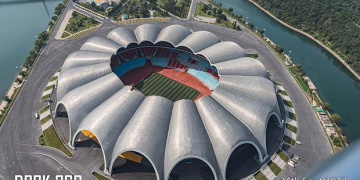
The blueprint features an elliptical design, optimizing the seating arrangement to ensure an unobstructed view for every spectator. The elliptical structure not only supports a panoramic viewing experience but also enhances the aerodynamics of the building.
Key features of the plan include:
- Bleacher Zones: The stadium seating is divided into lower and upper tiers, supported by a cantilevered structure to minimize visual obstructions.
- Field Layout: A regulation-sized football pitch sits at the center, surrounded by an athletics track. The design follows international standards, making the facility suitable for global competitions.
- Access Points: The plan includes strategically placed entry and exit points to facilitate smooth crowd flow, ensuring safety and convenience during major events.
Structural Design
The structural design of the stadium reflects its ability to withstand heavy loads and seismic activity, a vital consideration for public infrastructure.
Cantilevered Roof
One of the most striking features of the 1987 design is its cantilevered roof, which provides shade to a significant portion of the seating areas without obstructing views. The roof structure uses reinforced steel beams, creating a lightweight yet robust canopy.
Bleacher Support System
The bleachers are supported by a series of reinforced concrete columns and beams. These components distribute the weight evenly across the structure, maintaining stability and durability. The underside of the bleachers reveals intricate concrete detailing, which adds to the aesthetic and structural integrity.
Materials
- Concrete: Used for the bleachers, columns, and structural base, offering strength and durability.
- Steel: Employed in the cantilevered roof and railings, providing flexibility and resilience.
- Glass and Openings: Integrated into the facade for natural lighting and ventilation, reflecting a sustainable approach to design.
Sectional Design
The sectional view of the stadium reveals the relationship between its different levels and structural components.
- Spectator Levels: The section highlights the tiered seating arrangement, ensuring an excellent view from every level. The upper tiers are angled steeply to maximize sightlines while minimizing the building’s footprint.
- Concourse Areas: The mid-section includes spacious concourses for movement, food kiosks, and restrooms. These areas are seamlessly integrated to handle large crowds effectively.
- Player and VIP Areas: The design accommodates dedicated zones for players, officials, and VIPs, with direct access to the field and exclusive facilities.
Engineering Marvel
The engineering behind the stadium emphasizes efficiency and safety. By employing a combination of pre-cast and in-situ concrete techniques, the construction team achieved precision and speed during the build phase. The cantilevered roof system was a significant engineering challenge, solved by innovative use of counterbalancing and anchoring techniques.
Environmental Considerations
Even in 1987, the architects incorporated sustainable elements into the design:
- Ventilation: Large open sections allow natural airflow, reducing the need for artificial cooling systems.
- Natural Lighting: The strategic use of glass ensures that natural light illuminates the interior during the day.
Legacy of the 1987 Design
The Kasarani Stadium’s original design remains a testament to architectural ingenuity and foresight. Over the decades, the stadium has undergone renovations to modernize its facilities, but its core structural and architectural elements have stood the test of time. The design principles set in 1987 continue to inspire contemporary stadium projects in Africa and beyond.
Conclusion
The original 1987 design of Kasarani Stadium reflects a harmonious blend of form, function, and sustainability. Its architectural and structural components were meticulously planned to cater to both spectators and athletes, ensuring an optimal experience for all. Today, Kasarani Stadium stands not just as a sports venue but as a cultural and architectural landmark, a true reflection of Kenya’s ambitions and vision in the 1980s.