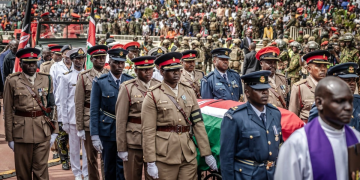
Julius Sello Malema is a South African politician who is the founder and leader of the Economic Freedom Fighters, a populist far-left political party known for the red berets and military-style outfits worn by its members. This article seeks to explain Why Julius Malema will never be President of South Africa.
Julius Malema and Xenophobia
Julius Malema, the leader of the Economic Freedom Fighters (EFF) in South Africa, has been vocal against xenophobia, advocating for unity among African nations and criticizing xenophobic violence. In a country with significant xenophobic sentiments, this stance could indeed be seen as politically risky. However, Malema’s position is consistent with his broader vision of pan-African solidarity and economic emancipation, which appeals to a specific base of supporters who value these ideals.
Political Rhetoric and Popularity
Politicians often face the dilemma of whether to maintain their principles or pander to popular sentiments. Donald Trump’s success in the 2016 U.S. presidential election is a prime example of how appealing to the fears and prejudices of the electorate can be an effective strategy. His promises to crack down on immigration and combat terrorism resonated with a significant portion of the American populace, despite the controversial nature of his statements.
Raila Odinga and the MAU Forest
Raila Odinga’s stance on preserving the MAU forest in Kenya, which involved relocating settlers to protect the environment, cost him political support among the Kalenjin community. This decision highlights the conflict between making environmentally and morally sound decisions and maintaining political support. Odinga’s loss of the Kalenjin vote arguably impacted his chances in the 2013 elections, suggesting that a more politically expedient stance might have yielded better short-term results.
Idealism vs. Pragmatism in Politics
The tension between revolutionary ideals and political pragmatism is a recurring theme in political discourse. Revolutionary leaders like Julius Malema often face challenges in translating their ideals into political power, especially when those ideals conflict with popular sentiments. In contrast, more pragmatic politicians like Cyril Ramaphosa tend to navigate these issues with a focus on what is politically feasible, sometimes at the expense of more radical reforms.
Jacob Zuma’s Role
Jacob Zuma’s continued involvement in South African politics and his potential impact on Julius Malema’s campaign reflects the complex dynamics of political alliances and rivalries. Zuma’s political maneuvers can be seen as attempts to maintain influence and power, even at the expense of splitting the vote that might otherwise consolidate around Malema and the EFF. This highlights the often self-serving nature of political actors and the impact of personal ambitions on broader political movements.
Conclusion
Your analysis underscores the importance of understanding the interplay between political ideals, public sentiment, and strategic decision-making. While idealistic positions can inspire and mobilize certain segments of the population, they can also alienate others and pose challenges in gaining broad-based support. Ultimately, the success of political leaders often hinges on their ability to balance these competing demands, making strategic compromises where necessary without entirely abandoning their core principles.