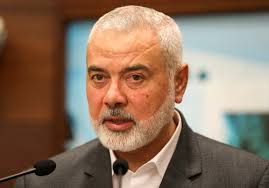
Iran has accused Israel of the assassination of Hamas’s political leader, Ismail Haniyeh, in Tehran, and has vowed to seek revenge. This incident has significantly raised the potential for further escalation in regional conflicts.
Haniyeh was reportedly killed in an early morning strike on his residence in Tehran, as confirmed by officials from Hamas and Iran. This development came on the heels of Israel’s announcement of having killed a senior Hizbollah commander in an airstrike on Beirut, raising fears of a potential full-scale war.
Israel has not publicly acknowledged responsibility for Haniyeh’s death and generally refrains from confirming or denying such operations in Iran. Nonetheless, Israeli officials have stated their intention to hold Hamas leaders accountable for their October 7 assault on southern Israel.
Israeli Defense Minister Yoav Gallant described the recent operation in Beirut as precise and professional, emphasizing Israel’s readiness for any scenario, despite not seeking further conflict.
Haniyeh, who had been living in exile in Qatar but frequently visited Iran, had attended the inauguration of Iran’s new president, Masoud Pezeshkian, just before his death.
Iran’s Supreme Leader Ayatollah Ali Khamenei has condemned the assassination, calling for retribution and framing it as a direct assault on Iranian sovereignty. He warned that Israel’s actions have set the stage for severe consequences.
Haniyeh’s death represents a significant blow to Hamas, especially given his role in ongoing ceasefire negotiations and hostage negotiations in Gaza. Qatar, a key mediator in these discussions, denounced the assassination as a dangerous escalation and questioned the future of mediation efforts.
US Secretary of State Antony Blinken has denied any American involvement or prior knowledge of the incident, urging for a ceasefire to de-escalate tensions.
The killing of Haniyeh is an embarrassment for Iran and could lead to retaliatory actions against Israel. The situation is further complicated by Israel’s recent targeted strike on a Hizbollah leader in Beirut, which followed a deadly rocket attack attributed to Hizbollah.
Hizbollah, which has issued warnings against such actions, has vowed a strong response, further inflaming regional tensions. The strike in Beirut caused significant damage and casualties, with Hizbollah promising to intensify its resistance against Israel.
Turkey has criticized the killing, warning of potential regional escalation, while the US and UK are actively seeking diplomatic solutions to prevent further conflict. The escalating situation has drawn global concern about the risk of broader regional instability.