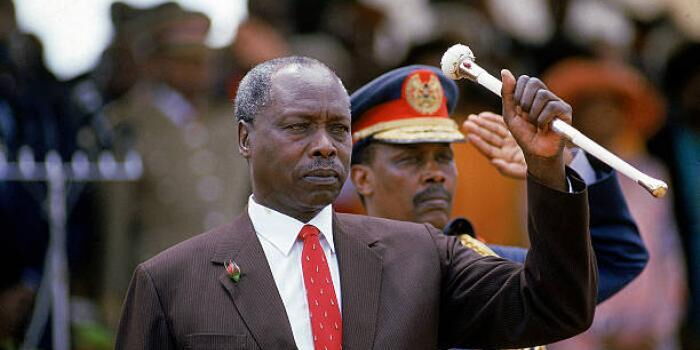
In the heat of the 1992 Kenyan general elections, President Daniel arap Moi found himself on the brink of losing power, with prominent contenders such as Kenneth Matiba and Mwai Kibaki threatening his long-standing rule. According to Lee Njiru, Moi’s press secretary, the former president was ready to step down, convinced that his time had come. However, Njiru and a team of intelligence officers crafted a covert plan that ultimately ensured Moi’s victory. Through deception and strategic manipulation, Moi outsmarted his rivals, including Matiba and Kibaki, in a move that left Kenya’s political landscape forever changed.
Lee Njiru’s Revelation

Lee Njiru recently shared his account of how Moi was on the verge of conceding the presidency in 1992, believing he would be ousted. However, his intervention and that of several other intelligence officers changed the course of history. “Moi wanted to leave in 1992 and said there was no way he could have won,” Njiru stated in a recent interview. “But I told him no, and that we were not going anywhere. I promised him time to craft a formula.”
Njiru and his team quickly mobilized to create a strategy that would mislead both Matiba and Kibaki into believing that they had widespread support, setting the stage for Moi’s manipulation of the electoral system.

The Role of Deception in the 1992 Elections
Njiru’s plan began with the creation of posters announcing Matiba’s presidential bid, despite Matiba being unaware of this development. He ordered government printer director Sheldon Muchilwa to print posters that depicted Matiba as a strong contender, and these posters were distributed across the country by hired youths. “We wanted to create the illusion that Matiba, who was in London at the time, was preparing for the presidency,” Njiru explained.
To further solidify this illusion, Njiru enlisted Kikuyu musicians to compose songs in praise of Matiba, all while he was abroad. This strategy was designed to draw attention to Matiba’s candidacy and falsely suggest that the Kikuyu community, traditionally a stronghold for Moi’s political opponents, was aligning with him.
Crafting a Rift Between Matiba and Kibaki
The deception did not stop with the music and posters. When Matiba returned to Kenya, the team organized buses filled with people from the Rift Valley to greet him, making it appear as though the region was solidly behind his bid. “We arranged for buses to bring people from Rift Valley to cheer for Matiba. When he saw them, he was overjoyed, and his confidence soared,” Njiru recounted.
This act led to a dramatic fallout between Matiba and Kibaki. While Matiba was convinced of his support in the Rift Valley, Kibaki saw this as a betrayal and chose to run independently. The division created by Moi’s strategy played a pivotal role in splitting the opposition vote, which ultimately allowed Moi to retain his grip on power.
The Western Region Tactic: Shikuku’s Role
Moi’s team also approached the late Martin Shikuku, a prominent political figure, and tasked him with convincing parliamentary candidates to join Matiba’s party, FORD-Asili. In a particularly deceptive move, Shikuku was instructed to invite Matiba to the Western region, where he was asked to make an impromptu speech in a local dialect. The message, although lost in translation, suggested that Matiba, due to illness, would pass the torch to Shikuku.
“When Matiba was asked about the statement, he confirmed it was true, even though he did not fully understand what Shikuku had said,” Njiru recalled. This confusing statement further undermined Matiba’s credibility and reinforced the divisions within his camp.
The Aftermath and Moi’s Victory

The result of these carefully orchestrated tactics was clear: Matiba was misled into believing he had widespread support, while Kibaki’s ambition was derailed by the fallout between the two men. The political confusion worked in Moi’s favor, and he was able to secure a second consecutive term as president in the 1992 elections.
Moi won with 1,962,866 votes, while Matiba secured 1,404,266 votes, and Kibaki came third with 1,050,617 votes. Jaramogi Oginga Odinga trailed in fourth with 944,197 votes. This victory solidified Moi’s control over Kenya’s political landscape for another decade.
Conclusion: Moi’s Lasting Influence
The 1992 elections were a defining moment in Kenyan history. While Moi’s victory was attributed to a combination of factors, it was the strategic manipulation and deception orchestrated by Lee Njiru and his team that ensured his continued reign. The political divisions sown between Matiba and Kibaki, combined with the carefully planned rift in the Mount Kenya and Western regions, secured Moi’s legacy as one of Kenya’s most formidable political figures. The 1992 elections demonstrated the extent to which political maneuvering could shape the future of a nation.