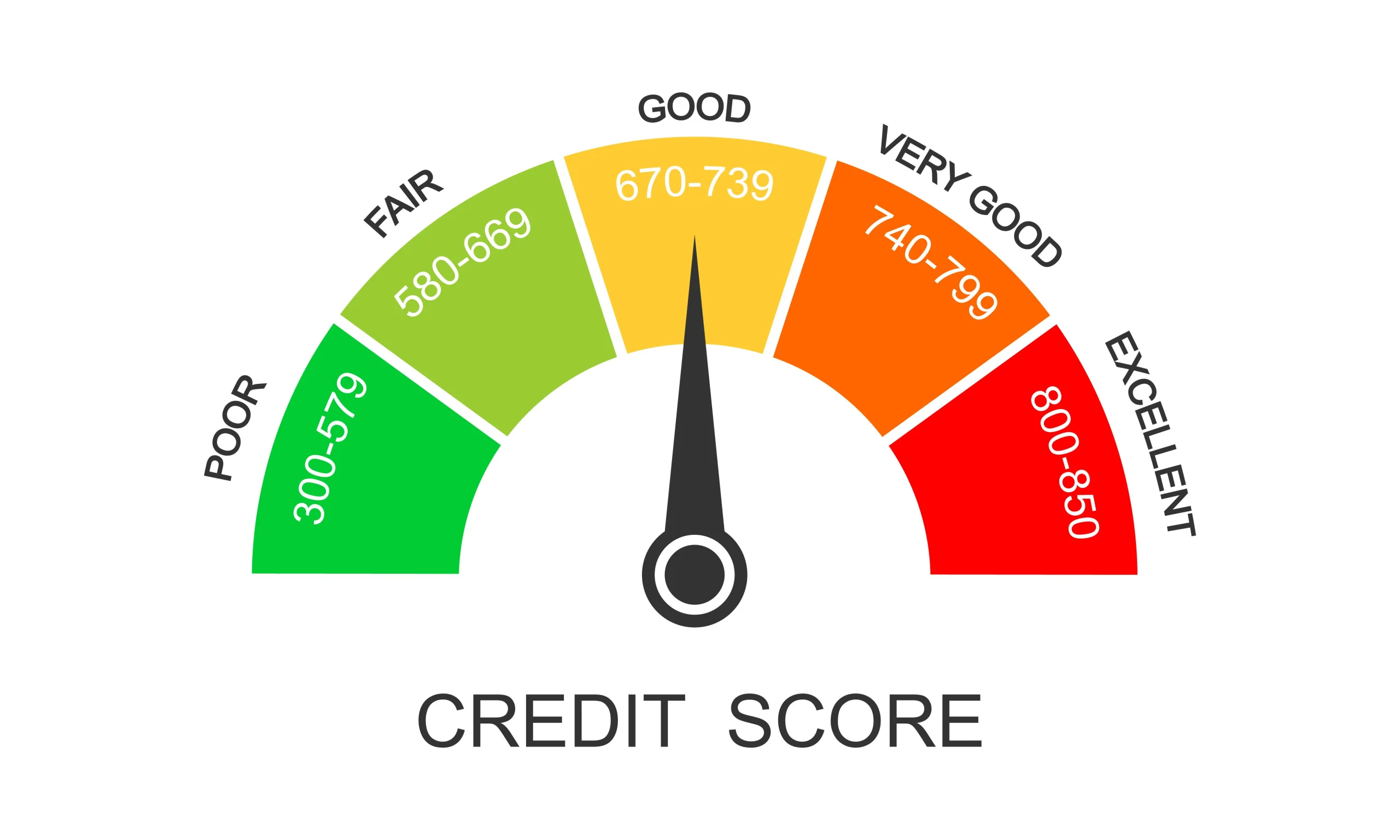
A credit score can influence whether a person qualifies for a mortgage, car loan, credit card, mobile contract or rental agreement. It may also affect the interest rate, credit limit, deposit or other terms offered.
Yet the system is widely misunderstood.
Credit scores are not personal wealth rankings, rewards for carrying debt or permanent labels attached to individuals. They are statistical estimates designed to help lenders assess the likelihood that a borrower will meet future payment obligations.
They are also not universal. A consumer can have several scores at the same time because different credit bureaus, lenders and scoring companies may use different data, formulas and numerical ranges.
Understanding how credit scores really work therefore requires looking beyond the number shown in a banking app. The underlying credit report, scoring model and lender’s own approval rules are often more important than a single headline score.
What a credit score means
A credit score is a number calculated from information contained in a person’s credit report. It attempts to estimate lending risk—usually the likelihood that the person will repay borrowed money according to the agreed terms.
In the United States, many commonly used consumer scores fall between 300 and 850. The Federal Trade Commission says a credit score is typically a number within this range that estimates how likely a consumer is to repay a loan and make payments on time.
Canada commonly uses a scale of 300 to 900, while UK credit-reference agencies may use entirely different ranges. Equifax UK, for example, currently uses a scale of 0 to 1,000. Germany’s SCHUFA has introduced a consumer score running from 100 to 999 points.
These numbers cannot be compared directly. A score of 700 may be strong under one model but average or weak under another.
The score should also be distinguished from the credit report:
- A credit report is the underlying record of credit accounts, balances, repayment history, applications and certain public information.
- A credit score is a calculation based on some of that information.
- A lending decision combines the score with the lender’s policies, affordability checks and information supplied in the application.
A high score therefore improves the probability of favourable treatment but does not guarantee approval.
Why credit scores matter
Lenders face a basic problem: they must decide whether to provide money now in exchange for repayment later.
Credit scoring allows them to assess large numbers of applications consistently and quickly. Instead of relying entirely on an individual employee’s judgement, the lender can use historical data to estimate risk.
A stronger credit profile may help a consumer:
- Qualify for a broader selection of financial products.
- Receive a lower interest rate.
- Obtain a higher credit limit.
- Avoid additional security deposits.
- Secure more favourable loan or mortgage terms.
The US Consumer Financial Protection Bureau states that credit scores and credit-report information can affect both mortgage eligibility and the interest rate charged. Higher scores generally represent stronger credit histories and may make borrowers eligible for lower rates.
However, lenders usually examine more than credit history. Income, existing financial commitments, deposit size, employment circumstances, loan purpose and affordability can all affect a decision.
A person with an excellent score but insufficient income may still be rejected. Conversely, someone with a less impressive score may qualify if other aspects of the application are strong and the lender accepts the level of risk.
The key facts about credit scores
Several facts help make sense of the system.
First, there is no single universal credit score. Scores can differ because credit bureaus may hold different information and because scoring models weigh information differently. Equifax UK explicitly notes that scores from different sources may use different formulas and scales.
Second, lenders do not necessarily see the same consumer-facing score displayed in a free app. A lender may use another version of the model, an industry-specific score or an internal risk system.
Third, scores change as credit reports are updated. New balances, payments, applications and account closures may not appear immediately because lenders report information on different schedules.
Fourth, a credit score estimates risk; it does not measure character, intelligence or financial success. Someone who has never borrowed may have limited credit history despite having substantial savings.
Finally, a score is only as accurate as the data behind it. Incorrect late payments, unfamiliar accounts or fraudulent applications can unfairly weaken a credit profile if they are not corrected.
How credit scores are calculated
Exact formulas are usually proprietary, but the main categories are well established.
For widely used US FICO scores, FICO describes the approximate weighting as:
- Payment history: 35%
- Amounts owed: 30%
- Length of credit history: 15%
- New credit: 10%
- Credit mix: 10%
These percentages describe the standard FICO framework, not every score used worldwide. Their effect can also vary according to the information in an individual credit file.
Payment history
Payment history usually carries the greatest weight. Scoring models examine whether payments were made on time and whether accounts became seriously overdue, entered collections or experienced other negative events.
One late payment does not affect every file identically. Its impact can depend on how late it was, how recently it occurred, whether the account remains unpaid and what the rest of the credit history looks like.
A consistent record of paying at least the required amount by the due date generally supports a stronger score. Canada’s Financial Consumer Agency also identifies payment history as the most important component of a Canadian credit score.
Amounts owed and credit utilisation
Credit utilisation measures how much revolving credit is being used relative to the available limit.
For example, a card with a $5,000 limit and a reported balance of $1,000 has an individual utilisation rate of 20%.
Scoring models may examine utilisation across all cards as well as on individual accounts. High balances can indicate that a borrower has less financial flexibility, even when payments remain current.
There is no universal threshold at which a score suddenly becomes “good” or “bad.” The widely repeated 30% guideline is not a magic boundary. Lower reported utilisation is generally better, but consumers should not borrow unnecessarily to produce activity.
Paying a credit-card statement balance in full can also avoid interest, provided the account’s terms include an interest-free grace period and the payment is made on time. The CFPB confirms that paying a card balance every month is one factor that can support stronger scores.
Length of credit history
Models may consider:
- The age of the oldest account.
- The age of the newest account.
- The average age of all accounts.
- How long particular accounts have been active.
This is why closing an old card can sometimes affect a score, although the result depends on the model and the rest of the credit file.
Closing a card may also reduce total available credit, causing utilisation to rise. However, keeping an account open is not always sensible if it has expensive annual fees, encourages overspending or creates a fraud risk.
New credit applications
When a lender checks a report following an application, the search may be recorded as a hard inquiry. A hard inquiry can have a small, temporary effect because several applications in a short period may suggest increased borrowing risk.
Checking one’s own report is generally treated as a soft inquiry and does not lower the score.
Many US scoring models group multiple mortgage, car-loan or student-loan inquiries made during a recognised comparison-shopping period. Depending on the model, the window may range from 14 to 45 days.
Rules differ by country and model, so consumers should avoid assuming that all repeated applications will automatically be combined.
Credit mix
Some models consider experience with different forms of borrowing, such as revolving credit cards and instalment loans.
This does not mean consumers should open several products simply to create a “better mix.” Credit mix is generally less influential than payment history and debt levels. Paying interest on an unnecessary loan is rarely justified solely by a possible scoring benefit.
Credit scores work differently across countries
The broad principle—using historical data to estimate future repayment risk—is similar across many markets. The details are not.
In the United States, the three major nationwide credit-reporting companies are Equifax, Experian and TransUnion. Many lenders use FICO scores, although VantageScore and proprietary lender models are also available.
Canada has two main credit bureaus, Equifax and TransUnion. The Canadian government explains that lenders may use a bureau score or calculate a score using their own formula.
In the United Kingdom, agencies can provide consumers with different scores because they use different scales and data. More importantly, lenders apply their own eligibility and affordability rules. A maximum score shown by an agency does not guarantee that a particular bank will approve an application.
Australia also uses credit reports and scores, but Australian consumers have a legal right to request a free copy of their report every three months. Official guidance recommends checking it at least annually.
In Germany, SCHUFA describes its score as a statistical payment forecast. Its new model uses a 100-to-999-point scale, with higher numbers representing a greater predicted probability of payment.
The practical lesson is simple: advice written for one country should not automatically be applied elsewhere.
Advantages and opportunities
A well-managed credit profile can reduce the cost of borrowing over time. Even a modest interest-rate difference can become significant on a large mortgage or long-term loan.
Credit scoring can also make lending faster and more consistent. Automated systems allow institutions to process applications without requiring lengthy personal interviews.
For consumers, credit reports provide an organised record that can demonstrate years of reliable repayment. People who move between employers, change banks or apply online can still show an established financial history.
Responsible credit use can be useful for managing cash flow, building a borrowing record and accessing services that require post-paid contracts. The benefit comes from reliability and affordability—not from carrying expensive balances.
Risks, costs and limitations
Credit scoring has important limitations.
A model predicts behaviour based on patterns in data. It cannot understand every personal circumstance behind a missed payment, such as illness, job loss, administrative mistakes or family emergencies.
People with limited credit histories may also be difficult to assess. This can affect young adults, recent immigrants and consumers who mostly use cash or debit cards.
Different agencies may receive information from different lenders, producing inconsistent reports. Errors and identity theft can create further problems.
There is also a risk of concentrating too heavily on the score while ignoring overall financial health. A person can have a strong score while carrying costly debt. Another can have a limited score but substantial savings and no need to borrow.
The goal should not be to chase a perfect number. It should be to maintain accurate records, make affordable payments and minimise unnecessary interest and fees.
Practical ways to build healthier credit
Begin by checking the credit reports available in the relevant country. Review account names, balances, payment statuses, addresses and applications.
Dispute information that is genuinely inaccurate. Do not dispute accurate negative information merely because it is inconvenient.
Next, pay every required bill by the deadline. Automatic payments and calendar reminders can reduce accidental lateness, but bank balances should still be monitored to prevent failed payments.
Keep card balances manageable relative to limits. Paying before the statement date may reduce the balance reported to a bureau, although reporting practices vary.
Apply for new credit selectively. Compare likely eligibility before submitting several full applications, especially when hard searches are involved.
Maintain older accounts when they remain useful, affordable and secure. Closing an account may still be appropriate when fees, fraud risk or overspending outweigh any scoring consideration.
Anyone struggling with repayments should contact the lender early and seek help from a recognised nonprofit or government-supported debt-advice service. Consumers should be cautious of companies promising to create a new identity or erase accurate information for a fee.
Common credit-score misconceptions
“Checking my own score lowers it”
Reviewing one’s own report or score is generally a soft inquiry and does not harm the score. A lender’s check connected to a formal application may be treated differently.
“Carrying a balance builds credit faster”
A card does not need to generate interest to support a payment history. Using it for affordable purchases and paying according to the terms can demonstrate responsible management without maintaining an expensive balance.
“Income is part of every credit score”
Income is normally considered during lending and affordability assessments, but it is not generally part of the standard US consumer credit report or FICO score. A lender can still reject an applicant whose income is insufficient for the proposed repayment.
“One score controls every decision”
Consumers can have multiple scores. A lender may use a different bureau, model or score version from the one shown in a consumer app.
“A perfect score guarantees the cheapest loan”
Approval and pricing can also depend on income, loan size, deposit, employment, collateral, affordability and the lender’s current policies.
“Credit repair companies can remove accurate history”
Legitimate errors can be corrected. Accurate information normally remains for the period permitted by local law. In the United States, most negative account information can generally be reported for up to seven years. UK defaults are normally visible for six years.
The future of credit scoring
Credit scoring is likely to become more data-driven, but the direction will vary by jurisdiction.
Newer models can examine trends over time rather than relying only on a single balance reported at one moment. Some systems are also incorporating newer categories of payment data, including certain buy-now-pay-later obligations.
Open-banking systems may allow lenders, with permission, to assess cash flow and account behaviour. This could help applicants with limited traditional credit histories, although it also creates privacy, cybersecurity and consent concerns.
Regulators are likely to continue examining transparency, data accuracy, discrimination and consumers’ ability to challenge automated decisions. Forecasts about alternative data should therefore be treated cautiously: wider data access may improve risk assessment, but more data does not automatically produce fairer outcomes.
Conclusion
Credit scores are best understood as changing risk estimates—not permanent grades of financial worth.
They are built from credit-report information such as repayment history, debt levels, account age and recent applications. However, the formula, scale and information available differ between countries, bureaus and lenders.
The most reliable approach is not to search for shortcuts. Consumers can support healthier credit scores by paying on time, keeping borrowing affordable, limiting unnecessary applications, checking reports for errors and protecting personal information.
A strong score may open the door to better borrowing terms, but the wider objective should be stronger financial health: manageable debt, lower costs, accurate records and enough flexibility to meet future obligations.
Disclaimer: This article provides general financial education and does not constitute personalised financial, legal or credit advice. Credit-reporting laws, scoring systems and lender policies vary by country. Readers should consult official local sources or a qualified adviser when making significant financial decisions.
Sources consulted
- Consumer Financial Protection Bureau — What is a credit score?
https://www.consumerfinance.gov/ask-cfpb/what-is-a-credit-score-en-315/ - Consumer Financial Protection Bureau — Understand your credit score
https://www.consumerfinance.gov/consumer-tools/credit-reports-and-scores/understand-your-credit-score/ - Consumer Financial Protection Bureau — How to get and keep a good credit score
https://www.consumerfinance.gov/ask-cfpb/how-do-i-get-and-keep-a-good-credit-score-en-318/ - Federal Trade Commission — Credit Scores
https://consumer.ftc.gov/articles/credit-scores - FICO — What’s in your FICO Scores?
https://www.myfico.com/credit-education/whats-in-your-credit-score - Financial Consumer Agency of Canada — Credit report and score basics
https://www.canada.ca/en/financial-consumer-agency/services/credit-reports-score/credit-report-score-basics.html - Financial Consumer Agency of Canada — Improving your credit score
https://www.canada.ca/en/financial-consumer-agency/services/credit-reports-score/improve-credit-score.html - MoneyHelper — How to check your credit report
https://www.moneyhelper.org.uk/en/everyday-money/credit/how-to-check-your-credit-report - Australian Securities and Investments Commission Moneysmart — Credit scores and credit reports
https://moneysmart.gov.au/managing-debt/credit-scores-and-credit-reports - Equifax UK — Understanding credit-score ranges
https://www.equifax.co.uk/resources/loans-and-credit/understanding-credit-score-ranges - SCHUFA — How SCHUFA calculates scores
https://www.schufa.de/en/scoring-data/scoring-schufa/index.jsp
Read Also: How to Send a View Once Photo on Instagram