
Google has confirmed that it is testing a new policy that gives some newly created Gmail accounts only 5GB of free cloud storage instead of the traditional 15GB allocation.
The company says the change is part of an experiment designed to improve account security, strengthen data recovery systems and maintain service quality across its storage infrastructure.
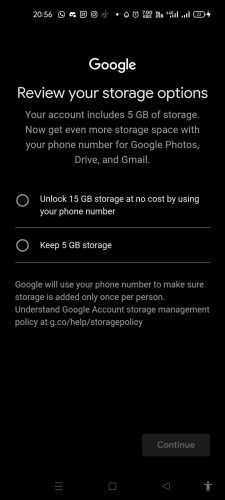
The adjustment was first noticed by users who reported that some new Gmail accounts were being limited to 5GB of free storage unless a phone number was added during setup.
In a statement to Android Authority, a Google spokesperson said the company is testing this change to help it continue to provide a “high-quality storage service” to its users.
Once users linked a verified phone number to the account, Google reportedly restored the full 15GB storage allowance at no additional cost.
The move has sparked fresh debate about how major technology companies are balancing free services, security requirements and rising infrastructure costs as demand for cloud storage continues growing globally.
Read Also: Change This Setting to Use the Right Gemini 3 Pro Model
Google Confirms Gmail Storage Test
In a statement explaining the change, Google said the company is testing a revised storage policy for accounts created in selected regions.
According to the company, the experiment is intended to help maintain “high-quality storage service” while also encouraging users to improve account security and recovery protection.
Google did not disclose which countries or regions are currently included in the test.
However, the company’s updated wording around free storage has already attracted attention.
Previously, Google’s support pages stated that every Google Account “includes 15 GB of storage.”
The wording has now changed to say accounts include “up to 15 GB of storage,” signaling greater flexibility around how much free storage users may receive depending on account conditions.
Gmail Storage Linked to Phone Verification
Reports from affected users suggest the reduced storage allocation is connected to account verification measures.
New accounts created without linking a phone number reportedly receive only 5GB of free cloud storage initially.
Users who add a verified mobile number regain access to the standard 15GB allocation shared across:
- Gmail
- Google Drive
- Google Photos
Analysts say the approach appears designed partly to reduce abuse involving automated account creation, spam operations and fraudulent activity.
Phone verification adds friction to mass account generation while also improving account recovery options if users lose access to passwords or devices.
Google has increasingly emphasized account security measures in recent years as cyberattacks, phishing and credential theft continue rising globally.
Cloud Storage Costs Continue Rising
The Gmail storage test also reflects broader economic pressures facing major cloud service providers.
Although free cloud storage has long been a major attraction for consumers, maintaining large-scale global storage infrastructure carries significant operational costs.
Companies such as Google must manage:
- Data center expansion
- Energy consumption
- Cooling systems
- Backup redundancy
- AI infrastructure demand
- Cybersecurity operations
Analysts say explosive growth in photos, videos and AI-generated content is placing additional strain on cloud storage ecosystems worldwide.
Google, Microsoft and Apple have all gradually adjusted storage policies over the years as user data volumes continue increasing.
The new Gmail storage experiment may therefore represent part of a broader strategy to encourage stronger account verification while controlling infrastructure usage.
AI Boom Increases Infrastructure Pressure
The timing of the Gmail storage policy test also coincides with rapid expansion of AI services across major technology platforms.
Generative AI systems require enormous computational and storage resources.
Companies like Google are simultaneously investing billions into:
- AI data centers
- GPU infrastructure
- Cloud computing systems
- Storage expansion
Analysts say infrastructure costs tied to AI deployment are forcing technology firms to reassess how free consumer services are managed and monetized.
Even relatively small storage reductions across millions of accounts could significantly reduce long-term infrastructure expenses.
Existing Accounts Appear Unaffected
For now, the changes appear limited mainly to certain newly created accounts.
Existing Google users who already have verified phone numbers linked to their accounts are expected to continue receiving the standard 15GB free storage allocation.
Google has not announced plans for broad reductions affecting current users.
However, analysts say the updated “up to 15 GB” wording gives the company greater flexibility for future experiments or region-specific policies.
The company may continue testing different verification and storage models before deciding whether to expand the policy more widely.
Security and Recovery Become Bigger Priorities
Google’s explanation emphasizes security and account recovery as major motivations behind the experiment.
Account recovery remains one of the largest challenges for large digital platforms because users frequently lose passwords, devices or authentication access.
Phone verification helps improve recovery success rates while reducing fraudulent account access attempts.
Technology companies globally have been increasing pressure on users to adopt stronger authentication systems, including:
- Phone verification
- Two-factor authentication
- Passkeys
- Biometric login methods
Analysts say tying premium account features to stronger verification could become more common across major digital platforms.
Users React to Reduced Gmail Storage
Reaction from users online has been mixed.
Some users argued that requiring phone verification for full storage access feels reasonable given rising cybersecurity risks.
Others criticized the move as a gradual erosion of previously standard free service benefits.
Privacy advocates have also raised concerns about increased pressure to provide personal phone numbers in exchange for access to full account functionality.
Google has not indicated whether alternative verification methods may eventually qualify users for expanded storage allocations.
Competition in Cloud Services Intensifies
The Gmail storage test also highlights growing competition within the consumer cloud storage market.
Major technology companies increasingly use storage services as part of broader ecosystem strategies designed to lock users into platforms and subscriptions.
Google’s 15GB free tier has historically exceeded free offerings from several competitors.
However, the company also aggressively promotes paid storage subscriptions through Google One.
Analysts say balancing free services with subscription growth remains a central challenge for cloud providers.
Why This Matters
Google’s Gmail storage experiment reflects how major technology companies are rethinking free digital services amid rising infrastructure costs, AI expansion and cybersecurity pressures.
The move also signals that account verification and security may increasingly influence what features and storage levels users receive by default.
As cloud ecosystems become more expensive to maintain, companies may continue adjusting free-tier offerings in subtle ways.
What Happens Next
Google is expected to continue testing the reduced storage policy in selected regions before deciding whether to expand or modify the approach.
Industry observers will closely monitor whether the company eventually introduces similar requirements across broader markets or connects additional account features to phone verification.
For Gmail users, the experiment may signal the beginning of more conditional access models tied to security, identity verification and cloud infrastructure usage.
Read Also: Gemini AI Coming to All Polestar Models Starting in 2026