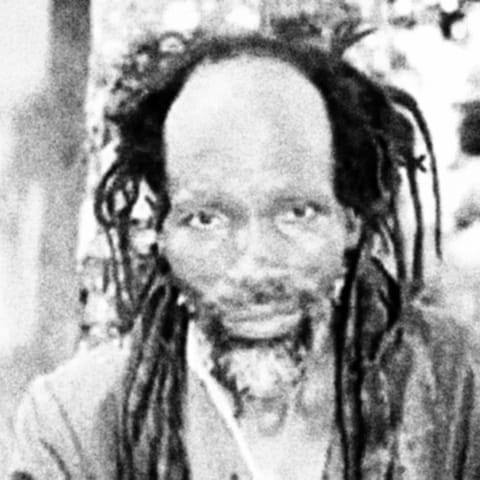
General Kahiu Itina, whose name translates to “General Knife in the Butt,” earned his moniker through his ruthless tactics against the enemy. Born Muruthi Mathi, he was known for his strict discipline and fearsome reputation. Before joining the Mau Mau rebellion, he was an ordinary carpenter, but his life took a dramatic turn as he became one of the key figures in Kenya’s struggle for independence.
In a significant meeting held in the Aberdares on June 12, 1953, Muruthi Mathi was promoted to General alongside other notable figures like Matenjagwo, Muraya Mbuthia, Mbaria Kaniu, Kibira Gatu, Kago Mboko, and Ndung’u Gicheru. Kahiu Itina’s unique strategies, such as wearing his sandals backward to mislead the enemy, and his infamous punishment methods, contributed to his notoriety.
Kahiu Itina was one of the few fighters granted direct access to Dedan Kimathi without prior screening by his guards. Known for his militant leadership, he donned a distinctive leopard-skin coat and trousers, a decorative Colobus monkey-skin hat, and a pair of brown gaiters made from thick buffalo hide. His bloodshot eyes and almost bald head set him apart from other fighters.
As a North Tetu leader aligned with Stanley Mathenge, Kahiu Itina rose to prominence within the Ituma Ndemi Trinity Council, established by Kimathi in May 1953. This council directed the activities of the nine separate wings of the Ituma Ndemi Mau Mau Army. ITUMA, an acronym from Itungati (warriors), Tetu (North and South Tetu Divisions), Uthaya Division, and Mathira Division, symbolized the unity and strength of the Nyeri Army. NDEMI, meaning “arrowhead,” referred to an early generation believed to have pioneered metal-working among the Gikuyu.
At the renowned Mwathe meeting, Kahiu Itina was elected Treasurer of the Kenya Defense Council and, in February 1954, Vice President of the first Kenya Parliament. He also served as Commander-in-Chief of the North Tetu Division, INA.
One of Kahiu Itina’s most notable raids was conducted with General Kibira Gatu and 150 warriors at the Kagunduini Homeguard post and Market. During this mission, he carried a 50-pound bomb dropped by enemy planes, which had been recovered from the Honi River. He successfully detonated the bomb at the post, resulting in the destruction of four buildings, an explosion heard throughout Nyeri District.
Tragically, General Kahiu Itina was captured in 1957. He was subsequently hanged alongside other Mau Mau fighters, including Dedan Kimathi, cementing his legacy as a fearless leader who sacrificed his life for Kenya’s independence.