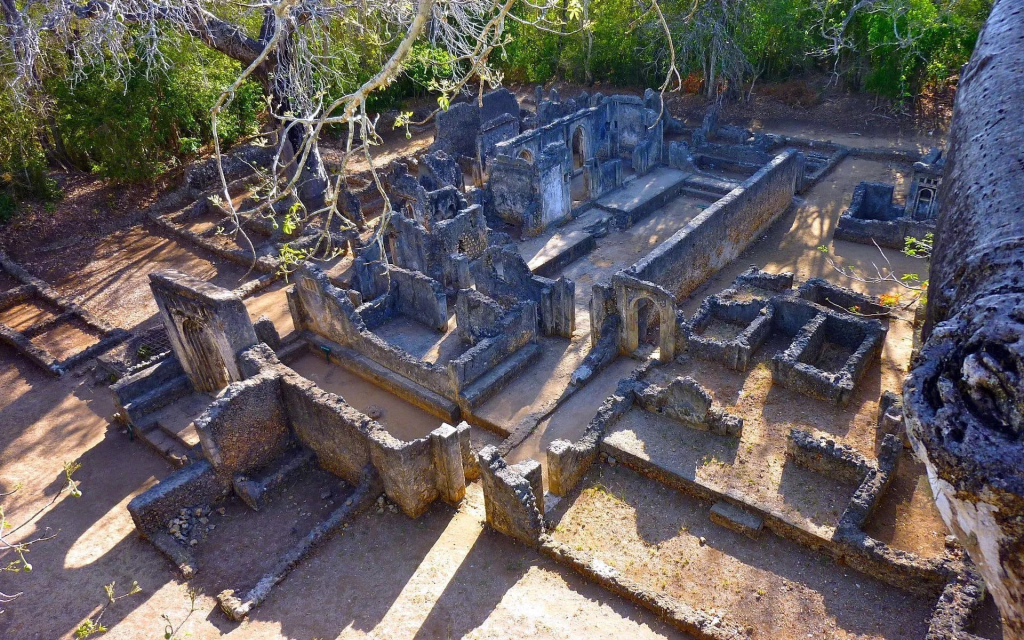
The Gedi Ruins, located in Kilifi County, are among the most celebrated historical sites in Kenya. These ruins provide a fascinating glimpse into a highly civilized and independent settlement that dates back to the late 11th and early 12th centuries. Alongside the Ungwana Ruins at Tana River, Gedi stands as one of the largest and most significant early settlements recovered in the region.
Historical Significance
According to Dr. James Kirkman and other archaeological researchers, Gedi was a major trade center, facilitating commerce between Arab and Asian traders. Although there are no written records to substantiate this claim, the artifacts excavated from the site indicate a highly developed society. These items suggest that the inhabitants of Gedi enjoyed a relatively advanced lifestyle compared to other African communities of the same period.
Architectural Marvels
The ruins of Gedi showcase detailed architecture, with well-defined roads, sophisticated building designs, and a clear arrangement reflecting the settlement’s political, economic, and religious order. Some of the notable discoveries include:
- Wells: Advanced water management systems.
- Scissors and Iron Box: Indicating the presence of sophisticated tools and domestic items.
- Building Structures: Elaborate homes and public buildings constructed with remarkable precision.
The Mystery of Abandonment
Despite its evident prosperity and advancement, the reasons why Gedi was abandoned remain a mystery. The settlement’s sudden desertion has puzzled historians and archaeologists alike. Various theories have been proposed, including invasions, disease, and depletion of resources, but none have been definitively proven.
Visiting the Gedi Ruins
Today, the Gedi Ruins are a popular tourist destination, offering a unique window into Kenya’s rich historical tapestry. Visitors can explore the remnants of this once-thriving settlement, marvel at the ancient architecture, and ponder the lives of its former inhabitants.
Conclusion
The Gedi Ruins stand as a testament to the advanced civilization that once flourished in Kilifi County. The site’s detailed architecture, sophisticated tools, and organized societal structure challenge traditional views of African life during the 11th and 12th centuries. As archaeological research continues, the mysteries of Gedi may one day be unraveled, offering even deeper insights into this fascinating chapter of Kenyan history.