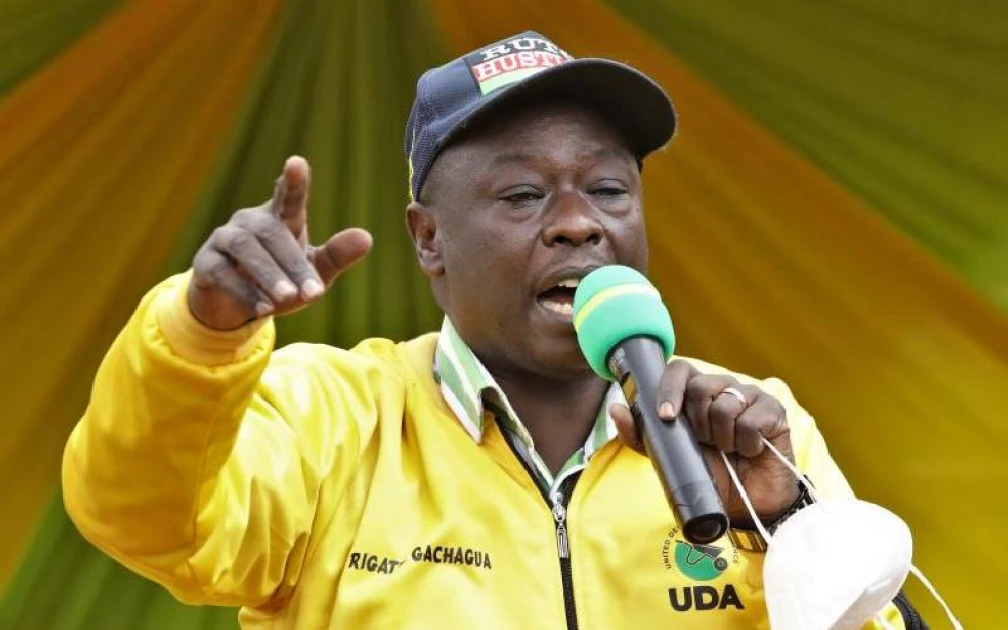
ETHNICITY GONE OVERBOARD: Now He’s Fighting Nilotes and Cushites. A dangerous trend is emerging in Kenya’s political arena—the weaponization of ethnicity as a shortcut to power. Former Deputy President Rigathi Gachagua, recently isolated within government, is now recasting the national political dialogue into an “us versus them” battle, framing the context as Bantus versus Nilotes and Cushites.
This approach is not just retrogressive—it is perilous. It is a desperate, divisive, and ultimately destabilizing narrative that undermines the progress Kenya has made in building an inclusive, multi-ethnic democracy. Kenya is not a chessboard of tribal alliances. It is a nation of citizens—equal in dignity, dreams, and democratic rights.
A False “Family” Built on Political Convenience
Gachagua’s recent calls for Bantu unity—grouping communities like the Kikuyu, Kamba, Luhya, Kisii, Mijikenda, Taita, and Taveta as “cousins”—might sound culturally charming. But when analyzed politically, it’s a strategy of exclusion. It attempts to position other Kenyan groups—particularly Nilotes and Cushites—as outsiders in their own country.
This is deeply ironic coming from a leader who, while in government, did little to uplift the very coastal communities he now calls family. Communities such as the Mijikenda, Pokomo, and Taita have endured generations of marginalization since the days of Jomo Kenyatta, often at the hands of the same Central Kenya elites now rebranding themselves as “cousins.”
Where was this cousinship when land injustices persisted, or when infrastructure and opportunities bypassed the Coast, favoring highland regions instead?
Now that Gachagua finds himself politically isolated and battling irrelevance, the “cousins” narrative has suddenly resurfaced. But Kenyans are no longer blind. They will not fall for calculated tribal sentimentality used as a ladder back to power.
Gachagua’s Ethnic Politics vs. Ruto’s Inclusive Vision
In stark contrast, President William Ruto is crafting a pan-Kenyan vision rooted in unity and equitable development. His administration has reached out to all corners of the country—from Mandera to Migori, Lamu to Turkana—spreading resources, launching road projects, empowering youth, and positioning Kenya as a united investment destination.
Dr. Ruto’s political strength does not come from tribal arithmetic. It comes from a message that transcends tribal walls. His inner circle is made up of Kenyans from diverse backgrounds: Bantus, Nilotes, Cushites, Asians, and Caucasians—a reflection of the Kenya we should be building.
He is not interested in pitting tribes against each other for temporary gain. He is interested in building a republic where every Kenyan, regardless of surname or accent, can dream big and access opportunity.
Historical Wounds, Repeated Mistakes
Kenya has suffered from ethnic favoritism for decades. The Jomo Kenyatta and Moi regimes entrenched ethnic patronage, while Mwai Kibaki and Uhuru Kenyatta used Central Kenya as the epicenter of national resources and elite privilege.
This skewed development model bred inequality, resentment, and violence.
The last thing Kenya needs is a return to those fault lines. Gachagua’s attempts to resurrect “Bantu solidarity” are a direct threat to national unity. They evoke memories of exclusion, of marginalization disguised as family, and of political cabals cloaked in cultural kinship.
Opportunism Has a Limit
Now that Gachagua is out of government influence, he has discovered that the coast has “his people.” But where was he when the port jobs were lost, when the Naivasha ICD project killed Mombasa’s economy, or when land and squatters’ issues plagued coastal voters?
He now refers to Pokomo, Mijikenda, Taita, and others as cousins. But to those communities, this sudden affection reads like political opportunism—not genuine solidarity.
This brand of ethnic marketing is dated. Kenyans today demand competence, results, and unity—not ethnic flattery followed by exclusion.
Conclusion: Kenya Deserves Better Than Tribal Mathematics
Gachagua’s ethnic realignment is not about unity—it’s about political survival. And in seeking that survival, he’s willing to sacrifice Kenya’s social fabric by setting tribes against each other.
But the future of Kenya is not Bantu vs. Nilote vs. Cushite. The future of Kenya is the unity of all 47 counties, where government is accessible to every Kenyan, regardless of where they come from or who they vote for.
We reject ethnic gatekeeping. We embrace national building.
Let Gachagua peddle exclusion. Kenyans are walking toward a more united future.