Net Worth: $25 Million
Profession: Singer, Actress, Songwriter
Birthdate: January 17, 1944
Birthplace: Paris, France
Nationality: French
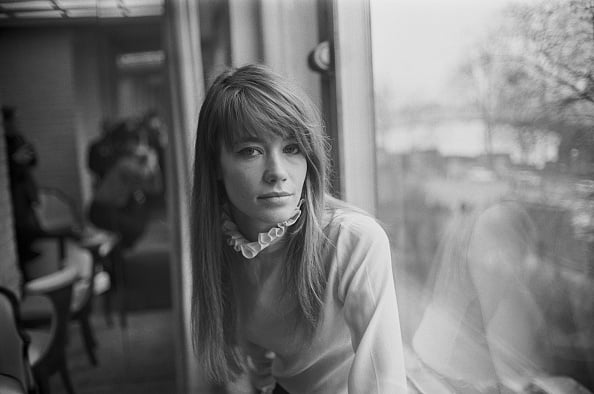
Françoise Hardy, the iconic French singer and songwriter, had a net worth of $25 million at the time of her death on June 11, 2024, at the age of 80. Hardy’s career spanned over five decades, and she became one of the defining voices of French pop music, particularly in the 1960s and 1970s, known for her ethereal voice and emotionally profound lyrics. She is often regarded as the “Queen of Yé-yé,” a French pop movement that blended catchy tunes with youthful energy and modern sensibilities.
Early Life and Breakthrough (1944–1962)
Françoise Madeleine Hardy was born on January 17, 1944, in Paris, France, during the final years of World War II. Raised in a modest household, her mother was a key influence in her early development, fostering an environment in which Hardy’s love for music flourished. Hardy began writing her own songs at an early age, which set her apart from many of her contemporaries in the French pop scene.
In 1961, Hardy signed a contract with Disques Vogue, and the following year, she released her debut single, “Tous les garçons et les filles” (All the Boys and Girls). The melancholic song about loneliness and love became an immediate hit, selling over a million copies in France and making Hardy a national sensation at just 18 years old. The song became a defining anthem of the Yé-yé movement, capturing the spirit of youth in a rapidly changing world.
Musical Evolution and Global Stardom (1963–1975)
Hardy’s early success paved the way for an international career. She represented Monaco in the 1963 Eurovision Song Contest with the song “L’Amour s’en va” (“Love Goes Away”). While she didn’t win, the performance further solidified her growing fame across Europe. As her popularity grew, she became one of the first French artists to record songs in multiple languages, including English, Italian, German, and Spanish.
In 1965, Hardy’s “All Over the World” achieved success in the UK charts, marking her breakthrough outside of France. Hardy’s unique style—combining French elegance with emotional depth—began to stand out. As she transitioned away from the youthful exuberance of Yé-yé, she explored more introspective, singer-songwriter territory, blending folk, chanson, and pop influences.
Albums like “Mon amie la rose” (1964) and “Ma jeunesse fout le camp” (1967), featured lyrics that expressed loneliness, loss, and growing older—reflecting Hardy’s emotional maturity and shifting creative direction. By the early 1970s, her work began to include Brazilian and bossa nova influences, leading to “La Question” (1971), which is regarded as a masterpiece of her career.
Fashion Icon and Personal Life
Hardy’s fashion sense became iconic in the 1960s and 1970s, influencing the likes of Yves Saint Laurent and Paco Rabanne. Her long, straight hair, minimalist style, and understated beauty made her a muse for fashion designers, and she was frequently photographed for major publications like Vogue and Paris Match.
In her personal life, Hardy began a long-term relationship with fellow French rock star Jacques Dutronc in the late 1960s, forming one of France’s most beloved celebrity couples. They had a son, Thomas Dutronc, in 1973, who would go on to become a successful musician himself. Hardy and Dutronc married in 1981, but their relationship remained unconventional, and they often led separate lives despite their enduring bond.
Later Career, Health, and Advocacy (1975–2024)
Although Hardy’s output slowed in the 1980s and 1990s, she made a successful return to music in 1996 with the album “Le Danger”. In the 2000s, Hardy continued to record, but her health began to decline after she was diagnosed with lymphatic cancer in the mid-2000s. She later suffered from laryngeal cancer, undergoing several treatments, including radiotherapy. Despite her health struggles, she continued recording and releasing albums, with “L’Amour fou” (2012) and “Personne d’autre” (2018) receiving critical acclaim.
In her final years, Hardy became an outspoken advocate for the legalization of assisted dying in France, calling for the right to choose a dignified end to suffering. She shared her battle with cancer openly, and her advocacy work contributed to her legacy.
Enduring Influence and Legacy
Françoise Hardy’s work transcended the French pop scene, inspiring generations of artists around the world. She influenced David Bowie, Bob Dylan, and modern French artists who sought to capture the vulnerability and sophistication Hardy embodied in her music. Hardy’s songs continue to be celebrated for their poetic lyricism and haunting melodies, and her influence on the French music scene remains unparalleled.
Her music, especially her early hits, continues to find new audiences in modern cinema, such as “Le Temps de l’Amour” being featured in Wes Anderson’s film Moonrise Kingdom (2012). Hardy’s legacy is not just as a singer but as an icon who seamlessly blended emotion, elegance, and timeless beauty.
Conclusion
With a net worth of $25 million, Françoise Hardy is remembered not only as a musical icon but as an embodiment of French sophistication and artistic resilience. From her Yé-yé roots to her evolution as a singer-songwriter, Hardy’s influence on both French pop and global music is immense. Even in the face of significant health challenges, she continued to produce music that resonated with both old fans and new generations, leaving behind a legacy that will endure for decades to come.