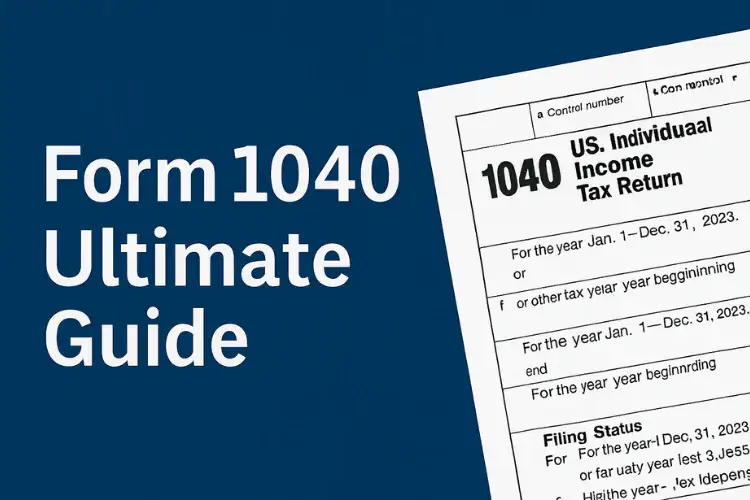
Form 1040 is one of the most important financial documents in the United States tax system. Every year, millions of Americans use it to report income, calculate taxes owed, claim deductions, and determine whether they will receive a refund from the Internal Revenue Service.
For employees, freelancers, retirees, business owners, and investors, Form 1040 serves as the foundation of federal income tax filing. Nearly every individual tax-related document eventually connects back to this form in some way.
Although tax filing can seem intimidating, understanding how Form 1040 works helps taxpayers avoid mistakes, maximize deductions, remain compliant with IRS rules, and better manage their personal finances.
Over the years, the IRS has revised Form 1040 multiple times to simplify filing requirements, integrate digital filing systems, and improve reporting efficiency. Despite these changes, the form remains the central component of the U.S. individual tax return system.
What Is Form 1040?
Form 1040 is the primary federal income tax return form used by individual taxpayers in the United States.
Taxpayers use the form to report:
- Annual income
- Taxable earnings
- Tax deductions
- Tax credits
- Capital gains
- Business income
- Retirement income
- Taxes already paid
The form ultimately calculates:
- Total tax liability
- Refund amounts
- Additional taxes owed
Form 1040 is submitted annually to the Internal Revenue Service.
Why Form 1040 Matters
Form 1040 is essential because it determines an individual’s federal tax obligations.
The form affects:
- Tax refunds
- Tax liabilities
- Government records
- Financial aid eligibility
- Mortgage applications
- Business financing
- Income verification
Lenders, financial institutions, and government agencies often use tax returns to verify income and financial standing.
Who Must File Form 1040?
Most U.S. taxpayers who earn income above certain thresholds are required to file Form 1040.
Filing requirements depend on factors such as:
- Filing status
- Gross income
- Age
- Dependency status
- Self-employment income
Income Thresholds for Filing Form 1040
The IRS sets annual income thresholds that determine filing requirements.
Examples of filing statuses include:
| Filing Status | Example |
|---|---|
| Single | Individual taxpayer |
| Married Filing Jointly | Married couples filing together |
| Married Filing Separately | Married couples filing separately |
| Head of Household | Single taxpayers supporting dependents |
| Qualifying Widow(er) | Surviving spouse with dependents |
Taxpayers earning above IRS income thresholds generally must file a return.
Special Situations Requiring Form 1040
Some taxpayers must file regardless of income level.
Examples include individuals who:
- Owe self-employment taxes
- Receive HSA distributions
- Owe alternative minimum tax
- Earn church wages above IRS limits
- Receive certain government benefits
- Owe household employment taxes
How Form 1040 Works
Form 1040 follows a structured process that combines income reporting with deductions and tax calculations.
The form generally includes:
- Personal information
- Filing status
- Income reporting
- Adjustments and deductions
- Tax calculations
- Credits and payments
- Refund or balance due
The IRS uses the completed form to determine final tax liability.
Personal Information Section
Taxpayers begin by entering:
- Name
- Address
- Social Security number
- Filing status
- Dependent information
This section establishes the taxpayer’s identity and filing classification.
Income Section on Form 1040
The income section reports various forms of taxable earnings.
Common income sources include:
- Wages and salaries
- Self-employment income
- Interest income
- Dividends
- Capital gains
- Retirement distributions
- Social Security benefits
- Rental income
The total income figure becomes the basis for tax calculations.
Deductions on Form 1040
Tax deductions reduce taxable income.
Taxpayers generally choose between:
- Standard deduction
- Itemized deductions
Standard Deduction
The standard deduction is a fixed amount established annually by the IRS.
| Filing Status | Typical Standard Deduction Structure |
|---|---|
| Single | Lower deduction |
| Married Filing Jointly | Higher deduction |
| Head of Household | Intermediate deduction |
Many taxpayers choose the standard deduction because it simplifies filing.
Itemized Deductions
Taxpayers may itemize deductions if total deductible expenses exceed the standard deduction.
Common itemized deductions include:
- Mortgage interest
- State and local taxes
- Medical expenses
- Charitable contributions
Tax Credits on Form 1040
Tax credits directly reduce taxes owed.
Unlike deductions, which reduce taxable income, credits lower tax liability dollar-for-dollar.
Examples include:
- Child Tax Credit
- Earned Income Tax Credit
- Education credits
- Residential energy credits
Some credits are refundable, meaning taxpayers may receive money back even if no taxes are owed.
Common Schedules Attached to Form 1040
Many taxpayers must attach supplemental schedules depending on their financial situation.
Schedule 1
Schedule 1 reports additional income and income adjustments.
Examples include:
- Unemployment compensation
- Alimony
- Business income adjustments
- Educator expenses
Schedule 2
Schedule 2 reports additional taxes.
Examples include:
- Self-employment tax
- Alternative minimum tax
- Household employment taxes
Schedule 3
Schedule 3 reports additional credits and payments.
Schedule A
Schedule A is used for itemized deductions.
Schedule B
Schedule B reports:
- Interest income
- Dividend income
Schedule C
Schedule C is one of the most important forms for self-employed individuals.
It reports:
- Business income
- Business expenses
- Net profit or loss
Freelancers, contractors, and sole proprietors commonly use Schedule C.
Schedule D
Schedule D reports:
- Capital gains
- Capital losses
- Investment asset sales
Schedule E
Schedule E reports supplemental income such as:
- Rental income
- Royalties
- Partnership income
Schedule SE
Schedule SE calculates self-employment taxes.
Types of Form 1040
Different versions of Form 1040 exist for specialized situations.
Form 1040-SR
Form 1040-SR is designed for taxpayers age 65 and older.
It features:
- Larger print
- Easier readability
- Simplified formatting
Form 1040-NR
Form 1040-NR is used by certain nonresident aliens with U.S. income obligations.
Form 1040-X
Form 1040-X is used to amend previously filed tax returns.
Taxpayers file this form to:
- Correct errors
- Add omitted income
- Claim missed deductions
Form 1040-ES
Form 1040-ES helps taxpayers calculate estimated quarterly taxes.
It is commonly used by:
- Freelancers
- Self-employed workers
- Investors
- Landlords
Form 1040-V
Form 1040-V is used when mailing tax payments to the IRS.
Form 1040 vs W-2
Many taxpayers confuse Form 1040 with Form W-2.
| Form | Purpose |
|---|---|
| Form 1040 | Annual tax return |
| Form W-2 | Wage and tax statement from employer |
Information from the W-2 is entered into Form 1040.
Form 1040 vs 1099
A Form 1099 reports non-employee or investment-related income.
Examples include:
- Freelance income
- Interest income
- Dividend income
- Retirement distributions
Taxpayers use 1099 information to complete Form 1040 accurately.
E-Filing vs Paper Filing
Taxpayers can file Form 1040:
- Electronically
- By mail
Electronic filing, commonly called e-filing, has become the preferred method because it:
- Speeds refunds
- Reduces errors
- Simplifies processing
Common Mistakes on Form 1040
Tax filing errors can lead to delays, audits, penalties, or rejected returns.
Common Mistakes Include:
- Incorrect Social Security numbers
- Math errors
- Missing signatures
- Incorrect filing status
- Forgotten income forms
- Missing schedules
- Incorrect bank account details
Careful review before submission is essential.
Why Investors and Lenders Care About Form 1040
Tax returns provide insight into financial stability.
Banks and lenders may review Form 1040 when evaluating:
- Mortgage applications
- Personal loans
- Business financing
- Creditworthiness
Investors and financial advisors also use tax returns for long-term financial planning.
Why This Matters
Form 1040 is more than a tax document. It serves as the financial foundation for millions of American households.
The form determines tax obligations, verifies income, affects access to credit, and influences long-term financial planning decisions. Understanding how Form 1040 works can help taxpayers reduce errors, improve financial organization, and make more informed tax decisions.
As tax laws continue evolving, Form 1040 remains the centerpiece of the U.S. individual income tax system.
Frequently Asked Questions
What is Form 1040?
Form 1040 is the primary federal income tax return form used by individual taxpayers in the United States.
Who must file Form 1040?
Most individuals earning income above IRS thresholds must file Form 1040.
What is the difference between Form 1040 and a W-2?
A W-2 reports wages from an employer, while Form 1040 is the complete annual tax return filed with the IRS.
What schedules are commonly attached to Form 1040?
Common schedules include Schedule A, Schedule C, Schedule D, Schedule E, and Schedule SE.
Can Form 1040 be filed electronically?
Yes. Most taxpayers now e-file through IRS-approved systems or tax software.
What is Form 1040-X used for?
Form 1040-X is used to amend previously filed tax returns.
What is Form 1040-SR?
Form 1040-SR is a simplified version designed for taxpayers age 65 and older.
Key Takeaways
- Form 1040 is the primary U.S. individual income tax return
- Taxpayers use it to report income, deductions, and tax credits
- Most taxpayers earning above IRS thresholds must file
- Supplemental schedules provide additional financial reporting details
- Self-employed individuals commonly use Schedule C and Schedule SE
- Form 1040 can be filed electronically or by mail
- The form plays a major role in financial verification and tax compliance
- Accurate filing helps avoid penalties and processing delays
Conclusion
Form 1040 remains one of the most important financial documents in the United States because it forms the foundation of individual income tax reporting. Whether someone is an employee, freelancer, retiree, investor, or business owner, understanding how the form works is essential for maintaining tax compliance and managing personal finances effectively.
Although the filing process can appear complex, learning the structure of Form 1040 and its supporting schedules helps taxpayers make better financial decisions, reduce costly errors, and navigate the U.S. tax system with greater confidence.
Read Also: THE FIRST MICROFINANCEBANK SWIFT Code and International Transfer Guide