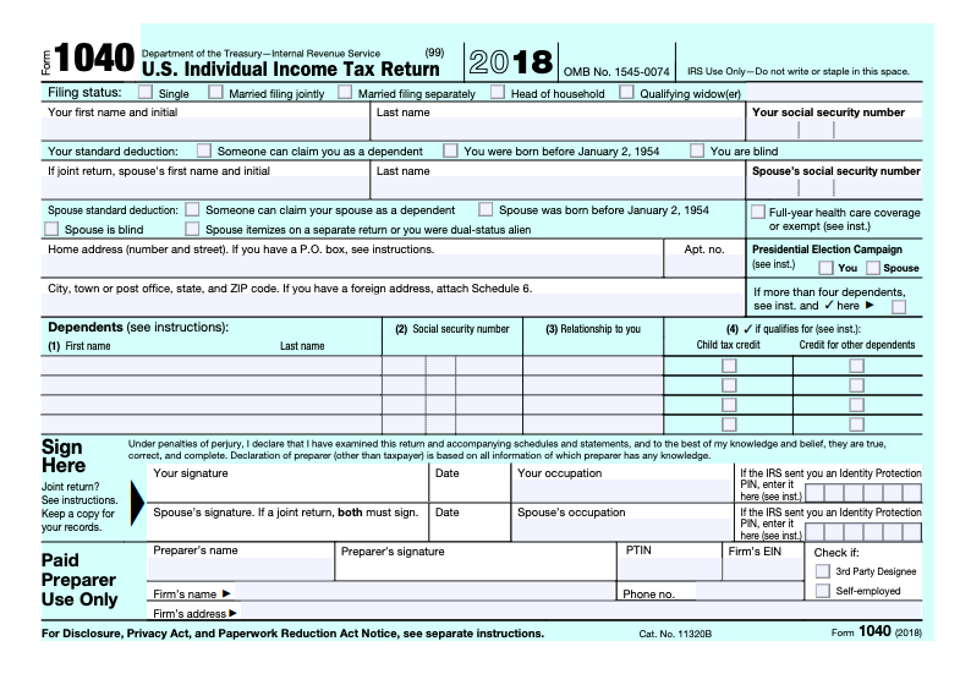
For decades, Form 1040EZ represented the simplest path to filing a federal income tax return in the United States. Millions of Americans—especially students, first-time workers, and households with straightforward finances—used the form because it reduced paperwork and made tax filing less intimidating.
But despite its popularity, Form 1040EZ disappeared after the 2018 tax year. The Internal Revenue Service (IRS) replaced it as part of a broader effort to modernize and simplify the federal tax filing system. Today, taxpayers instead use a redesigned Form 1040, even for relatively simple returns.
Understanding what Form 1040EZ was, why it existed, and why the IRS eventually abandoned it provides important insight into how the U.S. tax system evolved. It also highlights broader debates about tax simplification, government administration, financial literacy, and the growing complexity of personal taxation in modern economies.
What Was Form 1040EZ?
Form 1040EZ was the shortest and most simplified version of the standard IRS income tax return. Officially called “Income Tax Return for Single and Joint Filers With No Dependents,” it was designed for taxpayers with uncomplicated financial situations.
The form offered a streamlined alternative to the much longer standard Form 1040. Instead of navigating dozens of schedules, deductions, and specialized tax rules, eligible taxpayers could complete a basic two-page return with minimal calculations.
The IRS first introduced Form 1040EZ in 1982 as part of efforts to reduce administrative burdens on taxpayers with simple wage income. At the time, many Americans still filed paper returns manually, and reducing complexity became a major policy priority.
The simplified format helped taxpayers:
- File returns faster
- Reduce calculation errors
- Avoid unnecessary schedules
- Lower preparation costs
- Understand basic tax obligations more easily
For many younger workers and lower-income earners, Form 1040EZ served as an entry point into the U.S. tax system.
Who Qualified to Use Form 1040EZ?
Not everyone could use Form 1040EZ. The IRS imposed strict eligibility rules to ensure the form remained limited to very basic tax situations.
To qualify, taxpayers generally had to meet several conditions.
Income Limits
Taxpayers needed taxable income below $100,000.
This threshold applied whether filing individually or jointly with a spouse. Once income exceeded the limit, taxpayers had to use another version of Form 1040.
The income cap reflected the IRS assumption that higher-income households often have more complicated finances involving investments, retirement accounts, business income, or advanced deductions.
Filing Status Restrictions
Only taxpayers using these filing statuses qualified:
- Single
- Married Filing Jointly
People filing as:
- Head of Household
- Married Filing Separately
- Qualifying Widow(er)
could not use Form 1040EZ.
No Dependents Allowed
One of the form’s biggest restrictions involved dependents. Taxpayers could not claim children or other dependents.
This limitation excluded millions of families because dependent-related provisions often involve:
- Child tax credits
- Earned Income Tax Credit calculations
- Education credits
- Childcare deductions
As a result, Form 1040EZ primarily served individuals without children.
Age and Blindness Restrictions
Taxpayers and spouses filing jointly generally had to be:
- Younger than 65
- Not legally blind
Once taxpayers reached retirement age, the IRS assumed they might have more complex income sources such as pensions, Social Security benefits, or retirement account withdrawals.
Limited Types of Income
Form 1040EZ allowed only basic forms of income, including:
- Wages
- Salaries
- Tips
- Taxable scholarships
- Limited interest income
- Unemployment compensation
The form excluded many common income sources such as:
- Dividend income
- Rental income
- Self-employment earnings
- Capital gains
- Farm income
- Partnership income
- Foreign income
These limitations significantly narrowed eligibility.
Why Form 1040EZ Became Popular
The popularity of Form 1040EZ reflected more than convenience. It addressed a deeper frustration with tax complexity in the United States.
For many Americans, filing taxes felt overwhelming even when their financial situations were straightforward. The standard Form 1040 often appeared intimidating because of its length and technical terminology.
Form 1040EZ solved several psychological and practical problems.
Simplicity Reduced Filing Anxiety
Many first-time taxpayers fear making mistakes that could trigger IRS penalties or audits. Form 1040EZ minimized that concern by removing most complicated calculations.
The shorter format also reduced decision fatigue. Taxpayers did not need to evaluate dozens of deductions or tax credits.
Lower Preparation Costs
Because the form was simple, many taxpayers could complete returns without paying accountants or tax preparation companies.
That mattered especially for:
- Students
- Entry-level workers
- Part-time employees
- Lower-income households
Avoiding professional preparation fees saved money for taxpayers least able to absorb additional expenses.
Faster Refund Processing
Simplified returns generally involved fewer errors and fewer supporting schedules. That helped the IRS process refunds more efficiently.
Refund speed matters financially because many households depend on tax refunds for major annual expenses, including:
- Rent payments
- Debt reduction
- Vehicle repairs
- Savings goals
- Tuition costs
Educational Value
Form 1040EZ also played an important educational role. It introduced millions of Americans to concepts such as:
- Tax withholding
- Refunds
- Adjusted gross income
- Tax liability
- Earned income credits
In many cases, it became a taxpayer’s first interaction with the federal tax system.
The Major Limitations of Form 1040EZ
Although Form 1040EZ simplified filing, critics argued that it became too restrictive as the tax system evolved.
Over time, the U.S. economy changed dramatically. More Americans earned income from multiple sources, participated in investment markets, and claimed specialized tax benefits.
The simplicity that once made Form 1040EZ useful eventually became one of its biggest weaknesses.
Limited Deductions and Credits
Taxpayers using Form 1040EZ could not claim many common deductions.
Excluded deductions included:
- Student loan interest deductions
- IRA contribution deductions
- Educator expense deductions
- Tuition and fees deductions
- Itemized deductions
That limitation created problems because many younger taxpayers—the very people most likely to use Form 1040EZ—often carried student loan debt or education-related expenses.
Investment Restrictions
The form imposed strict investment income limitations.
Taxpayers could not use Form 1040EZ if they had:
- Significant interest income
- Dividend income
- Capital gains
- Complex brokerage activity
As investing became more accessible through online brokerages and retirement accounts, these restrictions excluded more taxpayers.
No Flexibility for Modern Work Arrangements
The rise of gig work and freelancing also made Form 1040EZ less practical.
Workers earning income through:
- Ride-sharing apps
- Freelance contracts
- Digital marketplaces
- Online content creation
often needed schedules for self-employment taxes and business expenses.
Form 1040EZ could not accommodate those realities.
Healthcare and Tax Credit Complexity
The Affordable Care Act introduced additional tax reporting requirements related to health insurance and premium tax credits.
Many taxpayers who received healthcare subsidies or marketplace coverage no longer qualified for Form 1040EZ.
This reflected a broader trend: tax filing increasingly became tied to social policy programs.
Form 1040EZ vs. Form 1040
The differences between Form 1040EZ and the standard Form 1040 were substantial.
While Form 1040EZ focused narrowly on basic wage earners, Form 1040 served as the comprehensive tax return for virtually all taxpayers.
Scope of Income Reporting
Form 1040EZ handled only limited income categories.
By contrast, Form 1040 included:
- Business income
- Dividend income
- Capital gains
- Retirement distributions
- Rental income
- Social Security benefits
- Farm income
- Partnership earnings
This broader structure made Form 1040 adaptable to increasingly complex household finances.
Deductions and Tax Strategies
Form 1040 also supported advanced tax planning strategies.
Taxpayers could:
- Itemize deductions
- Deduct mortgage interest
- Claim charitable contributions
- Report investment losses
- Maximize retirement deductions
These capabilities made Form 1040 far more valuable for higher-income households and investors.
Dependents and Family Credits
Unlike Form 1040EZ, the standard Form 1040 allowed taxpayers to claim dependents and related credits.
This included:
- Child Tax Credit
- Additional Child Tax Credit
- Earned Income Tax Credit
- Education credits
For families, these provisions often significantly reduced tax liability.
Greater Administrative Complexity
The trade-off, however, involved complexity.
The standard Form 1040 historically contained:
- More pages
- More calculations
- More schedules
- More compliance requirements
This complexity contributed to the tax preparation industry’s growth.
Why the IRS Eliminated Form 1040EZ
The IRS discontinued Form 1040EZ after the 2018 tax year as part of a major redesign initiative.
The decision reflected both political and administrative pressures.
The Tax Cuts and Jobs Act Changed Filing Rules
The 2017 Tax Cuts and Jobs Act (TCJA) reshaped large portions of the tax code.
Major changes included:
- Higher standard deductions
- Modified tax brackets
- Revised child tax credits
- Elimination of personal exemptions
Because the tax system changed so extensively, the IRS decided to redesign individual tax forms entirely.
The IRS Wanted a Unified Filing System
Instead of maintaining multiple core forms—1040, 1040A, and 1040EZ—the IRS moved toward a “building block” approach.
Under the redesigned system:
- All taxpayers begin with Form 1040
- Additional schedules are attached only when necessary
The IRS argued this approach would simplify administration while preserving flexibility.
Digital Filing Reduced the Need for Ultra-Short Forms
Electronic filing also reduced the importance of paper simplicity.
Tax software automatically:
- Calculates totals
- Identifies deductions
- Flags errors
- Transfers data between schedules
Because software increasingly guided taxpayers through filing, the physical length of forms mattered less than it did during the paper-filing era.
Critics Questioned Whether Simplification Actually Improved
Despite the redesign, critics argued the tax system remained highly complicated.
Some analysts noted that:
- Additional schedules offset the shorter core form
- Taxpayers still relied heavily on software
- Filing complexity remained high for many households
In practice, the redesigned Form 1040 simplified appearances more than underlying tax law.
How the Redesigned Form 1040 Works Today
After eliminating Form 1040EZ, the IRS consolidated filing into a revised Form 1040 framework.
Today’s system operates differently from the older multi-form structure.
A Modular Tax Filing Structure
Modern Form 1040 functions as a central filing document supported by optional schedules.
Taxpayers attach additional forms depending on circumstances such as:
- Self-employment income
- Capital gains
- Retirement distributions
- Education credits
- Additional taxes
This structure attempts to balance simplicity with flexibility.
Form 1040-SR for Older Taxpayers
The IRS also introduced Form 1040-SR for taxpayers aged 65 and older.
The form includes:
- Larger font sizes
- Simplified readability
- Standard deduction charts for seniors
However, it largely mirrors the standard Form 1040 in substance.
Electronic Filing Dominates Modern Tax Preparation
Today, most taxpayers file electronically using:
- IRS Free File programs
- Commercial tax software
- Professional preparers
Electronic systems increasingly automate calculations and eligibility checks.
This shift fundamentally changed the role tax forms play in the filing process.
The Broader Debate About Tax Complexity
The rise and fall of Form 1040EZ reflects a larger debate about whether the U.S. tax system is unnecessarily complicated.
Many economists and policy analysts argue Americans spend excessive time and money complying with tax rules.
The Cost of Complexity
Tax complexity creates several economic costs:
- Compliance expenses
- Accounting fees
- Lost productivity
- Filing errors
- Delayed refunds
According to various policy studies over the years, Americans collectively spend billions of hours preparing tax returns annually.
Why Tax Systems Become Complicated
Tax codes often grow more complex because governments use them to achieve policy goals.
The tax system influences behavior through:
- Homeownership incentives
- Retirement savings incentives
- Education credits
- Renewable energy incentives
- Healthcare subsidies
Each new incentive typically adds additional rules.
Calls for Simplification
Some reform advocates support:
- Pre-filled tax returns
- Flat taxes
- Consumption taxes
- Automatic withholding systems
Other countries already provide more automated tax filing experiences.
However, critics warn that oversimplification can reduce fairness or eliminate targeted economic incentives.
What Taxpayers Can Learn From the End of Form 1040EZ
Although Form 1040EZ no longer exists, its legacy still offers valuable lessons about tax literacy and financial management.
Simpler Finances Often Mean Simpler Taxes
One reason some taxpayers qualified for Form 1040EZ involved having uncomplicated financial lives.
As people build wealth, taxes usually become more complex because of:
- Investments
- Business ownership
- Real estate
- Retirement planning
- International assets
Understanding this progression helps taxpayers prepare for future financial responsibilities.
Tax Planning Matters
The restrictions of Form 1040EZ also highlighted how deductions and credits influence overall tax liability.
Taxpayers who understand:
- Retirement contributions
- Education deductions
- Capital gains strategies
- Tax-advantaged accounts
can often improve long-term financial outcomes.
Financial Literacy Is Increasingly Important
Modern tax systems require broader financial knowledge than in previous decades.
Understanding taxation now intersects with:
- Investing
- Healthcare
- Digital assets
- Gig economy income
- International finance
This makes financial education more important than ever.
Why Form 1040EZ Still Matters Historically
Even though the form disappeared, Form 1040EZ remains historically significant because it represented a rare attempt to simplify federal taxation for ordinary Americans.
Its popularity demonstrated strong demand for:
- User-friendly government systems
- Clear financial communication
- Reduced compliance burdens
- Accessible tax education
The form also marked an important transitional era between paper filing and digital tax preparation.
In many ways, Form 1040EZ belonged to a different financial world—one before widespread online investing, gig work, cryptocurrency trading, and app-based income streams transformed household finances.
Its elimination reflects how modern financial life has become more interconnected and complicated.
Frequently Asked Questions
What was Form 1040EZ used for?
Form 1040EZ was used by taxpayers with simple tax situations, typically individuals or married couples without dependents who earned less than $100,000 annually.
Why was Form 1040EZ discontinued?
The IRS eliminated Form 1040EZ after the 2018 tax year during a major redesign of federal tax forms following the Tax Cuts and Jobs Act.
Can taxpayers still file Form 1040EZ today?
No. The IRS no longer publishes or accepts Form 1040EZ. Taxpayers now use the redesigned Form 1040 instead.
What replaced Form 1040EZ?
The redesigned Form 1040 replaced Form 1040EZ, Form 1040A, and the older standard Form 1040 structure.
Who qualified for Form 1040EZ?
Eligible taxpayers generally needed to:
- Earn less than $100,000
- Have no dependents
- Be under age 65
- Have relatively simple income sources
What was the difference between Form 1040EZ and Form 1040?
Form 1040EZ handled only basic tax returns with limited deductions and credits, while Form 1040 supports complex income reporting, dependents, investments, and advanced tax planning.
Did Form 1040EZ allow itemized deductions?
No. Taxpayers using Form 1040EZ could not itemize deductions or claim many advanced tax benefits.
Is the modern Form 1040 simpler than Form 1040EZ?
For many taxpayers, no. Although the redesigned Form 1040 appears shorter, additional schedules often preserve much of the underlying complexity.
Key Takeaways
- Form 1040EZ was the IRS’s simplest federal income tax return.
- It served taxpayers with basic financial situations and no dependents.
- Strict eligibility rules limited who could use the form.
- The IRS eliminated Form 1040EZ after the 2018 tax year.
- The redesigned Form 1040 now serves all taxpayers through a modular schedule system.
- The shift reflected broader changes in tax policy, digital filing, and financial complexity.
- The history of Form 1040EZ highlights ongoing debates about tax simplification and financial literacy.
Conclusion
Form 1040EZ once symbolized simplicity in an increasingly complicated tax system. For millions of Americans, it offered an accessible and less intimidating way to file annual federal income taxes.
Yet as financial lives became more complex and tax policy evolved, the form’s limitations became harder to ignore. The IRS ultimately replaced Form 1040EZ with a redesigned Form 1040 intended to create a more flexible and unified filing structure.
Even so, the popularity of Form 1040EZ revealed a lasting truth about taxation: most taxpayers value clarity, simplicity, and accessibility. As governments continue modernizing tax administration, the legacy of Form 1040EZ remains an important reminder that efficient financial systems depend not only on accurate rules, but also on understandable processes that ordinary people can navigate confidently.
Read Also: AI Accounting Solutions Advancing Finance