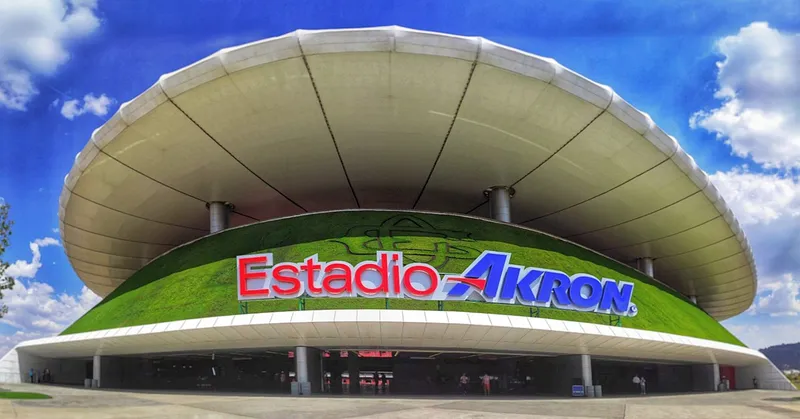
Estadio Akron will be one of Mexico’s three FIFA World Cup 2026 venues, hosting four group-stage matches in Guadalajara, Jalisco.
During the tournament, the stadium will be called Estadio Guadalajara because FIFA uses neutral venue names and removes commercial branding from World Cup stadiums. But to Mexican football fans, this is Estadio Akron: the home of CD Guadalajara, better known as Chivas, one of the most historic and beloved clubs in Latin America.
Opened in 2010, Estadio Akron is one of the most unusual stadiums in world football. Its grass-covered exterior makes it look like a green hill or dormant volcano rather than a conventional arena. That is why many fans know it as The Volcano.
The stadium’s sunken bowl, partial canopy and natural grass pitch give it a distinctive football identity. Chivas supporters also call it El Templo Mayor, a name that reflects the club’s deep connection to Mexican football tradition.
For World Cup 2026, Estadio Akron will host Mexico vs South Korea, Uruguay vs Spain and two other group-stage fixtures. The stadium may not host knockout football, but its match list gives Guadalajara a strong role in the early tournament story.
Quick Facts About Estadio Akron
| Fact | Detail |
|---|---|
| Stadium name | Estadio Akron |
| FIFA World Cup name | Estadio Guadalajara |
| Nicknames | The Volcano, El Templo Mayor |
| Location | Zapopan, Guadalajara metropolitan area, Jalisco, Mexico |
| Capacity | 49,850 |
| Opened | 2010 |
| Roof | Open with partial canopy |
| Surface | Natural grass |
| Main tenant | CD Guadalajara / Chivas |
| Competition focus | FIFA World Cup 2026 |
| World Cup matches | 4 matches |
| Biggest match | Mexico vs South Korea |
| First World Cup match | June 11, 2026 |
| Known for | Grass-covered exterior, Chivas identity, volcanic design and natural grass pitch |
Where Is Estadio Akron?
Estadio Akron is located in Zapopan, on the western edge of the Guadalajara metropolitan area in Jalisco, Mexico.
The stadium sits near the Bosque La Primavera forest reserve, giving it a more natural setting than many urban stadiums. Its grass-covered exterior was designed to blend into the landscape, making the building feel like part of the terrain rather than a structure imposed on it.
The venue is about 7 miles west of downtown Guadalajara. It is accessible by road, bus, BRT and rideshare, though match-day traffic can be heavy.
For World Cup visitors, the location offers access to Guadalajara’s historic centre, Tlaquepaque, Tequila, local food, mariachi culture and one of Mexico’s most passionate football regions.
History of Estadio Akron
Estadio Akron was built as the modern home of Chivas.
For decades, CD Guadalajara played at older venues before moving into this purpose-built stadium in 2010. The project was driven by Jorge Vergara, the former Chivas owner who wanted a stadium that would stand apart from every other football ground in Mexico.
Construction began in 2004 and took several years because of financial and technical challenges. The stadium finally opened on July 30, 2010, with a friendly between Chivas and Manchester United.
That opening match immediately gave the venue global attention. More than 70,000 fans reportedly attended through temporary seating and expanded arrangements, exceeding the stadium’s official capacity.
Since then, Estadio Akron has become the symbolic home of Chivas’ all-Mexican football identity. For World Cup 2026, it will become a global stage again.
Construction and Design
Estadio Akron was designed by French architect Jean-Marie Massaud with Daniel Pouzet. Populous, then known as HOK Sport, and VFO Arquitectos helped turn the concept into a buildable stadium.
The idea was bold: create a football stadium that looks like a natural landform. Instead of a typical concrete exterior, the stadium is wrapped in a grass-covered berm. Fans approach by walking up the grassy slope before descending into the seating bowl.
This gives the stadium its volcano-like character. From outside, it looks like the earth has risen around a hidden arena. From inside, it feels like a compact football cauldron.
The stadium has a circular tensile canopy that covers much of the seating while leaving the pitch open. That protects many fans from sun and rain without fully enclosing the venue.
The result is one of the most distinctive stadium designs in world football.
Estadio Akron and World Cup 2026
Estadio Akron will host four FIFA World Cup 2026 matches.
All four matches will be in the group stage. The first match is scheduled for June 11, 2026, the same day the tournament begins in Mexico City.
The stadium will be officially known as Estadio Guadalajara during the tournament. That name will appear in FIFA broadcasts, signage, tickets and tournament material.
Guadalajara’s biggest match will be Mexico vs South Korea on June 18. A host-nation match in one of Mexico’s strongest football cities should create one of the most intense atmospheres of the group stage.
The Uruguay vs Spain match on June 26 will also attract major global attention because both nations carry deep football history and strong World Cup pedigree.
World Cup 2026 Matches at Estadio Akron
| Date | Match |
| June 11, 2026 | South Korea vs UEFA Playoff D Winner |
| June 18, 2026 | Mexico vs South Korea |
| June 23, 2026 | Colombia vs Intercontinental Playoff 1 Winner |
| June 26, 2026 | Uruguay vs Spain |
This schedule gives Estadio Akron a strong group-stage identity. Mexico vs South Korea will bring home-nation pressure, while Uruguay vs Spain could become one of the most technically interesting group matches of the tournament.
For African readers, the venue does not currently have a confirmed African team in its listed fixtures. However, the Intercontinental Playoff 1 Winner could still shape the stadium’s wider relevance depending on the final qualification outcome.
For global fans, Guadalajara Stadium will be worth watching because it combines a distinctive venue with strong football nations and passionate local support.
Why Estadio Akron Was Chosen as a World Cup Venue
Estadio Akron was chosen because it gives World Cup 2026 a modern Mexican football venue with deep club identity and a unique design.
Mexico’s three host cities each offer something different. Mexico City brings the historic power of Estadio Azteca. Monterrey brings the modern industrial strength of Estadio BBVA. Guadalajara brings Chivas, tradition, culture and one of the most unusual football stadiums in the world.
The stadium’s natural grass pitch, modern facilities and football-first layout make it suitable for elite international matches.
Guadalajara also has a powerful football culture. Chivas are one of the biggest clubs in Mexico, and the city has long been central to the country’s football identity.
That combination made Estadio Akron a natural choice for the tournament.
Natural Grass Pitch
Estadio Akron uses natural grass for World Cup 2026.
That is important because FIFA requires a high-quality natural surface for tournament matches. The pitch must support fast passing, safe footing, stable movement and consistent ball behaviour.
The stadium originally opened with artificial turf, but that surface was criticised by players and coaches. In 2012, it was replaced with natural grass, solving one of the venue’s biggest early problems.
For World Cup 2026, the grass will be prepared to FIFA standards. The surface will need to handle four group-stage matches in a short window while staying firm, even and safe.
Because the pitch is open to the sky, rain and weather will also be factors, especially during Guadalajara’s rainy season.
Guadalajara Weather and Match Conditions
June marks the beginning of Guadalajara’s rainy season.
Temperatures are usually warm, often between 70°F and 85°F, but afternoon thunderstorms are possible. That means match-day conditions can change quickly.
The stadium’s partial canopy protects many seats, but the pitch remains open. Rain could affect ball speed, footing and tactical rhythm.
Evenings are often pleasant, which should help fans and players. Still, visitors should prepare for both heat and rain. Light clothing, hydration and rain gear may all be useful.
For teams, the climate should be manageable compared with Monterrey’s extreme heat or Mexico City’s altitude. But the possibility of rain could influence match preparation.
Chivas and Mexican Football Identity
Estadio Akron matters because of Chivas.
CD Guadalajara are one of Mexico’s most famous clubs and are known worldwide for their tradition of fielding only Mexican-born players. That policy makes Chivas more than a club. It makes them a symbol of Mexican football identity.
The stadium reflects that identity. Fans call it El Templo Mayor because it represents the club’s modern home and cultural weight.
During World Cup 2026, that Chivas identity will sit behind the tournament atmosphere. When Mexico face South Korea in Guadalajara, the crowd should feel deeply connected to the national team.
For many Mexican fans, the stadium is not just a venue. It is part of the country’s football soul.
Major Events Hosted at Estadio Akron
Estadio Akron has hosted major football, cultural and entertainment events since opening.
Its first major event was the 2010 friendly between Chivas and Manchester United. The stadium also hosted ceremonies during the 2011 Pan American Games, giving it international visibility early in its history.
It was used during the 2011 FIFA U-17 World Cup, a tournament Mexico won on home soil. That helped connect the venue to national football pride.
The stadium has also hosted Chivas matches, Liga MX fixtures, major concerts and other high-profile events.
World Cup 2026 will be its biggest global moment yet.
The Volcano Design
The Volcano nickname is one of the best things about Estadio Akron.
The grass-covered exterior makes the stadium look like a hill. Fans walk up and across parts of the outside landscape before entering the stadium and descending into the bowl.
That journey creates a sense of arrival. The stadium feels hidden inside the land, not simply placed on top of it.
The design also connects with Jalisco’s natural geography and the idea of football as a communal ritual. It is modern, but it also feels earthy and symbolic.
Among the 2026 World Cup venues, few will look as distinctive on television or in fan photos.
Transport and Fan Access
Public transport to Estadio Akron has improved, but fans should still plan carefully.
The Mi Macro Periférico BRT line includes a station near the stadium area, making it one of the most useful options for fans without cars. Several bus routes also serve the venue.
Light rail connections can help fans reach nearby points, followed by a bus or other transfer. During World Cup 2026, dedicated shuttles and enhanced transport routes are expected.
Because the stadium sits outside the city centre, fans should allow extra time. Match-day crowding, road closures and security controls may slow movement.
Arriving at least two hours before kickoff is a sensible plan.
Driving and Parking
Driving to Estadio Akron is possible, but traffic can be difficult on match days.
The stadium is accessible from the Periférico ring road and Avenida Aviación. From downtown Guadalajara, the drive can be short in normal conditions, but World Cup crowds will increase congestion.
Parking is available at the stadium, but it can fill quickly. Fans should use official parking areas and avoid relying on street parking.
For World Cup matches, parking rules and road access may differ from Chivas matches. Visitors should follow official tournament guidance and pre-book where possible.
Leaving after the match may take time, especially after Mexico vs South Korea.
Rideshare and Airport Access
Uber and DiDi are widely available in Guadalajara.
A rideshare from downtown Guadalajara to the stadium is usually affordable in normal conditions, but match-day surge pricing is likely. Traffic near the stadium can also delay drop-offs and pickups.
Fans may find it easier to get dropped a few blocks from the stadium and walk the final stretch where safe and permitted. After matches, walking 10 to 15 minutes away before requesting a ride can reduce waiting time.
Miguel Hidalgo y Costilla International Airport is about 19 miles from the stadium. Travel by car usually takes around 30 minutes in normal conditions, but World Cup visitors should allow more time on match days.
Nearby Attractions
Guadalajara is one of Mexico’s richest cultural cities, and World Cup visitors will have plenty to explore.
The Guadalajara Cathedral anchors the historic centre with its famous twin towers. Hospicio Cabañas, a UNESCO World Heritage Site, is known for major murals by José Clemente Orozco.
Tlaquepaque offers colourful streets, artisan shops, pottery, food and traditional music. Tequila, the famous town surrounded by blue agave fields, is within reach for visitors with extra time.
Guadalajara is also strongly linked to mariachi, regional food and Mexican national culture.
For fans, Estadio Guadalajara will be more than a match venue. It will be part of a broader cultural trip.
What Fans Should Know Before Visiting
Fans attending World Cup matches at Estadio Akron should prepare for warm weather, possible rain and heavy transport demand.
Because June is the start of the rainy season, fans should check the forecast before leaving. The canopy protects many seats, but stadium approaches and the pitch remain exposed.
Transport should be planned early. Public transport, driving and rideshare will all be busy on match days.
Security will follow FIFA standards. Fans should check official rules on tickets, bags, entry times and prohibited items before going to the stadium.
For Mexico vs South Korea, demand and crowd energy will be especially high. Arriving early will make the experience smoother.
Why Estadio Akron Matters to Football Fans
Estadio Akron matters because it is one of the few World Cup 2026 venues built entirely around football identity, landscape and local culture.
It is not an NFL stadium being converted for soccer. It is a Liga MX home ground built for Chivas, one of the biggest clubs in Mexico.
Its volcano design makes it visually unique. Its Chivas connection makes it culturally important. Its natural grass pitch makes it suitable for elite football.
The match list also gives it strong appeal. Mexico vs South Korea will bring home-country intensity, while Uruguay vs Spain will bring heavyweight football quality.
For fans who love stadium architecture and football culture, Estadio Akron will be one of the tournament’s most interesting venues.
Why Estadio Akron Is Important
Estadio Akron is important because it gives Guadalajara a role in the biggest World Cup ever.
The stadium may host only group-stage matches, but those matches carry serious weight. Mexico’s second group fixture could shape the host nation’s tournament. Uruguay vs Spain could influence Group H. Colombia’s match may bring South American energy to Jalisco.
The venue also shows a different side of Mexican football. Estadio Azteca offers history. Estadio BBVA offers industrial modernity. Estadio Akron offers landscape, tradition and Chivas identity.
That makes Guadalajara Stadium a valuable part of World Cup 2026.
Key Takeaways
- Estadio Akron is located in Zapopan, near Guadalajara, Jalisco.
- It will be called Estadio Guadalajara during FIFA World Cup 2026.
- The stadium opened in 2010.
- It has a listed capacity of 49,850.
- It is home to CD Guadalajara, known as Chivas.
- The venue is nicknamed The Volcano.
- Estadio Akron uses natural grass.
- It will host four World Cup 2026 group-stage matches.
- The first match is scheduled for June 11, 2026.
- Mexico vs South Korea will be played there on June 18.
- Uruguay vs Spain will be played there on June 26.
- Fans should prepare for warm weather and possible rain.
Frequently Asked Questions
Where is Estadio Akron located?
Estadio Akron is located in Zapopan, on the western edge of the Guadalajara metropolitan area in Jalisco, Mexico.
What will Estadio Akron be called during World Cup 2026?
During the tournament, Estadio Akron will be called Estadio Guadalajara because FIFA uses neutral venue names.
What is Estadio Akron’s capacity?
Estadio Akron has a listed capacity of 49,850.
When did Estadio Akron open?
Estadio Akron opened on July 30, 2010.
Which team plays at Estadio Akron?
Estadio Akron is home to CD Guadalajara, better known as Chivas.
Why is Estadio Akron called The Volcano?
The stadium is called The Volcano because its grass-covered exterior and sunken bowl make it look like a volcanic crater.
How many World Cup 2026 matches will Estadio Akron host?
Estadio Akron will host four group-stage matches during FIFA World Cup 2026.
What is the biggest World Cup match at Estadio Akron?
Mexico vs South Korea on June 18, 2026, is likely to be the biggest match at the venue because Mexico will be playing as a host nation.
Does Estadio Akron use natural grass?
Yes. Estadio Akron uses natural grass after replacing its original artificial turf in 2012.
Is Estadio Akron easy to reach by public transport?
Fans can use Mi Macro Periférico, buses and connecting transit options. Match-day services are expected to be enhanced for the World Cup.
Conclusion
Estadio Akron will give Guadalajara a distinctive role in the FIFA World Cup 2026. With four group-stage matches, a natural grass pitch, a volcano-inspired design and Chivas identity, the stadium will be one of the tournament’s most unique venues.
It may not host knockout football, but its match list is strong. Mexico vs South Korea will bring host-nation energy, while Uruguay vs Spain will bring elite football quality.
For visitors, the key will be planning. The stadium is outside the city centre, June can bring rain, and match-day traffic will be heavy. But fans who make the trip will experience one of the most unusual football stadiums in the world.
On June 18, 2026, Estadio Akron will stage Mexico’s second group match. In Guadalajara, inside The Volcano, that should feel like a national football event.
Read Also: Estadio BBVA World Cup 2026 Guide: Capacity, Location, Matches and Round of 32 Venue