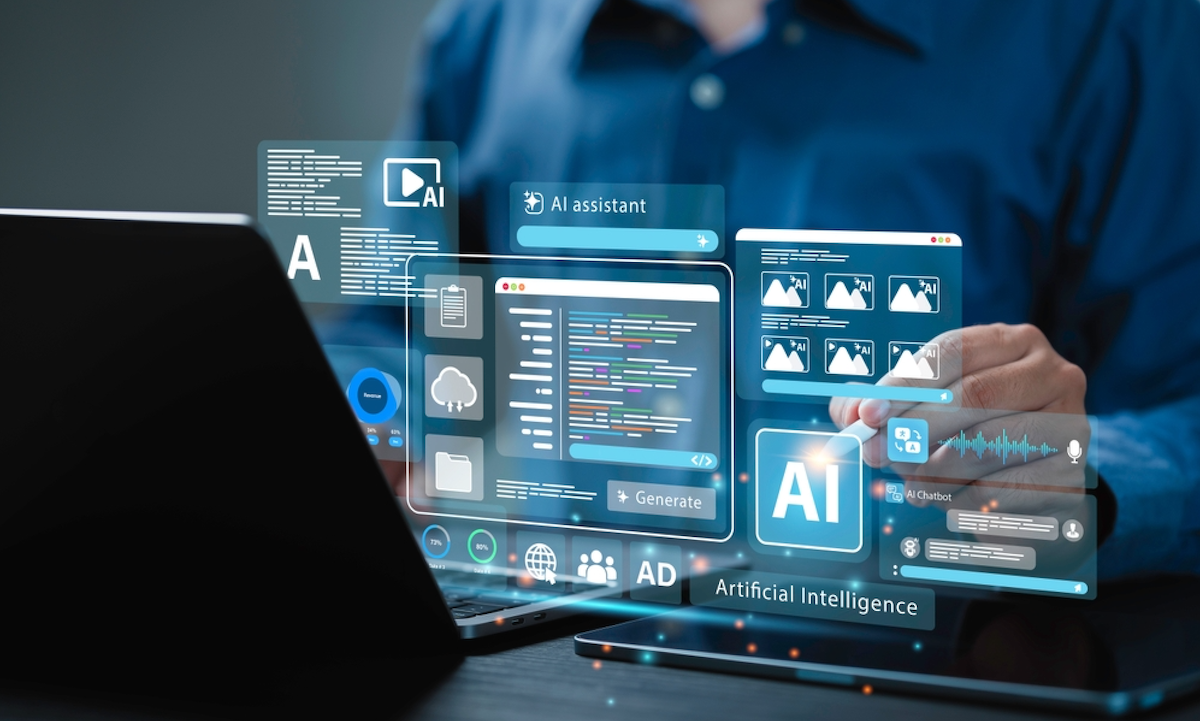
In 2025, the demand for enterprise AI software has surged as organizations seek smarter, faster, and more scalable solutions. These platforms integrate machine learning, natural language processing, computer vision, and generative AI into core business functions—fueling automation, insight generation, and competitive advantage.
🧠 1. What Is Enterprise AI Software?
Enterprise AI software refers to platforms and applications designed to embed artificial intelligence into enterprise-scale operations. These solutions are built to handle massive datasets, interact across departments, and comply with complex regulatory frameworks.
They include:
- Predictive analytics engines
- Intelligent automation platforms
- AI-enhanced ERP and CRM tools
- Enterprise-grade chatbots and agents
- Domain-specific AI models
⚙️ 2. Key Capabilities of Enterprise AI Software
- Scalability: Built to support thousands of users and terabytes of data across multiple global sites.
- Integration: Connects with enterprise systems like SAP, Salesforce, Oracle, and Microsoft Dynamics.
- Data Governance: Supports audit trails, role-based access, and compliance monitoring for industries like finance and healthcare.
- Custom Modeling: Enables organizations to train, deploy, and manage custom AI models aligned with business logic.
📊 3. Core Applications by Business Function
✅ Operations & Supply Chain
- Demand forecasting
- Inventory optimization
- Predictive maintenance
✅ Sales & Marketing
- Lead scoring and prioritization
- Customer sentiment analysis
- Campaign performance prediction
✅ Customer Support
- AI-powered chatbots
- Email response automation
- Call center transcription and analysis
✅ Finance & Compliance
- Automated expense audits
- Real-time fraud detection
- Regulatory reporting AI assistants
🔍 4. Industry-Specific Enterprise AI Software
- Healthcare: Patient triage, diagnostics, claims fraud detection
- Retail: Dynamic pricing, customer retention AI
- Banking: Credit scoring, AML compliance tools
- Logistics: Route optimization, fleet intelligence
- Manufacturing: Smart robotics, yield prediction
These vertical AI solutions are increasingly in demand due to the need for specialized data handling, models, and compliance layers.
📈 5. Benefits of Enterprise AI Software
| Business Outcome | Benefit of AI Software |
|---|---|
| Efficiency | Automates time-consuming manual processes |
| Agility | Real-time data insights enable faster decision-making |
| Revenue Growth | Improves conversion, retention, and customer personalization |
| Risk Reduction | Flags anomalies and policy breaches in real time |
| Competitive Advantage | Enables continuous innovation via adaptive learning systems |
🛡️ 6. Key Considerations Before Adoption
- Data Readiness: Does the enterprise have structured, accessible, and clean data?
- Talent Alignment: Are internal teams equipped to manage AI lifecycle (from model training to monitoring)?
- ROI Models: How will the software impact the top and bottom line—and how quickly?
- Vendor Evaluation: Is the provider experienced in handling your industry’s compliance and scale?
🚀 7. Leading Trends in Enterprise AI Software (2025)
- Composable AI platforms: Modular AI functions (e.g., vision, text, tabular) that plug into existing software.
- Federated learning: Models train across distributed enterprise datasets without data sharing.
- Explainable AI (XAI): Transparent AI logic to meet ethical standards and regulatory audits.
- Multimodal platforms: Combine voice, image, and text processing into unified AI workspaces.
- AI software marketplaces: Enterprises increasingly buy off-the-shelf AI solutions tuned to niche tasks.
❌ 8. Challenges to Navigate
- Vendor lock-in risks with proprietary AI models
- Bias in enterprise data leading to poor model generalization
- High upfront integration costs
- Security concerns when deploying cloud-based AI agents
📊 Enterprise AI Software vs. Consumer AI Tools
| Feature | Enterprise AI Software | Consumer AI Tools |
|---|---|---|
| Scalability | Enterprise-wide | Individual or small team use |
| Compliance | HIPAA, GDPR, SOC2 ready | Basic security, minimal audit trails |
| Integration | ERP, CRM, data lakes, cloud services | Email, web browsers, mobile apps |
| Model Customization | Full access to ML pipelines and data labeling | Black-box or minimal tuning options |
Conclusion
In 2025, enterprise AI software is not just an upgrade—it’s a business necessity. It empowers organizations to run faster, make smarter decisions, and adapt continuously in a hyper-competitive environment. From intelligent automation to AI-infused analytics, these platforms offer the scalability, security, and specialization that modern enterprises demand.