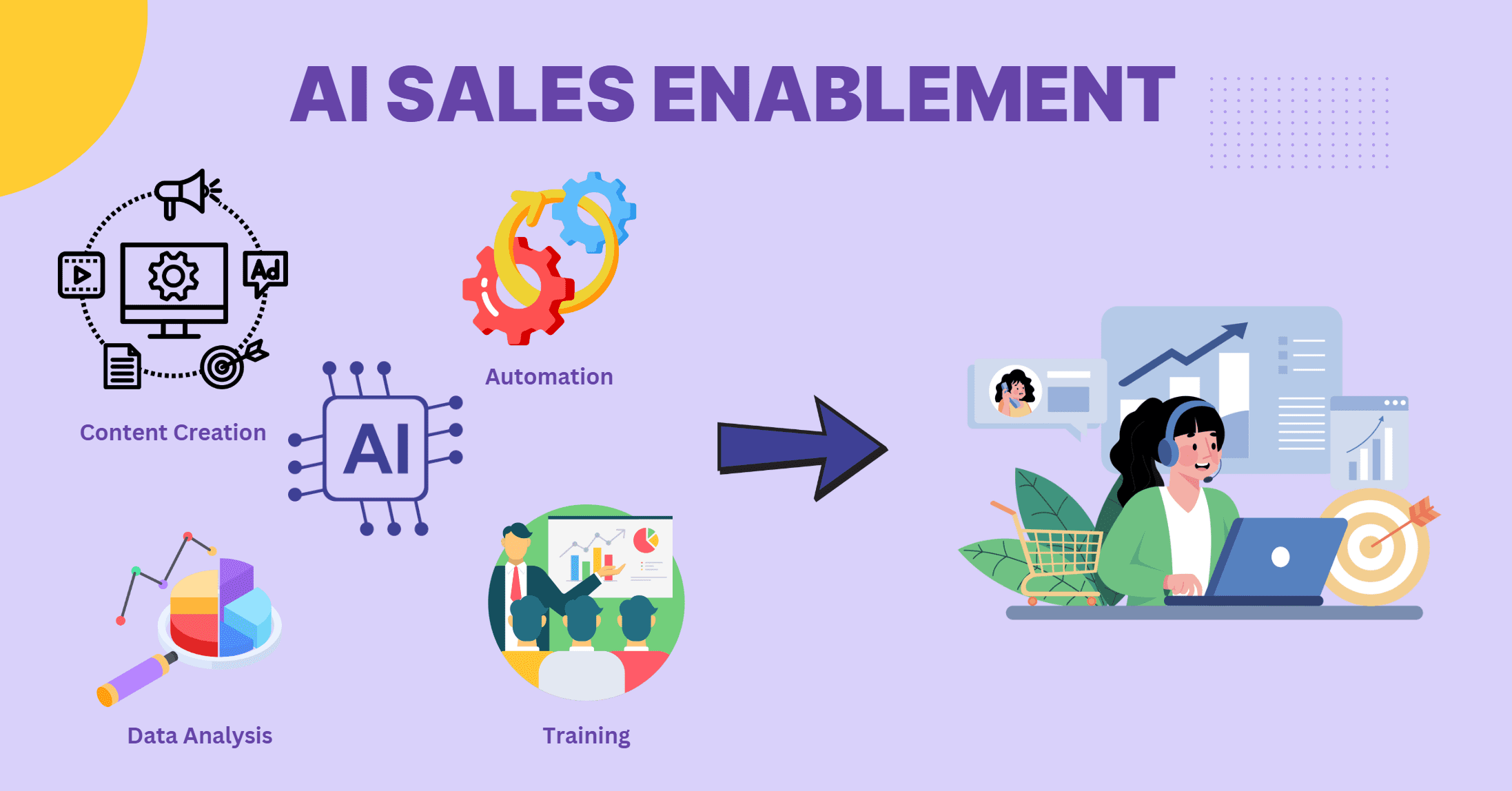
In 2025, AI for sales enablement has become a cornerstone of modern sales organizations. With buyers expecting faster responses and personalized outreach, AI tools now support reps by automating manual tasks, surfacing deal insights, and boosting sales productivity. The result: shorter sales cycles, higher win rates, and smarter selling.
🎯 1. What Is AI for Sales Enablement?
AI for sales enablement refers to technologies that help sales teams work smarter—not harder—by integrating artificial intelligence into their workflows. It enhances the efficiency of sales reps by automating routine activities and empowering them with predictive insights, automated content, and real-time coaching.
🧠 2. Core Capabilities of AI in Sales Enablement
- Lead Scoring & Qualification: AI prioritizes leads based on intent, behavior, and likelihood to convert.
- Email Personalization: Natural language models draft custom outreach messages aligned with the buyer’s industry and persona.
- Conversation Intelligence: Tools analyze calls and meetings to flag objections, interests, and buying signals.
- Pipeline Forecasting: Predictive models provide accurate revenue forecasts based on current deals and historical patterns.
- Sales Coaching: Real-time feedback tools help reps improve talk-time ratio, pitch structure, and closing techniques.
🔧 3. Types of AI Tools for Sales Enablement
✅ AI-Powered CRMs
Modern CRMs are now equipped with predictive intelligence, automatically updating fields, flagging stalled deals, and suggesting next steps.
✅ AI Sales Assistants
These virtual co-pilots schedule meetings, follow up with leads, and offer real-time deal suggestions based on CRM data.
✅ Content Recommendation Engines
AI matches the right content (case studies, pitch decks, videos) to the right buyer at the right time, increasing engagement.
✅ Sales Enablement Platforms
Platforms offer centralized dashboards where reps can access AI-curated scripts, customer insights, and objection-handling resources.
📊 4. Sales Funnel Stages Enhanced by AI
| Stage | AI Contribution |
|---|---|
| Lead Generation | Identifies warm leads using behavioral and firmographic data |
| Qualification | Scores leads using ML models based on past conversions |
| Engagement | Sends optimized emails and triggers follow-ups |
| Demo/Discovery | Transcribes calls and flags competitive mentions |
| Proposal/Quote | Auto-generates pricing scenarios and presentations |
| Closing | Predicts close likelihood and prompts last-step nudges |
| Post-Sale | Flags upsell and cross-sell opportunities |
🚀 5. Benefits of AI for Sales Enablement
- Boosted Productivity: Reps spend more time selling and less time on admin tasks.
- Personalized Engagement: Outreach is tailored and timely, improving buyer experience.
- Improved Forecasting Accuracy: AI eliminates human bias and guesswork.
- Higher Win Rates: Data-backed actions increase rep efficiency and deal success.
- Real-Time Coaching: Managers receive instant feedback to coach reps more effectively.
🔍 6. Use Case Examples by Company Size
🏢 SMBs
- Leverage email automation tools with built-in AI for outreach
- Use affordable AI plugins in CRMs like HubSpot for lead scoring
🏦 Mid-Market
- Adopt AI conversation analytics to scale coaching across reps
- Integrate AI-generated proposals into deal-closing playbooks
🏙️ Enterprises
- Deploy custom-trained LLMs on internal sales data for strategy optimization
- Run AI-driven revenue intelligence platforms for global pipeline visibility
❌ 7. Challenges to Watch Out For
- Data Cleanliness: AI is only as good as the CRM data it’s fed.
- Rep Resistance: Some reps may distrust automation tools or feel micromanaged.
- Over-Reliance: AI insights should complement—not replace—sales instincts.
- Integration Complexity: Syncing AI tools with legacy systems can be time-consuming.
🔮 8. Trends in AI for Sales Enablement (2025 and Beyond)
- Generative Sales Agents: AI agents can run entire outbound cadences autonomously.
- Multi-Language Personalization: Language models adapt pitches for global markets in seconds.
- Emotion AI: Tools detect tone and sentiment during calls to help reps adjust approach.
- Intent-Based Routing: AI assigns leads to the right reps based on buying signals and preferences.
- Adaptive Playbooks: Sales strategies evolve in real time based on rep behavior and buyer feedback.
Conclusion
AI for sales enablement in 2025 is a non-negotiable asset for revenue teams. It drives efficiency, intelligence, and growth by transforming how deals are sourced, nurtured, and closed. For teams ready to outperform, now’s the time to harness the full power of AI across your sales stack.