An unexpected car repair, urgent medical bill or sudden loss of income can turn into a financial crisis when no money has been set aside.
Many households respond to emergencies by using credit cards, borrowing from relatives, missing payments or selling investments. These options may provide temporary relief, but they can also create interest charges, damaged credit and longer-term financial pressure.
Emergency funds are designed to prevent that situation.
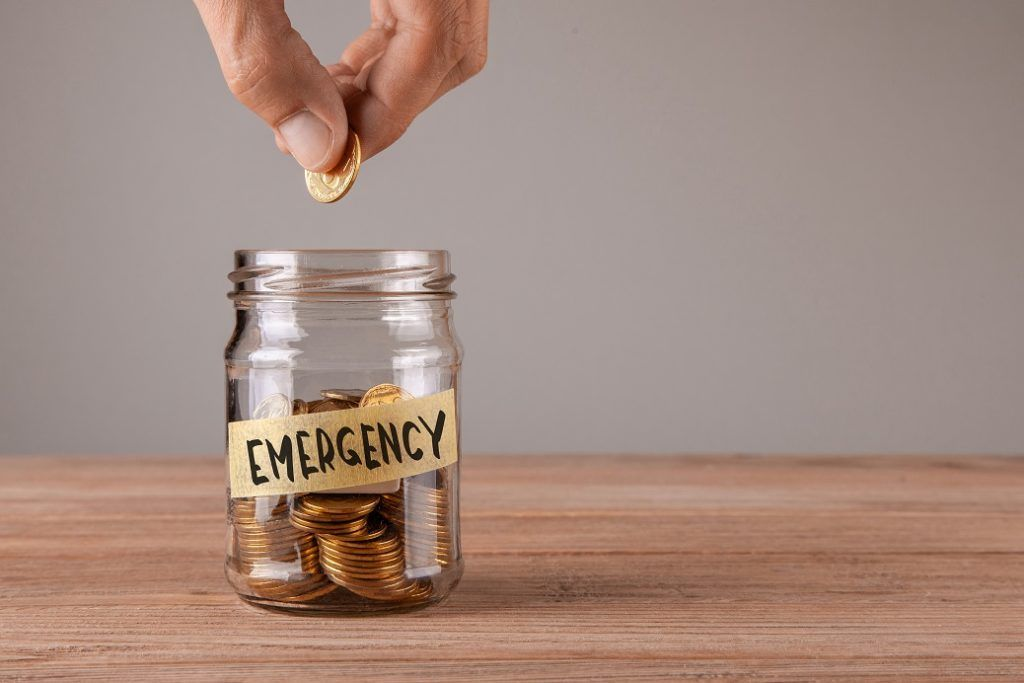
An emergency fund is a separate reserve of accessible money intended for necessary expenses that were not reasonably expected. It provides time to make better decisions without immediately depending on expensive debt.
The fund does not need to be completed in one month. Even a small amount can absorb part of an unexpected bill. The long-term objective is to create enough protection for the risks facing a particular household.
What emergency funds mean
An emergency fund is money reserved specifically for unplanned and necessary financial events.
The US Consumer Financial Protection Bureau defines it as a cash reserve set aside for unexpected expenses or financial emergencies, including home repairs, car repairs, medical bills and loss of income.
Examples of genuine emergencies may include:
- Essential vehicle repairs needed to continue working.
- Urgent home repairs involving safety or basic services.
- An insurance deductible after an accident.
- Necessary medical or dental treatment.
- Emergency travel involving a close family member.
- Temporary loss of employment.
- A delay in salary or business income.
- Replacement of an essential household appliance.
The important words are unexpected, necessary and urgent.
A planned holiday, annual insurance premium, birthday gift or predictable vehicle service is not normally an emergency. These costs should be managed through regular budgeting or a separate sinking fund.
MoneyHelper distinguishes emergency savings from sinking funds by explaining that emergencies are unexpected, while recurring costs and known future purchases should be planned separately.
Why emergency funds matter
An emergency fund creates financial flexibility.
Without one, a person facing an unexpected bill may have to borrow at a high interest rate. The original cost then becomes more expensive because interest and fees are added.
For example, a $1,000 emergency placed on a credit card does not remain a $1,000 problem when the balance is carried for months. It can also increase credit utilisation and make future borrowing more difficult.
A cash reserve can help a household:
- Avoid or reduce expensive borrowing.
- Continue paying essential bills during unemployment.
- Prevent missed rent, mortgage or loan payments.
- Protect long-term investments from forced sales.
- Handle insurance deductibles.
- Reduce dependence on relatives or friends.
- Make decisions without immediate financial panic.
Research from the Consumer Financial Protection Bureau found that emergency-savings levels are closely connected with broader financial circumstances. Consumers without emergency savings were more likely to have delinquent debt and weaker financial profiles than consumers with savings. The research shows an association rather than proof that emergency funds alone caused every difference.
Emergency savings cannot prevent job losses, illness or repairs. Their purpose is to reduce the financial damage caused by those events.
Emergency funds are different from ordinary savings
Not every savings account is an emergency fund.
A person may be saving for:
- A holiday.
- A home deposit.
- Education.
- A wedding.
- A vehicle.
- Retirement.
- Annual bills.
- Home improvements.
These are legitimate goals, but the money has already been assigned to expected spending.
An emergency fund has no planned purchase attached to it. It remains available until a qualifying financial shock occurs.
Keeping emergency money separate from other savings can make the distinction clearer. The FDIC recommends considering a separate insured savings account so that the money is less likely to be used for ordinary spending.
Separate accounts also make it easier to track progress. A household can see whether the emergency reserve is fully funded without confusing it with holiday or property savings.
How much should an emergency fund contain?
There is no universal amount that suits every household.
The correct target depends on:
- Monthly essential expenses.
- Job stability.
- Number of income earners.
- Dependants.
- Health and insurance coverage.
- Housing responsibilities.
- Vehicle reliability.
- Access to paid leave.
- Availability of family support.
- The predictability of income.
- The ease of finding replacement work.
A common guideline is to hold three to six months of essential living costs. MoneyHelper says it is generally a good idea to have three to six months of living expenses in an instant-access savings account.
However, this should be treated as a planning range rather than a strict rule.
A permanent employee in a two-income household may require less than a self-employed person with irregular earnings. Someone supporting children or elderly relatives may need more. A household with strong insurance and low fixed expenses may face less risk than one with high medical, property or vehicle costs.
The most useful approach is to build the fund in stages.
Stage one: Create a starter emergency fund
A full three-to-six-month reserve can appear impossible to someone starting from zero.
The first target should therefore be a smaller amount that can cover a common unexpected cost.
This could be:
- One insurance deductible.
- A typical vehicle repair.
- A minor medical expense.
- One week of essential household costs.
- A basic emergency travel ticket.
The exact amount will differ by country and household.
The objective is not to identify a perfect figure. It is to create enough distance between an unexpected bill and immediate borrowing.
Australia’s Moneysmart advises consumers to begin even when they can save only a small amount. The service emphasises that starting and continuing the habit is more important than waiting until a large contribution becomes possible.
Stage two: Save one month of essential expenses
Once the starter reserve is complete, the next target can be one month of necessary spending.
Essential expenses normally include:
- Housing.
- Basic food.
- Utilities.
- Transport required for work.
- Insurance.
- Minimum debt payments.
- Necessary medication.
- Childcare required for employment.
- Essential communication services.
They do not usually include the household’s full lifestyle spending.
Calculate this amount using actual bank statements and bills. Estimates can overlook irregular but necessary costs.
MoneyHelper identifies one month of expenses as a useful initial emergency-savings milestone before working toward a larger reserve.
Stage three: Build several months of protection
After reaching one month, the household can gradually work toward several months of essential expenses.
A larger fund may be particularly important for:
- Freelancers and contractors.
- Commission-based workers.
- Business owners.
- Single-income households.
- Workers in seasonal industries.
- People with chronic financial responsibilities.
- Homeowners responsible for major repairs.
- Anyone expecting a lengthy job search after redundancy.
Consider how long it would realistically take to replace lost income. A specialised professional may earn a high salary but need several months to secure a comparable position.
The emergency target should be reviewed when income, housing, employment or family responsibilities change.
How to calculate the target
Begin by listing essential monthly costs.
For example:
| Essential expense | Monthly amount |
|---|---|
| Housing | $1,200 |
| Food | $450 |
| Utilities | $200 |
| Transport | $250 |
| Insurance | $180 |
| Minimum debt payments | $220 |
| Essential communication | $100 |
| Necessary healthcare | $100 |
| Total | $2,700 |
In this example:
- One month of essential expenses is $2,700.
- Three months is $8,100.
- Six months is $16,200.
These figures are illustrations, not recommendations.
A person with a target of $8,100 does not need to achieve it immediately. Saving $225 per month would take three years, excluding interest. Bonuses, tax refunds or other legitimate windfalls could shorten the process.
The saving rate should remain affordable. Building an emergency fund by failing to pay rent, insurance or required debt payments would create a different emergency.
Where should emergency money be kept?
Emergency funds usually need three characteristics:
- Safety.
- Accessibility.
- Separation from daily spending.
A regulated, easy-access savings or deposit account is often suitable. The account should allow withdrawals without major penalties or lengthy delays.
In the United States, eligible deposits at FDIC-insured banks are automatically protected within applicable limits. The standard coverage is at least $250,000 per depositor, per insured bank and ownership category.
Other countries use their own deposit-protection systems and limits. Consumers should check the official scheme in their jurisdiction rather than assuming US protections apply internationally.
The account should also be examined for:
- Monthly fees.
- Minimum balance requirements.
- Withdrawal restrictions.
- Transfer times.
- Deposit protection.
- Interest rates.
- Introductory rates that may expire.
- Conditions attached to earning interest.
A slightly higher interest rate is not useful if the account makes emergency access difficult or imposes costly penalties.
Should an emergency fund be invested?
Emergency savings are generally not intended for volatile investments.
Stocks, cryptocurrency, speculative funds and individual company shares can lose value precisely when the money is needed. A person who loses a job during an economic downturn may also find that investment markets are falling at the same time.
Selling in that situation could permanently lock in losses.
Long-term investments serve a different purpose. They may offer growth but involve uncertainty and should normally have enough time to recover from market declines.
Emergency money prioritises preservation and access over maximum returns.
Some households with very large reserves may use a layered approach. Immediate needs may be held in an easy-access account, while a secondary portion is kept in another low-risk product.
However, notice periods, early-withdrawal penalties and settlement delays must be understood. Complex strategies are unnecessary for someone still building a basic reserve.
How to build an emergency fund
Automate transfers after payday
Automation removes the need to make a fresh saving decision every month.
Arrange for a fixed amount to move into the emergency account shortly after income arrives. The transfer should be affordable enough to continue consistently.
The FDIC recommends combining regular automated deposits with occasional windfalls, such as employment bonuses or tax refunds.
Use a realistic monthly target
Divide the emergency-fund target by the number of months available.
Someone seeking to save $1,200 in one year would need to transfer approximately $100 per month.
A longer timeline may be more sustainable than an aggressive contribution that causes repeated withdrawals.
Direct part of unexpected income into savings
Bonuses, gifts, refunds or freelance income can accelerate progress.
Not every windfall must go into the emergency fund. A balanced approach may direct one part toward savings, another toward debt and a smaller part toward enjoyment.
Review recurring expenses
Cancel subscriptions that are unused and renegotiate services where possible. Direct the released money into the emergency account before it is absorbed elsewhere.
Focus first on large or repeated costs rather than making the plan dependent on unrealistic restrictions.
Save after paying off a debt
When a loan or credit-card balance is cleared, redirect some or all of the former monthly payment into emergency savings.
This preserves the existing cash-flow pattern while improving financial security.
Should debt be repaid before saving?
The answer depends on the type and cost of debt.
High-interest debt can grow faster than money held in a savings account. In purely mathematical terms, paying it down may produce a greater benefit.
However, using every available dollar for debt can leave no protection against the next emergency. That event may send the borrower back to the credit card.
A balanced sequence may involve:
- Making all required payments.
- Building a small starter emergency fund.
- Directing additional money toward expensive debt.
- Expanding the emergency fund after high-cost balances are controlled.
MoneyHelper notes that repaying expensive debt generally reduces costs, while also recognising the importance of keeping some emergency savings. Early-repayment penalties should be checked before paying certain loans ahead of schedule.
Consumers who cannot meet essential payments should seek assistance from an official or recognised nonprofit debt-advice service.
When should the fund be used?
Before withdrawing money, ask three questions:
- Is the expense unexpected?
- Is it necessary?
- Is it urgent?
An essential boiler repair during winter may meet all three tests. A discounted television normally does not.
Job loss is also a valid reason to use the fund. The money exists to replace essential income temporarily, not merely to cover physical repairs.
Using the fund is not failure. It is the reason the money was saved.
After the emergency, create a realistic plan to rebuild the balance. The FDIC recommends replenishing withdrawals so that the protection remains available for future events.
Advantages and opportunities
The most important benefit of emergency funds is resilience.
A reserve can provide:
- More time to find suitable work.
- Greater negotiating power during a job change.
- Less dependence on high-interest credit.
- Protection for retirement investments.
- Fewer missed payments.
- Lower financial stress.
- Greater ability to handle insurance gaps.
- More stable household decision-making.
An emergency fund can also make calculated opportunities safer. Someone with adequate reserves may be better positioned to pursue training, change careers or start a carefully planned business.
However, the reserve should not be treated as investment capital for speculative opportunities.
Risks and limitations
Emergency funds have limitations.
Cash may lose purchasing power when inflation is higher than the interest earned. There is also an opportunity cost because the money might earn a higher long-term return if invested.
These disadvantages do not remove the need for liquidity. They explain why emergency targets should be based on genuine risk instead of accumulating unlimited cash without a purpose.
Another risk is keeping money with an unregulated provider. MoneyHelper warns that unregulated savings arrangements may not receive protection if the scheme fails.
Consumers should confirm that the institution is authorised and that the specific account qualifies for relevant deposit protection.
A fund may also affect eligibility for means-tested government support in some jurisdictions. MoneyHelper notes that savings can affect certain UK benefits, illustrating why local rules should be checked.
Common emergency-fund mistakes
Waiting until income is higher
Higher income does not automatically create savings. Expenses can rise at the same time. Beginning with a small amount builds the habit now.
Using one account for everything
Combining bills, spending and emergency savings makes accidental withdrawals more likely.
Treating predictable bills as emergencies
Annual fees, school costs and routine maintenance should have separate planned savings.
Investing the entire reserve
Volatile assets may fall when the money is needed most.
Choosing an inaccessible account
Emergency money should not be locked behind long notice periods or substantial penalties.
Setting an unrealistic target
A target should reflect essential expenses and household risks—not an arbitrary number copied from social media.
Refusing to use the fund
Some people borrow at high interest because they are afraid to reduce their savings balance. A genuine emergency is exactly what the reserve is for.
Forgetting to rebuild it
Once the crisis passes, restart automated contributions.
Future outlook
Emergency savings are likely to become more integrated with payroll systems, mobile banking and automated budgeting tools.
Employers may increasingly offer payroll-linked emergency-savings programmes that allow workers to direct part of each paycheck into a separate account. The CFPB has previously examined employer autosave structures intended to make this process easier.
Financial applications may also use artificial intelligence to estimate appropriate emergency targets from household spending patterns.
These tools could improve saving consistency, but they may create privacy and cybersecurity risks. Automated targets can also be misleading when they fail to understand health needs, dependants or unstable employment.
The basic principles are unlikely to change. Emergency money should remain safe, accessible, separate from ordinary spending and appropriate for the household’s real risks.
Conclusion
Emergency funds are one of the simplest financial tools, but their value can be significant.
They provide accessible money for urgent, necessary and unexpected expenses. They can reduce dependence on high-interest borrowing, protect long-term investments and provide breathing room during income disruption.
The ideal amount is not identical for everyone. Start with a realistic reserve, work toward one month of essential expenses and then consider several months based on employment, family and financial risks.
Keep the money in a safe and accessible account with an appropriately regulated institution. Do not chase high returns with cash that may be needed at short notice.
Most importantly, begin with the amount available. An emergency fund does not need to be complete before it becomes useful. Every contribution creates a little more protection between an unexpected event and a financial crisis.
Disclaimer: This article provides general financial education and does not constitute personalised financial, tax, legal or investment advice. Deposit-protection limits, savings rules and benefit eligibility differ by country. Readers should consult official local sources or an appropriately qualified professional.
Sources consulted
- Consumer Financial Protection Bureau — An essential guide to building an emergency fund
- Consumer Financial Protection Bureau — Emergency savings and financial security
- Consumer Financial Protection Bureau — Evidence-based strategies to build emergency savings
- FDIC — Saving for the unexpected and your future
- FDIC — Starting small can lead to big savings
- FDIC — Financial products covered by deposit insurance
- FDIC — Understanding deposit-insurance coverage
- MoneyHelper — Emergency savings: how much is enough?
- MoneyHelper — Saving or investing
- MoneyHelper — Sinking funds explained
- Australian Government Moneysmart — Save for an emergency fund
- Australian Government Moneysmart — Urgent help with money
Read Also: How Millionaires Budget Their Money Without Sacrificing Their Lifestyle