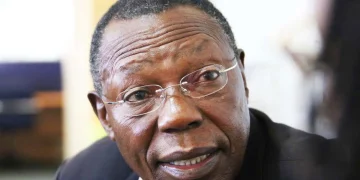
Duncan Ndegwa at 100: A Century of Economic Leadership and Legacy
As Kenya marks Madaraka Day 2025, the nation also celebrates the 100th birthday of Duncan Nderitu Ndegwa, a man whose legacy is deeply etched in the country’s economic and political evolution. Born in 1925 in Nyeri, Ndegwa rose from humble beginnings to become the first African Governor of the Central Bank of Kenya and a principal architect of the nation’s financial autonomy.
From Colonial Rule to Independence: The Rise of a Visionary
Educated at Alliance High School, Makerere University, and the University of St. Andrews in Scotland, Duncan Ndegwa returned to Kenya with a vision of a self-sufficient and empowered African state. His career in the civil service began in the 1950s during the colonial era, where he stood out as one of the first African economists to serve at senior policy levels.
In 1963, following independence, Ndegwa was appointed Head of Civil Service and Secretary to the Cabinet. He helped implement the Africanisation programme, a transformative policy that aimed to shift economic control from colonial hands to native Kenyans. His efforts laid the groundwork for indigenous participation in the public and private sectors, which significantly altered Kenya’s socio-economic trajectory.
The Central Bank Era (1967–1982): Championing Kenya’s Monetary Sovereignty
In 1967, Duncan Ndegwa was appointed as the first African Governor of the Central Bank of Kenya (CBK). His 15-year tenure remains the longest in the bank’s history. During this period, he played a crucial role in stabilizing Kenya’s young economy and laying firm institutional foundations.
Key achievements during his governorship include:
- Strengthening Monetary Policy: Ndegwa established frameworks for managing inflation, regulating currency circulation, and maintaining a stable Kenyan shilling—essential for a newly independent economy.
- Banking Sector Reforms: Under his leadership, the CBK implemented stricter regulatory frameworks, including the Banking Act of 1968, which formalized oversight of financial institutions and protected depositors.
- Promoting Financial Inclusion: He supported the development of local financial institutions and paved the way for the creation of indigenous banks, which allowed more Kenyans access to financial services.
A Pillar of Public and Private Sector Leadership
After leaving CBK in 1982, Ndegwa continued to shape Kenya through various leadership roles. He became chairman of several major corporations, including Kenya Airways, National Bank of Kenya, and Mombasa Continental Resort. He also held equity stakes in NIC Bank Group and other key sectors.
In 2006, Ndegwa released his autobiography, “Walking in Kenyatta Struggles: My Story”, offering rare insights into the political and economic maneuvering of post-independence Kenya.
Estimated Wealth and Legacy
While precise figures are private, Duncan Ndegwa is widely regarded as one of Kenya’s wealthiest retired public servants, with diversified investments in banking, hospitality, real estate, and publishing. Analysts estimate his net worth to be in the range of KES 3–5 billion (~USD 25–40 million), accrued through decades of service, investments, and board memberships.
More importantly, Ndegwa’s legacy is not measured merely in monetary terms, but in the institutional frameworks he helped build, the talent he nurtured, and the policies he shaped. Many of Kenya’s current financial regulations, banking systems, and public service reforms can trace their origins to his vision.
Honors and Recognition
- Elder of the Order of the Golden Heart (EGH) – One of Kenya’s highest civilian honors.
- Honored by the Central Bank and multiple institutions for pioneering monetary independence.
- His contributions have been referenced in academic, economic, and historical circles as foundational to modern Kenya.
Conclusion: A Life That Shaped a Nation
At 100, Duncan Nderitu Ndegwa stands as more than just a former central banker or civil servant—he is a symbol of Kenya’s rise from colonial rule to an economically sovereign republic. His leadership, intellect, and integrity helped construct the financial scaffolding on which Kenya stands today.
As the nation celebrates his century of life, it also salutes the indelible mark he has left on generations of economists, policymakers, and citizens. Duncan Ndegwa did not just witness Kenya’s history—he shaped it.