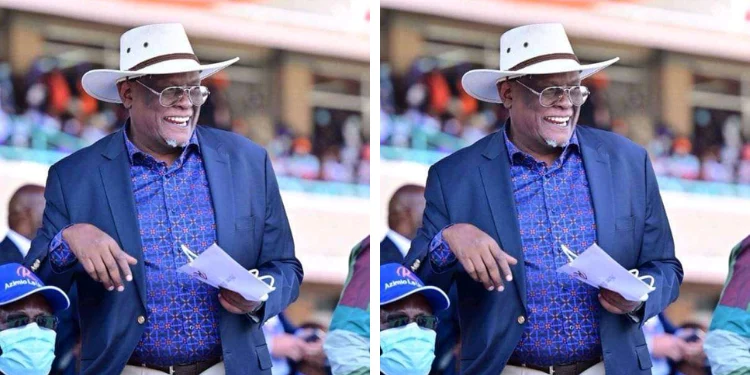
David Murathe remains one of Kenya’s most recognizable political strategists, known as much for his public statements as for his behind the scenes influence. Over several decades, he has built a reputation as a close ally of former President Uhuru Kenyatta and a key figure within the country’s ruling elite. Although he has held elected office for a limited period, his visibility in national political debates has kept him firmly within Kenya’s power circles.
Born in 1958, David Wakairu Murathe grew up in a family already engaged in business. His late father, William Murathe Gatuhi, was a well known entrepreneur with interests in wine and spirits distribution in Thika and Nairobi. That background shaped his early exposure to both commerce and public life.
Today, discussions about David Murathe often revolve around his role during the Jubilee Party era, his outspoken stance on succession politics and his continued influence in Central Kenya. Yet his journey spans education, activism, business expansion and political strategy.
Educational Background
David Murathe began his education at Kahuhia Primary School in Gatanga, Murang’a County. He later joined The Nairobi School for secondary education, a national institution known for producing prominent leaders in public service and business.
After completing secondary school, he enrolled at the University of Nairobi, where he pursued a degree in Political Science. His time at the university coincided with a tense period in Kenya’s political history. In 1982, during the attempted coup against President Daniel arap Moi, Murathe and several other students were linked to alleged involvement in the underground Mwakenya Movement, an anti Moi group. He was detained without trial and later released.
Following his release, he completed his degree and maintained a relatively low public presence before transitioning into formal politics.
Political Career and Party Leadership
David Murathe first entered elective politics during the 1997 general elections. Running under the Democratic Party coalition, he won the Gatanga parliamentary seat in Murang’a County. He served for one term before losing re election in 2002 to economist Peter Kenneth.
After that electoral loss, Murathe stepped back from frontline politics for several years. However, he resurfaced in 2007 during Uhuru Kenyatta’s tenure as Finance Minister. The alliance between the two would later become central to his political identity.
When the Jubilee Party was formed ahead of the 2013 general elections, Murathe rose to become vice chairman. In that role, he participated in party organization and strategic planning. He became widely known for his vocal opposition to then Deputy President William Ruto’s presidential ambitions as the 2022 election approached. He argued publicly that the administration needed uninterrupted time to implement its agenda.
His assertive communication style drew both support and criticism. Some viewed him as a loyal defender of his political camp, while others considered his remarks confrontational. Regardless of perspective, he remained a visible presence in political discourse.
Influence After the Jubilee Era
Following Uhuru Kenyatta’s departure from office in 2022, David Murathe retained a measure of influence, particularly in Central Kenya politics. Although he has not held a formal executive position in recent years, he continues to comment on governance matters and shifting alliances.
His public appearances and interviews often focus on coalition strategy, leadership transitions and regional political dynamics. This sustained engagement has ensured that his voice remains part of Kenya’s broader political conversation.
Business Ventures and Controversies
Beyond politics, David Murathe has maintained business interests. He inherited and expanded aspects of the Murathe Wines and Spirits enterprise established by his father. Over time, he developed a reputation as a businessman operating within Nairobi’s commercial networks.
He resides in Nairobi’s Garden Estate, an area associated with affluent homeowners. However, his business journey has not been without controversy. Critics have occasionally accused him of benefiting from dealings with foreign investors, claims he has denied.
In 2020, his name surfaced in connection with the Kenya Medical Supplies Authority procurement scandal during the COVID 19 period. Reports suggested that a company he had allegedly lent money to secured a tender. Murathe denied direct involvement, stating that he had severed ties before the transaction occurred.
Earlier, in 2005, he reportedly faced personal financial challenges involving debt exceeding KSh 50 million. Despite these setbacks, he continued participating in political and business activities.
Family Life
David Murathe is married to Faith Murathe. The couple has three children: June Tuto, Waturi Murathe and Davidson Wakairu Murathe, also known as DWS.
June has pursued fashion design studies abroad, while Waturi works as a research analyst and married Ernest Wakhusama in 2009. Their son, Davidson Wakairu Murathe, has engaged in political and social initiatives and runs an organization known as Vijana Amkeni, which focuses on youth mobilization and environmental issues.
Although Murathe is known for hosting high profile political gatherings, his family generally keeps a relatively low public profile.
Net Worth and Assets
Estimates place David Murathe’s net worth in the tens of millions of Kenyan shillings. His wealth is believed to stem from business operations in wine and spirits distribution as well as real estate holdings. Exact figures are not publicly disclosed.
Property ownership, including a multimillion shilling home in Nairobi, forms part of his asset base. However, like many political figures, his financial details remain largely private.
Public Persona and Legacy
David Murathe has built a reputation as a direct and outspoken political figure. His style often reflects blunt messaging rather than measured rhetoric. Over time, he has transitioned from elected representative to strategist and advisor, influencing political discourse without holding constant public office.
His journey illustrates the layered nature of Kenyan politics, where influence extends beyond electoral victory. Through party leadership roles, business ventures and strategic alliances, Murathe has remained a notable figure in national conversations about governance and power.