Net Worth and Financial Overview
- Net Worth: $115 Million
- Category: Richest Politicians › Presidents
- Birthdate: February 19, 1953 (72 years old)
- Birthplace: La Plata, Argentina
- Gender: Female
- Height: 5 ft 4 in (1.63 m)
- Profession: Politician, Lawyer
- Nationality: Argentinian
What is Cristina Fernández de Kirchner’s Net Worth?
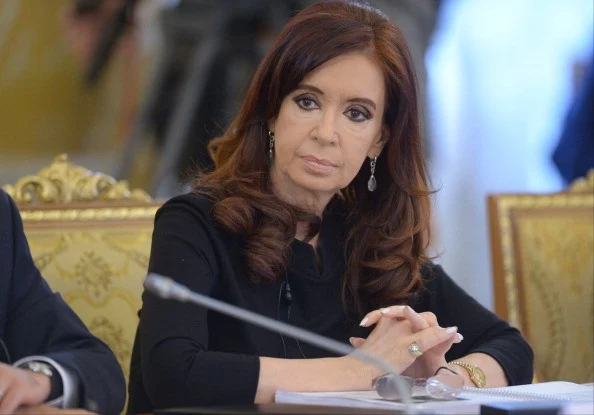
Cristina Fernández de Kirchner, Argentina’s former President and current Vice President, has an estimated net worth of $115 million. Her wealth has been a subject of major controversy, with accusations of money laundering, corporate extortion, and bribery surrounding her and her late husband, former President Néstor Kirchner.
When Néstor Kirchner became President in 2003, the couple reported a net worth of $3 million. By 2009, their combined fortune had skyrocketed to $14 million. Cristina’s 2013 financial disclosure, after her husband’s death, placed her personal wealth at $82 million.
Their fortune was largely built through real estate, tourism, and banking investments, but critics and investigators allege that much of their wealth came from state contracts and financial mismanagement. The couple was accused of using political influence to buy land at below-market prices, building hotels and tourism complexes, and operating “ghost hotels” to launder money.
Early Life and Education
Cristina Fernández de Kirchner was born on February 19, 1953, in La Plata, Argentina. Her mother, Ofelia Wilhelm, was a Peronist union leader, while her father, Eduardo Fernández, worked as a bus driver and was anti-Peronist.
Kirchner attended Popular Mercantil and Misericordia schools before enrolling at the National University of La Plata. Initially studying psychology, she later switched to law, where she met Néstor Kirchner, the man who would become both her husband and political mentor.
Career Beginnings: Lawyer and Provincial Politician
After earning her law degree, Cristina moved to Patagonia with Néstor. She started working in provincial government and served as an attorney for the Justicialist Party. She also worked for the Chamber of Appeals in Comodoro Rivadavia and became a key figure in her husband’s law firm.
Her political career took off in 1989, when she was elected as a deputy in the legislature of Santa Cruz Province. When Néstor became Governor of Santa Cruz, Cristina became one of his closest political advisors, helping him shape policies and strengthen their political influence.
In 1995, she was elected National Senator, but her term was marked by controversy, leading to her temporary removal from Congress in 1997. However, she made a comeback, winning a Senate seat again in 2001.
First Lady and the Kirchner Political Machine (2003-2007)
When Néstor Kirchner was elected President of Argentina in 2003, Cristina became First Lady, a role she transformed into a powerful political position. Unlike many First Ladies, Cristina was highly involved in policymaking, public speeches, and government strategy.
She played a key role in:
✔ Economic and social policies during Néstor’s administration
✔ Strengthening the influence of the Kirchner family in Argentine politics
✔ Expanding state control over major industries
By the time Néstor declined to run for re-election in 2007, Cristina was the natural choice for the presidency.
President of Argentina (2007-2015): Turbulence, Power, and Scandal
Election and First Term Challenges
Cristina Kirchner won the 2007 presidential election, making her Argentina’s first elected female president. She inherited a country dealing with:
- High inflation
- Public protests
- Weak energy infrastructure
- Agricultural sector disputes
Despite low approval ratings and economic difficulties, she won re-election in 2011, securing the highest percentage of votes since 1983.
Key Policies and Controversies
During her two terms, Kirchner:
✔ Renationalized YPF, Argentina’s largest energy company
✔ Increased government subsidies on public services
✔ Implemented strict currency controls, leading to economic instability
✔ Strengthened human rights policies, including trials against Dirty War military officials
However, her presidency was also marked by major corruption scandals, including money laundering schemes, bribery allegations, and accusations of financial fraud.
By 2014, Argentina faced sovereign default, intensifying public discontent with her leadership.
Corruption Scandals and Legal Charges
Money Laundering and “Ghost Hotels”
Investigations into Cristina Kirchner’s wealth revealed numerous financial irregularities. Authorities alleged that the Kirchners had:
- Manipulated land deals to build luxury hotels
- Used tourism properties for money laundering
- Received illegal kickbacks from business contracts
One of the most infamous scandals involved the Hotesur hotel in El Calafate, which reportedly failed to pay taxes and was linked to laundering millions in illicit funds.
Legal Indictments and Trials
After leaving office in 2015, Cristina was charged with multiple crimes, including:
- Fraudulent sales of dollar futures (later acquitted)
- Obstruction of justice in the 1994 AMIA bombing investigation
- Treason charges in 2017 (avoided prosecution due to Senate immunity)
- Accepting bribes for public works contracts
Despite the numerous allegations, Kirchner has escaped long-term legal consequences, largely due to her strong political influence and loyal supporters.
Vice President of Argentina (2019-Present)
In 2019, despite her legal troubles, Kirchner returned to power as Vice President, running alongside Alberto Fernández. Her continued dominance in Argentine politics underscores her ability to maintain influence despite corruption allegations.
In 2022, she survived an assassination attempt when an attacker tried to shoot her in the face, but the gun malfunctioned, allowing security forces to intervene.
Personal Life and Legacy
Family and Personal Affairs
Cristina married Néstor Kirchner in 1975, and the couple had two children, Máximo and Florencia. After Néstor’s sudden death from a heart attack in 2010, Cristina became even more politically aggressive, consolidating power over the Justicialist Party.
Books and Public Influence
Beyond politics, Cristina Kirchner founded the Patria Institute, a think tank focused on Peronist policies. In 2019, she published the book “Sinceramente”, which became a bestseller in Argentina.
Net Worth and Wealth Management
Cristina Kirchner’s net worth of $115 million is attributed to:
💰 Real estate investments and hotel ownership
💰 State-backed business deals and financial assets
💰 Foreign bank deposits and offshore holdings
Despite years of legal battles, her wealth has continued to grow, raising questions about Argentina’s political system and financial oversight.
Conclusion: A Legacy of Power and Controversy
Cristina Fernández de Kirchner remains one of Argentina’s most polarizing figures. She has been praised for her role in social reforms and economic policies, but heavily criticized for corruption, financial mismanagement, and authoritarian tendencies.
Her influence in Argentine politics remains strong, despite multiple indictments, scandals, and economic crises. Whether history remembers her as a reformer or a corrupt leader, her legacy is undeniably impactful—for better or worse.