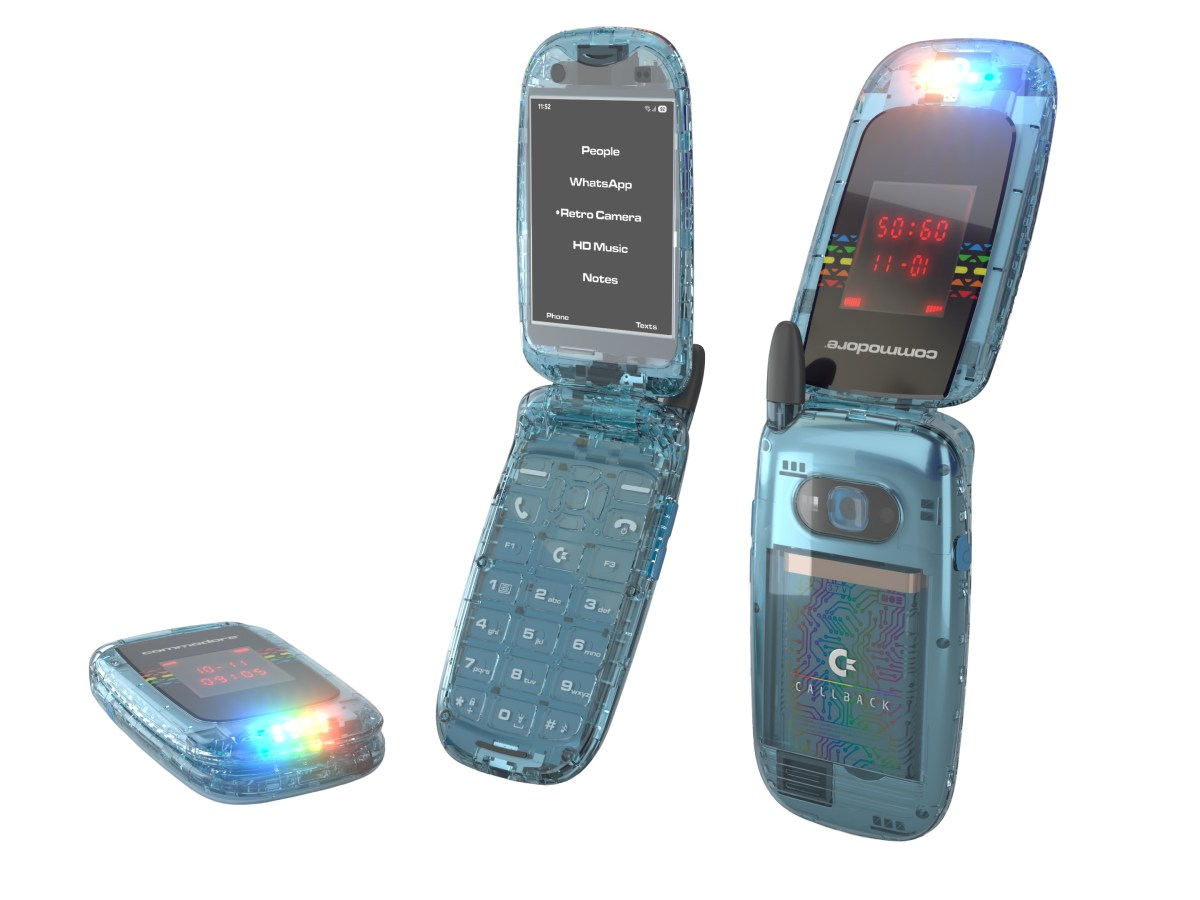
The Commodore Callback 8020 is now available for pre-order, and it is already cheaper than first announced.
When Commodore introduced the retro-inspired flip phone earlier this month, the starting price was set at $499. That figure raised eyebrows because the Callback 8020 is not a flagship smartphone. It is a deliberately limited, nostalgia-heavy flip phone designed for people who want fewer distractions, more privacy and a break from endless scrolling.
Now, just as pre-orders open, Commodore has lowered the starting price to $399. The change makes the device easier to consider, although it also comes with an important detail: the base model uses what the company calls “eco-validated” memory, meaning remanufactured or post-consumer RAM and storage that has been tested for reuse.
Buyers who want factory-new RAM and storage can pay extra. The result is a tiered pricing strategy that lets Commodore offer a lower entry point while still giving customers the option to upgrade at checkout.
The Callback 8020 is not trying to be a normal smartphone. It is a flip phone with LTE, Wi-Fi, GPS, Bluetooth, expandable storage, a removable battery, a headphone jack and Sailfish OS. It blocks social media apps, browsers, work apps and email apps at the system level, aiming to create a calmer phone experience.
That makes it one of the more unusual mobile launches of the year: part retro collectible, part digital detox tool and part privacy-focused alternative to mainstream smartphones.
Why the Price Dropped Before Launch
The most surprising part of the Callback 8020 story is the price cut.
Commodore originally announced the phone at $499, but customer reaction appears to have been mixed. Many people liked the idea of a modern flip phone with retro styling and anti-doomscrolling software, but the price felt high for the hardware.
The company has now responded by lowering the entry price to $399. That is a 20 percent cut before the device has even started shipping.
The lower price is made possible through a few changes. The biggest is the use of eco-validated post-consumer memory in the base model. In simple terms, the phone can ship with reused RAM and storage that has been tested and validated rather than brand-new chips.
Commodore is also making some accessories optional instead of bundling everything into the base package. That helps lower the starting cost for buyers who only want the phone.
This is a clever move, but it also changes how buyers should think about the device. The $399 version is not exactly the same as a fully upgraded configuration. Customers who want new memory, premium accessories or special editions will pay more.
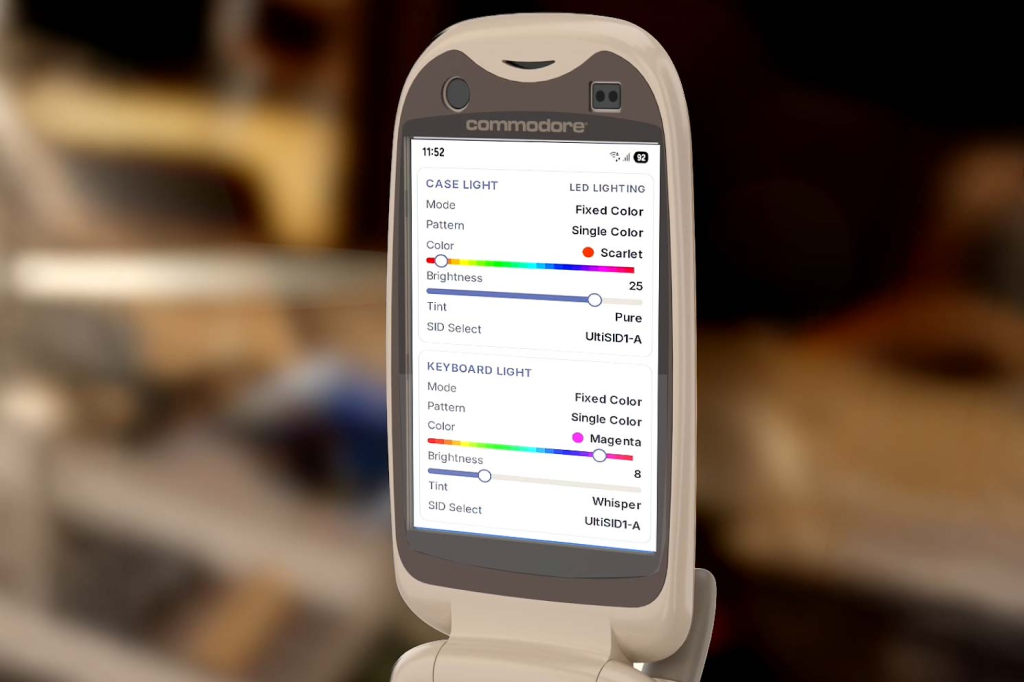
Still, the lower entry price makes the Callback 8020 more competitive, especially for people who were interested in the concept but not comfortable with the original $499 figure.
What Is the Commodore Callback 8020?
The Commodore Callback 8020 is a modern flip phone built around nostalgia, privacy and intentional phone use.
It brings back the look and feel of early-2000s flip phones while adding enough modern features to remain useful today. It supports LTE, Wi-Fi, Bluetooth, GPS and hotspot functionality. It also includes a 3.5mm headphone jack, expandable storage and a removable battery.
The device runs Sailfish OS, a Linux-based mobile operating system developed by Jolla. Commodore chose Sailfish OS because it wanted a platform that could support privacy-focused features while avoiding the full attention economy of modern smartphones.
The key idea is simple: keep essential communication and utility, but block the parts of smartphones that are designed to keep users hooked.
That means no social media apps, no browsers, no work apps and no email apps running freely at the system level. The Callback 8020 is meant to be a phone for calls, texts, music, simple tools, maps, selected apps and calmer use.
It is not a dumbphone in the strictest sense because it has modern connectivity and app support. It is better described as a smart feature phone or digital detox phone.
A Flip Phone for the Anti-Doomscrolling Crowd
The Callback 8020 is built around a very specific frustration: many people are tired of modern smartphones.
Smartphones are powerful, but they can also be exhausting. Social media feeds, endless notifications, short videos, work messages and browser rabbit holes make it easy to lose hours without meaning to. The Callback 8020 tries to solve that problem by removing the most addictive parts of phone use.
Instead of relying only on user discipline, Commodore blocks certain categories at the system level. That is important because many digital wellness tools on normal smartphones are easy to disable. A user can set app limits, then ignore them. They can turn off notifications, then turn them back on. The Callback 8020 is designed to make distraction harder by default.
This makes the phone especially interesting as a secondary device. A person might keep a normal smartphone for work and travel, but use the Callback 8020 on weekends, evenings, holidays or during focused periods.
It could also appeal to users who want a simpler daily phone but still need basics such as calls, messaging, hotspot, Bluetooth audio, navigation and selected apps.
The point is not to reject technology completely. It is to reduce the parts of technology that feel manipulative.
The Main Specs
The Commodore Callback 8020 has modest hardware by modern smartphone standards.
It features a 3.25-inch internal display with a 480 x 640 resolution and a smaller 1.77-inch external screen. The inner screen is technically a touchscreen, but Commodore says touch input is disabled by default to encourage a more keypad-first experience. Users can enable touch when needed for apps that require it.
The phone is powered by the MediaTek Helio G81 chipset, paired with 4GB of RAM and 64GB of expandable storage. This is not a high-end processor, but it should be enough for the phone’s intended purpose.
The device also includes LTE, Wi-Fi, Bluetooth, GPS, a 3.5mm headphone jack and a removable 1,550mAh battery. It supports emergency calling where network coverage and carrier support are available.
The phone is IP44 splash-resistant, meaning it can handle splashes but should not be submerged. It is not a rugged waterproof device.
These specs are not impressive if compared with mainstream Android smartphones. But that comparison misses the point. The Callback 8020 is not trying to be a gaming phone, camera phone or flagship productivity device. It is trying to be a calmer mobile companion.
The Removable Battery Is a Welcome Feature
One of the Callback 8020’s most practical features is its removable battery.
Modern smartphones almost always use sealed batteries. Once battery health declines, users usually need professional repair or replacement. A removable battery gives owners more control and can extend the device’s useful life.
For a phone built around long-term simplicity and user control, this feature makes sense. A digital detox phone should not feel disposable. If the battery wears out, users should be able to replace it without buying a new device.
The 1,550mAh capacity may sound small compared with modern smartphones, but the Callback 8020 has a smaller screen, no 5G and a less demanding use case. Commodore expects standby life to benefit from the flip design and reduced background wake-ups, though final real-world battery performance will depend on software optimisation.
The removable battery is one of the strongest arguments in favour of the device. It fits the product’s philosophy better than chasing thinness or sealed premium design.
Eco-Validated Memory: Smart Sustainability or Cost Cutting?
The base $399 model uses eco-validated memory, which means remanufactured or post-consumer RAM and storage.
This will divide buyers.
Some users will appreciate the sustainability angle. Reusing tested components can reduce waste and lower the cost of a device. If the chips are properly validated and covered by warranty, the practical difference may be minimal for many users.
Others may see it as a compromise. RAM and storage are core components, and some buyers will prefer factory-new parts, especially in a device they are paying for upfront months before shipping.
Commodore is trying to solve this by offering choice. Buyers who want new memory can pay extra. Buyers who want the lowest price can take the eco-validated option.
That is a reasonable approach, but it should be communicated clearly. Customers need to understand what they are buying before checkout.
The idea is not necessarily bad. In fact, the electronics industry needs more ways to reuse quality components. But in a new phone from a revived brand, trust will matter. Commodore will need to deliver on testing, warranty and transparency.
Colours and Editions
The Callback 8020 is available in several retro-inspired finishes.
The standard colour options include Basic Beige, SX Silver and ProtoPET White. These names clearly lean into Commodore’s old-school computer heritage, especially for fans of the Commodore 64 and other classic systems.
There is also a Starlight Edition, which has a more distinctive look. For collectors and nostalgia-driven buyers, this may be one of the more attractive versions.
The Founders Edition is the premium collectible model. It costs significantly more and includes a 24K gold-plated Commodore “C=” key, along with additional presentation and accessory items.
The colour strategy is one of the smartest parts of the product. Commodore knows this phone is not being sold only on specs. It is being sold on emotion. The design, naming and editions are meant to make buyers feel connected to the brand’s computing history.
For longtime Commodore fans, that may work. For ordinary phone buyers, the retro styling may simply look fun and different.
What Comes in the Box?
Every Callback 8020 includes the phone, a USB-C charging cable, the removable battery, a spiral-bound user guide and sticker packs.
The spiral-bound guide and stickers are small details, but they fit the retro positioning. Commodore is trying to make the unboxing feel like a throwback to older consumer electronics, when manuals and physical extras felt like part of the product experience.
The Founders Edition adds more collectible items, including premium presentation packaging, a hard shell protective case, earphones and the gold-plated Commodore key.
One important change is that some accessories that were originally expected to be bundled are now optional. This helps lower the base price but means buyers should check carefully during checkout to see exactly what is included in their chosen version.
The cheaper base price is good news, but it also means not every configuration will feel equally complete.
Sailfish OS Gives the Phone Its Identity
The Callback 8020 runs Sailfish OS, the European mobile operating system developed by Jolla.
This is one of the device’s most important features. Sailfish OS gives Commodore an alternative to standard Android and iOS while still allowing selected app compatibility.
The operating system is central to the phone’s privacy and digital detox pitch. Commodore is not simply adding a focus mode on top of Android. It is using a different platform to create a more controlled phone experience.
The company says the phone blocks social media and browsers at the system level. That means the device is not built for casual scrolling, endless web browsing or constant work notifications.
This could be attractive to people who want a phone that protects their attention by design. It may also appeal to users who distrust big tech ecosystems and want a more independent mobile platform.
However, Sailfish OS also creates questions. App compatibility, updates, support, reliability and long-term software development will all matter. Buyers should not expect the same app experience as a normal Android phone.
That may be the point, but it is still a trade-off.
What Apps Will Work?
The Callback 8020 is designed to support useful apps while blocking categories Commodore considers distracting or harmful to the product’s purpose.
That means the phone is not meant for social media, browsers, email or work apps. It is designed for essential communication and selected utilities.
This makes app compatibility one of the biggest buyer questions.
Users will want to know whether WhatsApp, Signal, Spotify, maps, banking apps, authentication apps, music players, notes and other everyday tools work properly. Commodore says the phone can support many Android apps through Sailfish OS compatibility, but the system-level blocking means the experience will not match a normal smartphone.
For some buyers, that will be perfect. For others, it may be frustrating.
The best way to think about the Callback 8020 is not as a cheap Android phone. It is a selective phone. It intentionally says no to certain app categories. That is what gives it value for some people and limits it for others.
Before pre-ordering, buyers should check whether the apps they actually need are compatible and allowed.
A Phone With No Social Media and No Browser
The most controversial feature is the system-level blocking of social media apps and browsers.
For many users, this is the entire appeal. A phone that cannot become an Instagram, TikTok, X, YouTube Shorts or browser rabbit hole may help people reclaim time and attention. It makes the device useful as a weekend phone, family phone, student focus phone or travel backup.
For others, it will feel too restrictive. A browser is one of the most basic smartphone tools. Removing it means users cannot quickly search the web, open links or access web-based services in the usual way.
This is the central trade-off of the Callback 8020. It is designed to be limiting. Those limits are not flaws for the target audience; they are the product.
The phone’s success will depend on whether enough people want a device that protects them from their own habits.
Dome LEDs Instead of Notification Overload
The Callback 8020 includes a five-LED notification system called Dome LEDs.
This is a clever design idea. Instead of constantly lighting up a screen or vibrating for every notification, the LEDs can communicate basic information through soft colour signals. For example, one light can indicate a message, another can show charging status and another can show Bluetooth activity.
This supports the phone’s anti-distraction philosophy. A modern smartphone often demands attention with banners, badges, vibrations and lock-screen previews. The Callback 8020 tries to make alerts quieter and less addictive.
This kind of design could become one of the phone’s most charming features. It feels retro, but it also addresses a modern problem.
The best digital detox products are not only about removing features. They replace stressful interactions with calmer ones. The Dome LED system does that well in concept.
Is the Hardware Worth $399?
On hardware alone, the Callback 8020 is expensive.
For $399, buyers can find Android phones with better screens, faster processors, larger batteries, better cameras, 5G, more storage and stronger app ecosystems. Even budget smartphones often provide more raw capability than the Callback 8020.
But the Callback 8020 is not priced like a normal spec sheet product. It is priced around design, software philosophy, niche manufacturing, brand nostalgia and intentional limitations.
The question is not whether the hardware beats a mainstream Android phone. It does not. The question is whether the concept is worth paying for.
For buyers who want a normal smartphone, the answer will be no. For buyers who want a flip phone that blocks distractions, runs Sailfish OS, has a removable battery and carries Commodore branding, the value calculation changes.
The new $399 price helps. The original $499 starting price made the phone much harder to justify. At $399, it is still not cheap, but it becomes easier to place in the premium digital detox category.
The Pre-Order Caveat
Buyers should pay close attention to the pre-order terms.
Commodore says customers are charged upfront at checkout because pre-orders help support manufacturing. The company also says pre-orders are not Kickstarter campaigns and can be cancelled before shipping for a refund.
That is reassuring, but buyers should still be cautious.
This is a revived Commodore operation bringing a new phone to market. It does not yet have a long track record of shipping modern mobile devices at scale. Production, certification, software optimisation and logistics can all create delays.
The current shipping estimate points to late 2026, with delivery targeted within months rather than immediately. Buyers should understand that they are not ordering a phone that ships tomorrow.
That does not mean the project will fail. It simply means pre-ordering carries more uncertainty than buying an already available device from an established phone manufacturer.
For cautious buyers, waiting for reviews and real-world availability may be the safer path.
Why the Callback 8020 Exists
The Callback 8020 exists because many people are rethinking their relationship with phones.
The smartphone has become the centre of modern life. It handles communication, banking, photos, navigation, work, entertainment, identity and news. But it also creates dependency. Many users feel that the device controls them more than they control it.
Digital detox phones have emerged as a response. Some are extremely basic, offering only calls and texts. Others, like the Callback 8020, try to keep useful modern features while removing the most addictive parts.
This middle path is difficult. A phone that is too limited becomes inconvenient. A phone that is too capable becomes another smartphone.
The Callback 8020 tries to sit between those extremes. It offers enough functionality to remain useful, but not enough to become a pocket-sized distraction machine.
That is a difficult balance, but it is also why the device is interesting.
Commodore Nostalgia Is Doing Heavy Lifting
Commodore is not just another brand name. For many people, it carries emotional weight.
The original Commodore computers were central to the home computing revolution. The Commodore 64 became one of the most beloved personal computers of all time, introducing millions of people to gaming, programming and digital creativity.
The Callback 8020 leans strongly into that heritage. The colours, naming, physical buttons, retro design language and special editions all appeal to people who remember older technology fondly.
This nostalgia is powerful, but it can also be risky. A retro brand can attract attention quickly, but it must still deliver a good product. Buyers may forgive limited specs if the device is charming and reliable. They will be less forgiving if the experience feels unfinished.
Commodore’s challenge is to turn nostalgia into trust.
The phone cannot survive on branding alone. It needs to work well as a calm, useful, reliable mobile device.
Who Should Buy the Callback 8020?
The Callback 8020 is best for a very specific buyer.
It suits people who want a secondary phone for weekends, evenings, travel or focus time. It may appeal to users who feel addicted to social media and want a device that blocks those apps by design. It could also work for people who want a simpler phone but still need LTE, hotspot, maps, messaging and music.
It may appeal to parents considering a less distracting phone for older teenagers, though family decisions should consider safety, communication needs, app compatibility and school requirements.
It may also appeal to retro tech collectors, Commodore fans and users interested in alternatives to Android and iOS.
It is not ideal for people who need email, web browsing, work apps, banking apps, high-end cameras, gaming or full smartphone flexibility. It is also not ideal for buyers who dislike pre-order uncertainty.
The Callback 8020 is not trying to please everyone. It is trying to please people who know exactly what they want to avoid.
How It Compares With Other Minimalist Phones
The minimalist phone category is growing.
Some devices use e-ink screens to reduce stimulation. Others use basic operating systems with calls and texts only. Some run simplified Android builds. Others focus on privacy, repairability or offline living.
The Callback 8020 stands out because it combines several ideas: retro flip design, Sailfish OS, social media blocking, browser blocking, removable battery and Commodore nostalgia.
Compared with ultra-basic phones, it offers more modern features. Compared with normal smartphones, it offers stronger limits. Compared with most digital detox phones, it has a stronger retro personality.
Its main disadvantage is price. Many simple phones cost far less. But most cheaper feature phones do not offer the same combination of privacy-focused software, app compatibility and brand-led design.
Whether that combination is worth $399 will depend on the buyer.
What Commodore Still Needs to Prove
Commodore has made the Callback 8020 more attractive with the price drop, but several questions remain.
First, real-world battery life is not yet fully proven. The removable battery is good, but users need to know how long it lasts in daily use.
Second, app compatibility must be tested. Sailfish OS support for Android apps is promising, but buyers need real examples of what works smoothly.
Third, software blocking must be reliable. The phone’s identity depends on preventing social media, browsers and other distracting categories from running at the system level.
Fourth, the build quality must match the price. A $399 flip phone should feel durable and well-made.
Fifth, shipping timelines must be met. New hardware brands often face delays, and Commodore needs to prove it can deliver.
Sixth, long-term support matters. Buyers need security updates, bug fixes and replacement parts, especially batteries.
The idea is strong. Execution will decide whether the Callback 8020 becomes a meaningful product or just a clever nostalgic experiment.
Final Thoughts
The Commodore Callback 8020 is now on pre-order, and the lower $399 starting price makes it much easier to take seriously than the original $499 announcement.
This is still not a cheap phone for its hardware. The MediaTek Helio G81, 4GB of RAM, 64GB of storage and small displays are modest by modern standards. But the Callback 8020 is not selling itself as a normal smartphone. It is selling a different relationship with technology.
It is a flip phone for people who want calls, texts, music, selected apps, hotspot, privacy and fewer distractions. It blocks social media and browsers at the system level. It runs Sailfish OS. It has a removable battery, a headphone jack and retro Commodore styling.
The new pricing strategy is smart. Buyers can choose the lower-cost eco-validated memory model or pay extra for new memory. Accessories are optional, and special editions remain available for collectors.
Still, buyers should be careful. This is a pre-order from a revived hardware brand, not a phone already sitting on store shelves. Waiting for reviews may be wise for anyone who is unsure.
For the right user, though, the Callback 8020 is one of the most distinctive phones of the year. It is not built to help you do more on your phone. It is built to help your phone demand less from you.
FAQs About the Commodore Callback 8020
What is the Commodore Callback 8020?
The Commodore Callback 8020 is a retro-inspired flip phone designed around privacy, reduced distractions and nostalgia. It runs Sailfish OS, supports modern basics such as LTE, Wi-Fi, Bluetooth and GPS, and blocks social media apps, browsers, work apps and email apps at the system level.
How much does the Commodore Callback 8020 cost?
The Callback 8020 now starts at $399, down from the originally announced $499 price. The lower entry price uses eco-validated post-consumer memory. Buyers who want factory-new RAM and storage can pay extra at checkout.
Why did Commodore lower the price?
Commodore lowered the price after feedback that the original $499 starting price was too high. The company introduced tiered pricing, made some accessories optional and used tested post-consumer memory in the base model to bring the starting price down.
What is eco-validated memory?
Eco-validated memory refers to remanufactured or post-consumer RAM and storage that has been tested for reuse. It allows Commodore to lower the base price. Buyers who prefer new memory can pay more for that option.
When did pre-orders open?
Pre-orders opened on June 30, 2026, through Commodore’s official website. Buyers are charged upfront at checkout because the pre-orders help support manufacturing.
When will the Callback 8020 ship?
Commodore is targeting late 2026 shipping, with estimates around October to November or within several months of pre-order. Buyers should remember that timelines for new hardware can change, especially when certification and manufacturing are still ongoing.
Can I cancel a pre-order?
Commodore says buyers can cancel before shipping for a refund. Customers should review the current cancellation terms on the official order page before placing a pre-order.
What operating system does the Callback 8020 use?
The phone runs Sailfish OS, a Linux-based mobile operating system developed by Jolla. Commodore chose Sailfish OS because of its privacy-focused design and alternative position outside the dominant Android and iOS ecosystems.
Can the Callback 8020 run Android apps?
Sailfish OS includes Android app compatibility, but the Callback 8020 is not meant to behave like a normal Android smartphone. Commodore blocks certain categories such as social media, browsers, work apps and email apps at the system level.
Does the Callback 8020 have social media apps?
No. The phone is designed to block social media apps at the system level. This is one of its main digital detox features and a central part of the product’s identity.
Does it have a web browser?
The Callback 8020 is designed to block browsers at the system level. That means it is not intended for normal web browsing. Buyers who need constant browser access should consider a regular smartphone instead.
Does the Callback 8020 have a touchscreen?
Yes, the main internal display is technically a touchscreen, but touch input is disabled by default for a keypad-first experience. It can be enabled when an app needs touch input.
What are the main hardware specs?
The phone has a 3.25-inch internal display, a 1.77-inch external display, MediaTek Helio G81 chipset, 4GB of RAM, 64GB of expandable storage, LTE, Wi-Fi, Bluetooth, GPS, a 3.5mm headphone jack and a 1,550mAh removable battery.
Is the battery removable?
Yes. The Callback 8020 has a removable, quick-swappable 1,550mAh battery. This is one of its strongest practical features because it can help extend the phone’s useful life.
Is the Callback 8020 waterproof?
No. The phone is IP44 splash-resistant, which means it can handle splashes from any direction but should not be submerged. It is not a waterproof phone.
Does the Callback 8020 support hotspot?
Yes. Commodore says the Callback 8020 supports Wi-Fi hotspot functionality, allowing it to share mobile data with other devices where carrier support is available.
What colours are available?
The Callback 8020 is available in Basic Beige, SX Silver, ProtoPET White, Starlight Edition and Founders Edition. The Founders Edition includes premium collectible details, including a 24K gold-plated Commodore key.
What comes in the box?
Every Callback 8020 includes the phone, USB-C charging cable, removable battery, spiral-bound user guide and sticker packs. Special editions may include extra accessories and presentation items.
Is the Callback 8020 a good primary phone?
It depends on your needs. It can work as a primary phone for people who want calls, texts, basic tools and fewer distractions. It is not ideal for users who rely on email, web browsing, work apps, social media, advanced cameras or full smartphone flexibility.
Should I pre-order the Callback 8020?
Pre-order only if you understand the trade-offs. The Callback 8020 is a niche digital detox phone from a revived brand, and it has not yet been widely reviewed. Buyers who want certainty should wait for independent reviews and confirmed shipping.
Read Also: Callback 8020: The Future of Flip-Phones
Read Also: Samsung Strongly Hints at Galaxy Z Fold8, Z Fold8 Ultra and Z Flip8 Unveiling Date